Bamwor Indexes
Wake Island — Q1 2026
Wake Island Intelligence Report
Download PDF with 20+ statistics, rankings & proprietary indices
Introduction
Background
It is likely that early settlers from Micronesia and Polynesia made sporadic visits to Wake Island, with oral traditions suggesting that individuals from the Marshall Islands undertook voyages to the island. When Spanish explorer Alvaro de Mendana de NEYRA first encountered Wake Island in 1568, it was devoid of inhabitants, and it remained uninhabited during the passage of English captain Samuel WAKE in 1796. The United States Exploring Expedition arrived at the island in 1841, and the US formally annexed it in 1899 to serve as a cable and refueling station for its newly acquired Pacific territories, including Hawaii, the Philippines, and Guam. In the 1930s, Pan American Airways established facilities on Wake Island to facilitate stopovers for flights traveling from the US to China. The US began deploying military resources to Wake Island in 1941, after which Japan seized control of the island and held it until the conclusion of World War II. In 1946, commercial airlines resumed using Wake Island for refueling purposes.
In 1973, the Marshall Islands asserted their claim over Wake Island, referencing the aforementioned oral legends, although the US has not acknowledged these assertions. The following year, in 1974, the US military assumed exclusive control over the island’s airstrip and imposed restrictions on visitor access. In 1978, Bikini Islanders from the Marshall Islands, who had been relocated in the 1950s and 1960s due to US nuclear testing, contemplated resettlement on Wake Island; however, this proposal was denied by the US military. Since the 1970s, Wake Island has played a significant role in missile defense testing. In 2009, it was designated as part of the Pacific Remote Islands Marine National Monument.
Geography
Area
land
6.5 sq km
water
0 sq km
total
7 sq km
Climate
tropical
Terrain
an atoll consisting of three diminutive coral islands, namely Peale, Wake, and Wilkes, formed atop an underwater volcano; the central lagoon represents a former crater, while the islands constitute the rim
Land use
other
100% (2018 est.)
agricultural land
0% (2018 est.)
Location
located in Oceania, this atoll is situated in the North Pacific Ocean, approximately two-thirds of the distance from Hawaii to the Northern Mariana Islands
Coastline
19.3 km
Elevation
lowest point
Pacific Ocean 0 m
highest point
unnamed location 8 m
Irrigated land
0 sq km (2022)
Map references
Oceania
Land boundaries
total
0 km
Maritime claims
territorial sea
12 nm
exclusive economic zone
200 nm
Natural hazards
experiences intermittent typhoons
Geography - note
holds a strategically significant position in the North Pacific Ocean
Natural resources
none
Area - comparative
encompasses an area roughly 11 times larger than the National Mall in Washington, D.C.
Geographic coordinates
19 17 N, 166 39 E
People & Society
Population
total
no permanent inhabitants
Environment
Climate
tropical
Land use
other
100% (2018 est.)
agricultural land
0% (2018 est.)
Environmental issues
restricted drinking water; dangerous waste management
Carbon dioxide emissions
total emissions
1.214 million metric tonnes of CO2 (2023 est.)
from petroleum and other liquids
1.214 million metric tonnes of CO2 (2023 est.)
Government
Flag
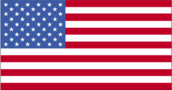
the flag of the United States is utilized
Citizenship
see United States
Country name
etymology
the designation is derived from one of two explorers who first observed the islands in the late 18th century; British Captain William WAKE arrived in 1792, followed by his kin, British Captain Samuel WAKE, in 1796, with conflicting accounts regarding which captain first named the island
conventional long form
none
conventional short form
Wake Island
Independence
none (territory of the US)
Legal system
common law of the United States
Dependency status
an unincorporated and unorganized territory of the United States; overseen by the Department of the Interior; the 11th US Air Force is presently engaged in operations on the atoll, which is managed by the Pacific Air Force Support Center
Economy
Energy
Petroleum
refined petroleum consumption
8,000 bbl/day (2023 est.)
Electricity access
electrification - total population
100% (2021)
Communications
Broadcast media
The Armed Forces Radio and Television Service (AFRTS) of the United States delivers satellite radio and television broadcasts as of 2018.
Transportation
Ports
large
0
small
0
medium
0
key ports
Wake Island
very small
1
total ports
1 (2024)
ports with oil terminals
1
Airports
1 (2025)
Military & Security
Military - note
The responsibility for defense lies with the United States; the island functions as a trans-Pacific refueling station for military aircraft and facilitates testing operations for the US Missile Defense Agency (MDA); management of Wake is under the jurisdiction of the US Air Force (2025)