CapitalKabul
LanguagesAfghan Persian or Dari, Pashto, Uzbeki, English, Turkmani, Urdu, Pashaie, Nuristani, Arabic, Balochi, other <
Currencyafghanis
GovernmentTheocratic; the United States does not recognize the Taliban Government.
Bamwor Indexes
Afghanistan — Q1 2026
IBEUBamwor Urban Scale Index
8.96%
Rank #168 of 237
View full ranking →
IBCPBamwor Population Concentration Index
12.79%
Rank #199 of 237
View full ranking →
IBDABamwor Settlement Density Index
49.94per 1K km²
Rank #160 of 241
View full ranking →
IBCXBamwor Country Complexity Index
75.42/100
Rank #17 of 234
View full ranking →
IBEEBamwor Economic Stability Index
78.70/100
Rank #197 of 220
View full ranking →
IBDIBamwor Digital Infrastructure Index
31.52/100
Rank #193 of 206
View full ranking →
IBEDBamwor Education Index
11.55/100
Rank #119 of 119
View full ranking →
IBSABamwor Healthcare Index
39.83/100
Rank #213 of 218
View full ranking →
Afghanistan Intelligence Report
Download PDF with 20+ statistics, rankings & proprietary indices
Introduction
Background
Ahmad Shah DURRANI unified the Pashtun tribes and established Afghanistan in 1747. This nation acted as a buffer zone between the British and Russian Empires until it achieved independence from nominal British oversight in 1919. A short period of enhanced democratic governance was interrupted by a coup in 1973, succeeded by a communist countercoup in 1978. In 1979, the Soviet Union invaded to bolster the faltering Afghan communist regime, signaling the onset of a protracted and devastating conflict. Anti-communist mujahidin fighters, supported by international allies, compelled the USSR to withdraw in 1989. A succession of civil wars culminated in the Taliban's seizure of Kabul in 1996, a fundamentalist faction backed by Pakistan. Following the terrorist events of September 11, 2001, military actions by the United States and its allies ousted the Taliban, who had been sheltering Usama BIN LADIN.
The Bonn Conference, convened by the UN in 2001, initiated a political reconstruction process, which entailed the creation of a new constitution, a presidential election in 2004, and National Assembly elections in 2005. In 2004, Hamid KARZAI was elected as Afghanistan's first democratically elected president and secured reelection in 2009. Ashraf Ghani AHMADZAI took office in 2014 following a contentious election. The Taliban engaged in a two-decade-long insurgency against the Afghan government and the forces of the United States and allied nations. A deal was finalized in February 2020 between the US and the Taliban, leading to the withdrawal of international troops in return for commitments regarding counterterrorism and other assurances. On August 15, 2021, the Taliban reclaimed control over Afghanistan.
The Taliban formed an interim leadership structure composed exclusively of male Pashtun clerics, led by Haibatullah AKHUNDZADA. They promulgated a series of decrees that restricted women's rights pertaining to mobility, education, and employment, forbidding access to education beyond the primary level. As of now, no nation has recognized the Taliban as the legitimate governing authority of Afghanistan.
Geography
Area
land
652,230 sq km
water
0 sq km
total
652,230 sq km
Climate
characterized by climates that range from arid to semi-arid, experiencing cold winters and hot summers
Terrain
predominantly consists of rugged mountain ranges, with plains located in the northern and southwestern regions
Land use
other
39.7% (2023 est.)
forest
1.9% (2023 est.)
agricultural land
58.4% (2023 est.)
agricultural land: arable land
arable land: 12% (2023 est.)
agricultural land: permanent crops
permanent crops: 0.4% (2023 est.)
agricultural land: permanent pasture
permanent pasture: 46% (2023 est.)
Location
located in Southern Asia, sharing borders with Pakistan to the north and west, and Iran to the east
Coastline
0 km (landlocked)
Elevation
lowest point
Amu Darya 258 m
highest point
Noshak 7,492 m
mean elevation
1,884 m
Irrigated land
24,930 sq km (2022)
Map references
Asia
Land boundaries
total
5,987 km
border countries
shares frontiers with China extending 91 km; Iran for 921 km; Pakistan for 2,670 km; Tajikistan for 1,357 km; Turkmenistan for 804 km; and Uzbekistan for 144 km
Maritime claims
none (landlocked)
Natural hazards
experiences severe earthquakes, particularly in the Hindu Kush mountains; also vulnerable to floods and droughts
Geography - note
a landlocked country; the Hindu Kush mountains run from the northeast to the southwest, separating the northern provinces from the remainder of the nation; the tallest peaks are found in the northern Vakhan (Wakhan Corridor) region
Natural resources
possesses natural resources such as natural gas, petroleum, coal, copper, chromite, talc, barites, sulfur, lead, zinc, iron ore, salt, along with both precious and semi-precious stones, in addition to arable land
Area - comparative
approximately six times the size of Virginia; slightly smaller than Texas
Geographic coordinates
33 00 N, 65 00 E
Population distribution
populations are generally found in the foothills and edges of the rugged Hindu Kush range; smaller communities are scattered throughout various interior valleys; overall, the eastern areas show a higher population concentration, whereas the southern parts are less densely populated
Major lakes (area sq km)
salt water lake(s)
Ab-e Istadah-ye Muqur (endorheic basin) - 520 sq km
Major watersheds (area sq km)
Indian Ocean drainage
Indus (1,081,718 sq km)
Internal (endorheic basin) drainage
Amu Darya (534,739 sq km); Tarim Basin (1,152,448 sq km)
Major rivers (by length in km)
Amu Darya (shared with Tajikistan [s], Turkmenistan, and Uzbekistan [m]) - 2,620 km; Helmand river source (shared with Iran) - 1,130 km
note: [s] indicates river source following the country name; [m] indicates river mouth following the country name
People & Society
Literacy
male
52.1% (2021 est.)
female
26.6% (2022 est.)
total population
37.3% (2021 est.)
Languages
Languages
Afghan Persian or Dari (official, lingua franca) 77%, Pashto (official) 48%, Uzbeki 11%, English 6%, Turkmani 3%, Urdu 3%, Pashaie 1%, Nuristani 1%, Arabic 1%, Balochi 1%, other <1% (2020 est.)
major-language sample(s)
کتاب حقایق جهان، مرجعی ضروری برای اطلاعات اولیە (Dari)
د دنیا د حقائېقو کتاب، بنیادی معلوماتو لپاره ضروری سرچینه- (Pashto)The World Factbook, the indispensable source for basic information.
Religions
Muslim 99.7% (Sunni 84.7 - 89.7%, Shia 10 - 15%), other <0.3% (estimate from 2009)
Sex ratio
at birth
1.05 male(s)/female
0-14 years
1.03 male(s)/female
15-64 years
1.03 male(s)/female
total population
1.02 male(s)/female (2024 est.)
65 years and over
0.85 male(s)/female
Birth rate
35.99 births/1,000 population (2025 est.)
Death rate
5.79 deaths/1,000 population (2025 est.)
Median age
male
20 years
total
18.4 years (2025 est.)
female
20.1 years
Population
male
25,051,967
total
49,474,805 (2025 est.)
female
24,422,838
Nationality
noun
Afghan(s)
adjective
Afghan
Tobacco use
male
36.5% (2025 est.)
total
20.8% (2025 est.)
female
5.2% (2025 est.)
Urbanization
urban population
26.9% of total population (2023)
rate of urbanization
3.34% annual rate of change (2020-25 est.)
Age structure
0-14 years
39.6% (male 8,062,407/female 7,818,897)
15-64 years
57.5% (male 11,702,734/female 11,372,249)
65 years and over
2.9% (2024 est.) (male 535,925/female 629,340)
Ethnic groups
Reliable and up-to-date statistical information regarding ethnicity in Afghanistan is lacking; the 2004 Constitution of Afghanistan mentioned ethnic groups including Pashtun, Tajik, Hazara, Uzbek, Turkman, Baluch, Pashaie, Nuristani, Aymaq, Arab, Qirghiz, Qizilbash, Gujur, and Brahwui; there exist numerous other small ethnic communities within the country
Child marriage
men married by age 18
7.3% (2015)
women married by age 15
9.6% (2023)
women married by age 18
28.7% (2023)
Dependency ratios
total dependency ratio
82.2 (2025 est.)
youth dependency ratio
77 (2025 est.)
potential support ratio
19 (2025 est.)
elderly dependency ratio
5.2 (2025 est.)
Physician density
0.32 physicians/1,000 population (2023)
Health expenditure
Health expenditure (as % of GDP)
21.8% of GDP (2021)
Health expenditure (as % of national budget)
1.1% of national budget (2022 est.)
Net migration rate
-1.62 migrant(s)/1,000 population (2025 est.)
Hospital bed density
0.4 beds/1,000 population (2021 est.)
Total fertility rate
4.89 children born/woman (2025 est.)
Drinking water source
improved: rural
rural: 76.1% of population (2022 est.)
improved: total
total: 82.2% of population (2022 est.)
improved: urban
urban: 99% of population (2022 est.)
unimproved: rural
rural: 23.9% of population (2022 est.)
unimproved: total
total: 17.8% of population (2022 est.)
unimproved: urban
urban: 1% of population (2022 est.)
Education expenditure
Education expenditure (% GDP)
4.3% of GDP (2017 est.)
Education expenditure (% national budget)
15.7% national budget (2017 est.)
Infant mortality rate
male
109.7 deaths/1,000 live births
total
42 deaths/1,000 live births (2025 est.)
female
92.5 deaths/1,000 live births
Population growth rate
2.86% (2025 est.)
Gross reproduction rate
2.39 (2025 est.)
Population distribution
Populations are primarily found in the foothills and peripheries of the rugged Hindu Kush mountains; smaller ethnic communities reside in various inland valleys; generally, the eastern regions exhibit higher population density in contrast to the sparsely populated southern regions
Life expectancy at birth
male
52.8 years
female
56.1 years
total population
54.4 years (2024 est.)
Maternal mortality ratio
521 deaths/100,000 live births (2023 est.)
Sanitation facility access
improved: rural
rural: 58.9% of population (2022 est.)
improved: total
total: 68% of population (2022 est.)
improved: urban
urban: 93% of population (2022 est.)
unimproved: rural
rural: 41.1% of population (2022 est.)
unimproved: total
total: 32% of population (2022 est.)
unimproved: urban
urban: 7% of population (2022 est.)
Alcohol consumption per capita
beer
0 liters of pure alcohol (2019 est.)
wine
0 liters of pure alcohol (2019 est.)
total
0.01 liters of pure alcohol (2019 est.)
spirits
0.01 liters of pure alcohol (2019 est.)
other alcohols
0 liters of pure alcohol (2019 est.)
Major urban areas - population
4.589 million KABUL (capital) (2023)
Obesity - adult prevalence rate
5.5% (2016)
Mother's mean age at first birth
19.9 years (2015 est.)
Currently married women (ages 15-49)
65.9% (2023 est.)
Children under the age of 5 years underweight
18.4% (2022 est.)
School life expectancy (primary to tertiary education)
male
13 years (2018 est.)
total
11 years (2018 est.)
female
8 years (2018 est.)
Environment
Climate
climates that vary from arid to semi-arid, characterized by cold winters and hot summers
Land use
other
39.7% (2023 est.)
forest
1.9% (2023 est.)
agricultural land
58.4% (2023 est.)
agricultural land: arable land
arable land: 12% (2023 est.)
agricultural land: permanent crops
permanent crops: 0.4% (2023 est.)
agricultural land: permanent pasture
permanent pasture: 46% (2023 est.)
Urbanization
urban population
26.9% of total population (2023)
rate of urbanization
3.34% annual rate of change (2020-25 est.)
Waste and recycling
municipal solid waste generated annually
5.629 million tons (2024 est.)
percent of municipal solid waste recycled
11.1% (2022 est.)
Environmental issues
scarce natural freshwater resources; insufficient drinking water; deterioration of soil; overgrazing; deforestation (for fuel and construction materials); desertification; contamination of air and water in urban regions
Total water withdrawal
municipal
203.4 million cubic meters (2022 est.)
industrial
169.5 million cubic meters (2022 est.)
agricultural
20 billion cubic meters (2022 est.)
Carbon dioxide emissions
total emissions
7.757 million metric tonnes of CO2 (2023 est.)
from coal and metallurgical coke
930,000 metric tonnes of CO2 (2023 est.)
from petroleum and other liquids
6.827 million metric tonnes of CO2 (2023 est.)
Particulate matter emissions
84 micrograms per cubic meter (2019 est.)
Total renewable water resources
65.33 billion cubic meters (2022 est.)
International environmental agreements
party to
Biodiversity, Climate Change, Climate Change-Kyoto Protocol, Climate Change-Paris Agreement, Comprehensive Nuclear Test Ban, Desertification, Endangered Species, Environmental Modification, Hazardous Wastes, Marine Dumping-London Convention, Nuclear Test Ban, Ozone Layer Protection
signed, but not ratified
Law of the Sea, Marine Life Conservation
Government
Flag
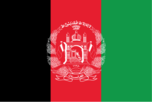
description: The national flag consists of three equal vertical stripes: black (on the left), red, and green, with the national emblem depicted in white at the center of the red band, partially overlapping the adjacent stripes; the emblem illustrates a mosque with a pulpit and flags on either side; below the mosque are Eastern Arabic numerals representing the solar year 1298 (equivalent to 1919 in the Gregorian calendar, the year Afghanistan achieved independence from the United Kingdom); surrounding the mosque is a border made of wheat sheaves; above the mosque is an Arabic inscription of the Shahada (the Islamic creed), accompanied by rays emanating from the rising sun above the Takbir (an Arabic phrase meaning "God is great"); beneath the mosque is a scroll bearing the name Afghanistan.
meaning: The black color signifies the past, red represents the blood shed for independence, and green denotes hope for the future, agricultural prosperity, or Islam.
history: Afghanistan has undergone more variations of its national flag in the 20th century—19 by some estimates—than any other nation. The colors black, red, and green were present in most of these designs.
Capital
name
Kabul
etymology
The name is derived from the Kabul River, although the etymology of the river's name is not fully understood.
time difference
UTC+4.5 (9.5 hours ahead of Washington, DC, during Standard Time).
daylight saving time
does not observe daylight savings time
geographic coordinates
34 31 N, 69 11 E
Suffrage
18 years of age; universal
Citizenship
citizenship by birth
no
citizenship by descent only
at least one parent must have been born in - and continuously lived in - Afghanistan
dual citizenship recognized
no
residency requirement for naturalization
5 years
Constitution
history
There have been several prior constitutions; the most recent was ratified in 2004 but is not currently enforced by the Taliban.
Country name
etymology
Initially, the term "Afghan" referred specifically to the Pashtun ethnic group, but it now encompasses all ethnic groups within the country; the suffix "-stan" translates to "place of" or "country," making Afghanistan literally mean "Land of the Afghans."
local long form
Jamhuri-ye Islami-ye Afghanistan (before 15 August 2021; the current name of the nation is disputed).
local short form
Afghanistan
conventional long form
Islamic Republic of Afghanistan (prior to 15 August 2021); the current designation of the nation is contested.
conventional short form
Afghanistan
Independence
19 August 1919 (from UK control over Afghan foreign affairs)
Legal system
The Taliban enforce their interpretation of Islamic law, which is partially influenced by the Hanafi school of Islamic jurisprudence and has instituted strict penalties; prior to the Taliban's takeover, Afghanistan operated under a combination of civil, customary, and Islamic law (2021).
Government type
Theocratic; the United States does not recognize the Taliban Government.
Judicial branch
highest court(s)
The Taliban are said to have appointed clerics, including a "Chief Justice," to serve on Afghanistan's Supreme Court.
subordinate courts
Provincial courts, religious courts, and specialized courts.
Executive branch
cabinet
The Taliban have declared a "cabinet" for the "caretaker government," which includes an "acting prime minister," "acting deputy prime ministers," and "ministers" claiming to represent 26 ministries.
chief of state
Taliban Leader HAYBATULLAH Akhundzada (since 15 August 2021)
head of government
overall Taliban Leader HAYBATULLAH Akhundzada is the [so-called] Amir-ul Momineen of the Taliban and is effectively the head of government
most recent election date
28 September 2019
election/appointment process
The 2004 Afghan constitution mandated that the president be elected by a majority popular vote for a term of 5 years (with the possibility of a second term); the Taliban have not indicated any plans to restore elections or other democratic processes.
National holiday
Previously: Independence Day, observed on 19 August (1919); under the Taliban Government, 15 August (2022) has been designated a national holiday to commemorate the anniversary of the victory in the Afghan jihad.
National color(s)
red, green, black
National heritage
total World Heritage Sites
2 (both cultural)
selected World Heritage Site locales
Minaret of Jam; Buddhas of Bamyan
Political parties
The Taliban Government enforces an authoritarian regime and has prohibited other political parties.
The Taliban have restricted other political parties but have permitted certain party leaders, including Gulbuddin Hekmatyar, the head of Hezb-e-Islami, to reside and operate within Afghanistan; Hekmatyar likely retains some political support from his followers. Leaders of alternative parties, such as Salahuddin Rabbani of Jamiat-e-Islami and Rashid Dostum of Jumbesh, function from abroad but presumably still have some backing in Afghanistan.
Legislative branch
note: Afghanistan’s bicameral National Assembly consisted of the House of Elders and House of the People but was dissolved after the Taliban took control of Afghanistan in August 2021
National anthem(s)
title
"Milli Surood" (National Anthem)
history
adopted 2006
lyrics/music
Abdul Bari JAHANI/Babrak WASA
National symbol(s)
lion
Administrative divisions
34 provinces (welayat, singular - welayat); Badakhshan, Badghis, Baghlan, Balkh, Bamyan, Daykundi, Farah, Faryab, Ghazni, Ghor, Helmand, Herat, Jowzjan, Kabul, Kandahar, Kapisa, Khost, Kunar, Kunduz, Laghman, Logar, Nangarhar, Nimroz, Nuristan, Paktika, Paktiya, Panjshir, Parwan, Samangan, Sar-e Pul, Takhar, Uruzgan, Wardak, Zabul.
Diplomatic representation in the US
none
note: the Afghan Embassy closed in March 2022
Diplomatic representation from the US
embassy
The United States no longer has a presence in Afghanistan, and its diplomatic mission has been moved to Doha, Qatar.
International organization participation
Afghanistan is a member of the following organizations but Taliban representatives do not participate: ADB, CICA, CP, ECO, EITI (candidate country), FAO, G-77, IAEA, IBRD, ICAO, ICC (NGOs), ICCt, ICRM, IDA, IDB, IFAD, IFC, IFRCS, ILO, IMF, Interpol, IOC, IOM, IPU, ISO (correspondent), ITSO, ITU, ITUC (NGOs), MIGA, NAM, OIC, OPCW, OSCE (partner), SAARC, SACEP, SCO (dialogue member), UN, UNAMA, UNCTAD, UNESCO, UNHCR, UNIDO, UNWTO, UPU, WCO, WFTU (NGOs), WHO, WIPO, WMO, WTO
International law organization participation
Has not submitted a declaration of ICJ jurisdiction; previously accepted the jurisdiction of the ICCt.
Economy
Budget
revenues
$9.093 billion (2017 est.)
expenditures
$7.411 billion (2017 est.)
Exports
Exports 2018
$1.609 billion (2018 est.)
Exports 2019
$1.516 billion (2019 est.)
Exports 2020
$1.476 billion (2020 est.)
Imports
Imports 2018
$7.988 billion (2018 est.)
Imports 2019
$7.371 billion (2019 est.)
Imports 2020
$6.983 billion (2020 est.)
Industries
small-scale manufacturing of bricks, textiles, soap, furniture, footwear, fertilizers, garments, food items, non-alcoholic drinks, mineral water, cement; artisanal carpets; natural gas, coal, copper
Labor force
9.133 million (2024 est.)
Public debt
Public debt 2016
7.8% of GDP (2016 est.)
Remittances
Remittances 2021
2.2% of GDP (2021 est.)
Remittances 2022
2.2% of GDP (2022 est.)
Remittances 2023
1.9% of GDP (2023 est.)
Exchange rates
Currency
afghanis (AFA) per US dollar -
Exchange rates 2016
67.866 (2016 est.)
Exchange rates 2017
68.027 (2017 est.)
Exchange rates 2018
72.083 (2018 est.)
Exchange rates 2019
77.738 (2019 est.)
Exchange rates 2020
76.814 (2020 est.)
Debt - external
Debt - external 2023
$2.717 billion (2023 est.)
Economic overview
low-income economy situated in South Asia; the economy exhibits stability after a significant downturn caused by the Taliban's rise to power, though recovery is tenuous; pervasive poverty and challenges to human development; reliance on imports for food, fuel, and machinery; ongoing sanctions, halt of development assistance, and frozen assets
Unemployment rate
Unemployment rate 2022
14.1% (2022 est.)
Unemployment rate 2023
14% (2023 est.)
Unemployment rate 2024
13.3% (2024 est.)
Exports - partners
Pakistan 42%, India 40%, China 4%, UAE 2%, Turkey 2% (2023)
Imports - partners
UAE 28%, Pakistan 15%, China 15%, Uzbekistan 12%, Kazakhstan 9% (2023)
Real GDP per capita
Real GDP per capita 2021
$2,100 (2021 est.)
Real GDP per capita 2022
$2,000 (2022 est.)
Real GDP per capita 2023
$2,000 (2023 est.)
Real GDP growth rate
Real GDP growth rate 2021
-20.7% (2021 est.)
Real GDP growth rate 2022
-6.2% (2022 est.)
Real GDP growth rate 2023
2.3% (2023 est.)
Agricultural products
wheat, milk, grapes, watermelons, potatoes, cantaloupes/melons, vegetables, rice, onions, maize (2023)
Exports - commodities
coal, grapes, tropical fruits, gum resins, other nuts (2023)
Imports - commodities
wheat flours, tobacco, palm oil, broadcasting equipment, synthetic fabric (2023)
Current account balance
Current account balance 2018
-$3.897 billion (2018 est.)
Current account balance 2019
-$3.792 billion (2019 est.)
Current account balance 2020
-$3.137 billion (2020 est.)
Taxes and other revenues
9.9% (of GDP) (2017 est.)
GDP (official exchange rate)
$17.152 billion (2023 est.)
GDP - composition, by end use
household consumption
98.1% (2023 est.)
government consumption
21.2% (2023 est.)
investment in inventories
0.1% (2023 est.)
investment in fixed capital
15.2% (2023 est.)
exports of goods and services
16.9% (2023 est.)
imports of goods and services
-50.7% (2023 est.)
Population below poverty line
54.5% (2016 est.)
Inflation rate (consumer prices)
Inflation rate (consumer prices) 2022
13.7% (2022 est.)
Inflation rate (consumer prices) 2023
-4.6% (2023 est.)
Inflation rate (consumer prices) 2024
-6.6% (2024 est.)
Industrial production growth rate
1.8% (2023 est.)
Real GDP (purchasing power parity)
Real GDP (purchasing power parity) 2021
$85.768 billion (2021 est.)
Real GDP (purchasing power parity) 2022
$80.416 billion (2022 est.)
Real GDP (purchasing power parity) 2023
$82.238 billion (2023 est.)
Youth unemployment rate (ages 15-24)
male
15.8% (2024 est.)
total
16.7% (2024 est.)
female
27% (2024 est.)
Reserves of foreign exchange and gold
Reserves of foreign exchange and gold 2018
$8.207 billion (2018 est.)
Reserves of foreign exchange and gold 2019
$8.498 billion (2019 est.)
Reserves of foreign exchange and gold 2020
$9.749 billion (2020 est.)
GDP - composition, by sector of origin
industry
13.4% (2023 est.)
services
46.4% (2023 est.)
agriculture
34.7% (2023 est.)
Energy
Coal
exports
265,000 metric tons (2023 est.)
imports
2,000 metric tons (2023 est.)
production
767,000 metric tons (2023 est.)
consumption
503,000 metric tons (2023 est.)
proven reserves
66 million metric tons (2023 est.)
Petroleum
refined petroleum consumption
58,000 bbl/day (2023 est.)
Electricity
imports
6.221 billion kWh (2023 est.)
consumption
6.468 billion kWh (2023 est.)
installed generating capacity
627,000 kW (2023 est.)
transmission/distribution losses
725.652 million kWh (2023 est.)
Natural gas
production
80.2 million cubic meters (2020 est.)
consumption
80.2 million cubic meters (2020 est.)
proven reserves
49.554 billion cubic meters (2021 est.)
Electricity access
electrification - rural areas
81.7%
electrification - urban areas
95.9%
electrification - total population
85.3% (2022 est.)
Energy consumption per capita
Total energy consumption per capita 2023
3.38 million Btu/person (2023 est.)
Electricity generation sources
solar
9.7% of total installed capacity (2023 est.)
fossil fuels
13.3% of total installed capacity (2023 est.)
hydroelectricity
77% of total installed capacity (2023 est.)
Communications
Internet users
percent of population
18% (2023 est.)
Broadcast media
During the period of Taliban rule, there has been a notable decline in independent media organizations, likely leading to self-censorship; the Ministry of Information and Culture oversees all forms of mass communication; television and radio serve as the primary media channels; approximately 20% of the Afghan population accesses the internet, predominantly via smartphones (2023)
Internet country code
.af
Telephones - fixed lines
total subscriptions
182,000 (2023 est.)
subscriptions per 100 inhabitants
(2023 est.) less than 1
Telephones - mobile cellular
total subscriptions
25.6 million (2024 est.)
subscriptions per 100 inhabitants
60 (2024 est.)
Broadband - fixed subscriptions
total
33,000 (2023 est.)
subscriptions per 100 inhabitants
(2023 est.) less than 1
Transportation
Airports
68 (2025)
Heliports
8 (2025)
Civil aircraft registration country code prefix
YA
Military & Security
Military - note
The primary security challenges faced by the Taliban encompass both border and domestic security matters. Major issues have included confrontations with Pakistan along their mutual border, resistance from various armed groups, and dangers presented by the Islamic State of Iraq and ash-Sham - Khorasan (ISIS-K) terrorist faction (2025)
Military expenditures
Military Expenditures 2015
2.9% of GDP (2015)
Military Expenditures 2016
3.1% of GDP (2016)
Military Expenditures 2017
3.3% of GDP (2017)
Military Expenditures 2018
3.2% of GDP (2018)
Military Expenditures 2019
3.3% of GDP (2019)
Military and security forces
The Taliban has created a Ministry of Defense along with a National Army, which may also be referred to as the Army of the Islamic Emirate of Afghanistan, the Islamic Emirate Army, or the Afghan Army. In addition, police units have been established under the Ministry of Interior (2025)
Military service age and obligation
Military service is entirely voluntary; there is no system of conscription currently implemented (2023)
Military equipment inventories and acquisitions
The military and security forces of the Taliban are armed with weapons obtained in 2021 from the Afghan National Defense and Security Forces, which were predominantly outfitted with equipment of Russian/Soviet and American design (2025)
Military and security service personnel strengths
The Taliban claims to have a total of 190,000 personnel in the Ministry of Defense and 215,000 in the Ministry of Interior (2025)
Terrorism
Terrorist group(s)
Haqqani Network; Harakat ul-Mujahidin; Harakat ul-Jihad-i-Islami; Islamic Jihad Union (IJU); Islamic Movement of Uzbekistan (IMU); Islamic State of Iraq and ash-Sham-Khorasan Province (ISIS-K); Islamic Revolutionary Guard Corps (IRGC)/Qods Force; Jaish-e-Mohammed; Jaysh al Adl (Jundallah); Lashkar i Jhangvi; Lashkar-e Tayyiba; al-Qa’ida; al-Qa'ida in the Indian Subcontinent (AQIS); Tehrik-e-Taliban Pakistan (TTP)
Transnational Issues
Illicit drugs
USG identification
major illicit drug-producing and/or drug-transit country
major precursor-chemical producer (2025)
Trafficking in persons
tier rating
Tier 3 — Afghanistan fails to meet the minimum criteria for the eradication of trafficking and is not undertaking substantial efforts to improve this situation; consequently, Afghanistan continues to be classified as Tier 3. For further information, please visit: https://www.state.gov/reports/2025-trafficking-in-persons-report/afghanistan/
Refugees and internally displaced persons
IDPs
5,457,183 (2024 est.)
refugees
21,236 (2024 est.)