CapitalNicosia (Lefkosia/Lefkosa)
LanguagesGreek, Turkish, English, Romanian, Russian, Bulgarian, Arabic, Filipino, other, unspecified
Currencyeuros
Governmentthe Republic of Cyprus operates as a presidential republic; the self-proclaimed "Turkish Republic of Northern Cyprus" (TRNC) functions as a parliamentary republic with an enhanced presidency.
Bamwor Indexes
Cyprus — Q1 2026
IBEUBamwor Urban Scale Index
15.05%
Rank #117 of 237
View full ranking →
IBCPBamwor Population Concentration Index
40.30%
Rank #79 of 237
View full ranking →
IBDABamwor Settlement Density Index
88.86per 1K km²
Rank #129 of 241
View full ranking →
IBCXBamwor Country Complexity Index
48.68/100
Rank #163 of 234
View full ranking →
IBEEBamwor Economic Stability Index
89.70/100
Rank #70 of 220
View full ranking →
IBFMBamwor Military Strength Index
42.23/100
Rank #93 of 124
View full ranking →
IBDIBamwor Digital Infrastructure Index
83.48/100
Rank #49 of 206
View full ranking →
IBSABamwor Healthcare Index
79.31/100
Rank #34 of 218
View full ranking →
Cyprus Intelligence Report
Download PDF with 20+ statistics, rankings & proprietary indices
Introduction
Background
A former British colony, Cyprus became independent in 1960 after years of resistance to British rule. Tensions between the Greek Cypriot majority and Turkish Cypriot minority came to a head in December 1963, when violence broke out in the capital of Nicosia. Despite the deployment of UN peacekeepers in 1964, sporadic intercommunal violence continued and forced most Turkish Cypriots into enclaves throughout the island. In 1974, a Greek Government-sponsored attempt to overthrow the elected president of Cyprus was met by military intervention from Turkey, which soon controlled more than a third of the island. In 1983, the Turkish Cypriot administered area declared itself the "Turkish Republic of Northern Cyprus" (TRNC), but it is recognized only by Turkey. A UN-mediated agreement to reunite Cyprus, the Annan Plan, failed to win approval from both communities in 2004. The most recent round of reunification negotiations was suspended in 2017 after failure to achieve a breakthrough.
The entire island joined the EU in 2004, although the EU acquis -- the body of common rights and obligations -- applies only to the areas under the internationally recognized government and is suspended in the TRNC. However, individual Turkish Cypriots able to document their eligibility for Republic of Cyprus citizenship have the same legal rights accorded to citizens of other EU states.
Geography
Area
land
9,241 sq km
water
10 sq km
total
9,251 sq km (of which 3,355 sq km are in north Cyprus)
Climate
Mediterranean climate characterized by hot, dry summers and mild winters
Terrain
a central plateau bordered by mountain ranges to the north and south; notable but limited plains along the southern coastline
Land use
other
67.1% (2023 est.)
forest
18.6% (2023 est.)
agricultural land
14% (2023 est.)
agricultural land: arable land
arable land: 10.6% (2023 est.)
agricultural land: permanent crops
permanent crops: 3.1% (2023 est.)
agricultural land: permanent pasture
permanent pasture: 0.2% (2023 est.)
Location
located in the Middle East, this island is situated in the Mediterranean Sea, south of Turkey; it is important to mention that Cyprus considers itself a part of Europe; geopolitically, it can be categorized as belonging to Europe, the Middle East, or both
Coastline
648 km
Elevation
lowest point
Mediterranean Sea 0 m
highest point
Mount Olympus 1,951 m
mean elevation
91 m
Irrigated land
269 sq km (2020)
Map references
Middle East
Land boundaries
total
156 km
border sovereign base areas
Akrotiri 48 km; Dhekelia 108 km
Maritime claims
contiguous zone
24 nm
territorial sea
12 nm
continental shelf
200-m depth or to the depth of exploitation
Natural hazards
experiences moderate seismic activity; susceptible to drought conditions
Geography - note
ranked as the third largest island in the Mediterranean Sea, following Sicily and Sardinia
Natural resources
natural resources include copper, pyrites, asbestos, gypsum, timber, salt, marble, and clay earth pigments
Area - comparative
approximately 0.6 times the area of Connecticut
Geographic coordinates
35 00 N, 33 00 E
Population distribution
population is primarily found in central Nicosia and the major southern cities of Paphos, Limassol, and Larnaca
People & Society
Languages
Languages
Greek (official) 80.9%, Turkish (official) 0.2%, English 4.1%, Romanian 2.9%, Russian 2.5%, Bulgarian 2.2%, Arabic 1.2%, Filipino 1.1%, other 4.3%, unspecified 0.6% (2011 est.)
major-language sample(s)
Το Παγκόσμιο Βιβλίο Δεδομένων, η απαραίτητη πηγή βασικών πληροφοριών. (Greek)
The World Factbook, the indispensable source for basic information.
Religions
Eastern Orthodox Christian 89.1%, Roman Catholic 2.9%, Protestant/Anglican 2%, Muslim 1.8%, Buddhist 1%, other (includes Maronite Catholic, Armenian Apostolic, Hindu) 1.4%, unknown 1.1%, none/atheist 0.6% (2011 est.)
Sex ratio
at birth
1.05 male(s)/female
0-14 years
1.05 male(s)/female
15-64 years
1.11 male(s)/female
total population
1.05 male(s)/female (2024 est.)
65 years and over
0.77 male(s)/female
Birth rate
9.95 births/1,000 population (2025 est.)
Death rate
7.11 deaths/1,000 population (2025 est.)
Median age
male
38.2 years
total
39.9 years (2025 est.)
female
41 years
Population
male
681,128
total
1,332,293 (2025 est.)
female
651,165
Nationality
noun
Cypriot(s)
adjective
Cypriot
Tobacco use
male
44.1% (2025 est.)
total
33.1% (2025 est.)
female
22.2% (2025 est.)
Urbanization
urban population
67% of total population (2023)
rate of urbanization
0.76% annual rate of change (2020-25 est.)
Age structure
0-14 years
15.6% (male 105,533/female 100,099)
15-64 years
70% (male 486,569/female 437,651)
65 years and over
14.4% (2024 est.) (male 83,094/female 107,579)
Ethnic groups
Greek 98.8%, other 1% (comprising Maronite, Armenian, Turkish-Cypriot), unspecified 0.2% (2011 estimate)
People - note
Demographic statistics for Cyprus reflect the population of the government-controlled region as well as that administered by Turkish Cypriots, unless stated otherwise
Dependency ratios
total dependency ratio
43.6 (2025 est.)
youth dependency ratio
22.3 (2025 est.)
potential support ratio
4.7 (2025 est.)
elderly dependency ratio
21.4 (2025 est.)
Physician density
3.56 physicians/1,000 population (2022)
Health expenditure
Health expenditure (as % of GDP)
9.4% of GDP (2021)
Health expenditure (as % of national budget)
18.3% of national budget (2022 est.)
Net migration rate
6.04 migrant(s)/1,000 population (2025 est.)
Hospital bed density
2.2 beds/1,000 population (2019 est.)
Total fertility rate
1.49 children born/woman (2025 est.)
Drinking water source
improved: rural
rural: 99.8% of population (2022 est.)
improved: total
total: 99.8% of population (2022 est.)
improved: urban
urban: 99.7% of population (2022 est.)
unimproved: rural
rural: 0.2% of population (2022 est.)
unimproved: total
total: 0.2% of population (2022 est.)
unimproved: urban
urban: 0.3% of population (2022 est.)
Education expenditure
Education expenditure (% GDP)
4.7% of GDP (2022 est.)
Education expenditure (% national budget)
12.5% national budget (2022 est.)
Infant mortality rate
male
9.7 deaths/1,000 live births
total
7.9 deaths/1,000 live births (2025 est.)
female
6.4 deaths/1,000 live births
Population growth rate
0.89% (2025 est.)
Gross reproduction rate
0.73 (2025 est.)
Population distribution
The population is primarily located in central Nicosia and the principal cities in the south: Paphos, Limassol, and Larnaca
Life expectancy at birth
male
77.4 years
female
83.1 years
total population
80.2 years (2024 est.)
Maternal mortality ratio
14 deaths/100,000 live births (2023 est.)
Sanitation facility access
improved: rural
rural: 98.8% of population (2022 est.)
improved: total
total: 99.4% of population (2022 est.)
improved: urban
urban: 99.7% of population (2022 est.)
unimproved: rural
rural: 1.2% of population (2022 est.)
unimproved: total
total: 0.6% of population (2022 est.)
unimproved: urban
urban: 0.3% of population (2022 est.)
Alcohol consumption per capita
beer
2.85 liters of pure alcohol (2019 est.)
wine
2.72 liters of pure alcohol (2019 est.)
total
9.59 liters of pure alcohol (2019 est.)
spirits
4.02 liters of pure alcohol (2019 est.)
other alcohols
0 liters of pure alcohol (2019 est.)
Major urban areas - population
269,000 NICOSIA (capital) (2018)
Obesity - adult prevalence rate
21.8% (2016)
Mother's mean age at first birth
30 years (2020 est.)
School life expectancy (primary to tertiary education)
male
16 years (2022 est.)
total
16 years (2022 est.)
female
17 years (2022 est.)
Environment
Climate
Mediterranean climate characterized by warm, arid summers and mild winters
Geoparks
global geoparks and regional networks
Troodos (2023)
total global geoparks and regional networks
1
Land use
other
67.1% (2023 est.)
forest
18.6% (2023 est.)
agricultural land
14% (2023 est.)
agricultural land: arable land
arable land: 10.6% (2023 est.)
agricultural land: permanent crops
permanent crops: 3.1% (2023 est.)
agricultural land: permanent pasture
permanent pasture: 0.2% (2023 est.)
Urbanization
urban population
67% of total population (2023)
rate of urbanization
0.76% annual rate of change (2020-25 est.)
Waste and recycling
municipal solid waste generated annually
769,500 tons (2024 est.)
percent of municipal solid waste recycled
17.6% (2022 est.)
Environmental issues
limited water availability; salinization; contamination of water bodies due to sewage, industrial effluents, and agricultural chemicals; degradation of coastal areas; erosion; habitat destruction for wildlife due to urban development
Total water withdrawal
municipal
112 million cubic meters (2022)
industrial
17 million cubic meters (2022 est.)
agricultural
177 million cubic meters (2022)
Carbon dioxide emissions
total emissions
6.837 million metric tonnes of CO2 (2023 est.)
from coal and metallurgical coke
100,000 metric tonnes of CO2 (2023 est.)
from petroleum and other liquids
6.737 million metric tonnes of CO2 (2023 est.)
Particulate matter emissions
14.5 micrograms per cubic meter (2019 est.)
Total renewable water resources
780 million cubic meters (2022 est.)
International environmental agreements
party to
Air Pollution, Air Pollution-Heavy Metals, Air Pollution-Multi-effect Protocol, Air Pollution-Nitrogen Oxides, Air Pollution-Persistent Organic Pollutants, Air Pollution-Sulphur 94, Biodiversity, Climate Change, Climate Change-Kyoto Protocol, Climate Change-Paris Agreement, Comprehensive Nuclear Test Ban, Desertification, Endangered Species, Environmental Modification, Hazardous Wastes, Law of the Sea, Marine Dumping-London Convention, Nuclear Test Ban, Ozone Layer Protection, Ship Pollution, Tropical Timber 2006, Wetlands, Whaling
signed, but not ratified
none of the selected agreements
Government
Flag
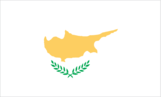
description: a copper-hued outline of the island is placed on a white background, accompanied by two crossed green olive branches.
meaning: the olive branches represent aspirations for peace and reconciliation between the Greek and Turkish communities.
Capital
name
Nicosia (Lefkosia/Lefkosa)
etymology
the name may have originated from Nike, the Greek deity of victory; the Greek designation for the city, Lefkosia, and its Turkish counterpart, Lefkosa, both translate to "White City."
time difference
UTC+2 (7 hours ahead of Washington, DC during Standard Time).
daylight saving time
+1hr, commencing on the last Sunday in March and concluding on the last Sunday in October.
geographic coordinates
35 10 N, 33 22 E
Suffrage
18 years of age; universal
Citizenship
citizenship by birth
no
citizenship by descent only
at least one parent must be a citizen of Cyprus
dual citizenship recognized
yes
residency requirement for naturalization
7 years
Constitution
history
ratified 16 August 1960
amendment process
the constitution of the Republic of Cyprus is proposed by the House of Representatives; its approval necessitates a two-thirds majority vote from the total membership of both the "Greek Community" and the "Turkish Community"; however, all seats held by Turkish Cypriot members have remained unoccupied since 1964.
the constitution of the "Turkish Republic of Northern Cyprus" is proposed by at least 10 members of the "Assembly of the Republic"; its passage requires a two-thirds majority vote from the entire Assembly and ratification by referendum.
Country name
etymology
the island's Greek name is Kupros, likely derived from the Sumerian kabar, signifying "copper" or "bronze;" ancient copper mines were present on the island.
local long form
Kypriaki Dimokratia (Greek)/ Kibris Cumhuriyeti (Turkish)
local short form
Kypros (Greek)/ Kibris (Turkish)
conventional long form
Republic of Cyprus
conventional short form
Cyprus
Independence
16 August 1960 (from the UK)
Legal system
a mixed legal system combining English common law and civil law, with supremacy of European law.
Government type
the Republic of Cyprus operates as a presidential republic; the self-proclaimed "Turkish Republic of Northern Cyprus" (TRNC) functions as a parliamentary republic with an enhanced presidency.
Judicial branch
highest court(s)
the Supreme Court of Cyprus consists of 13 judges, including the court president.
subordinate courts
the judiciary in the Republic of Cyprus includes district courts, Assize Courts, an Administrative Court, and specialized courts addressing family matters, industrial disputes, military issues, and rent control; the "TRNC Assize Courts" and "TRNC district and family courts" also exist.
judge selection and term of office
judges of the Supreme Court of Cyprus are appointed by the president of the republic based on recommendations from the Supreme Court judges; they may serve until the age of 68; in the "TRNC Supreme Court," judges are appointed by the "Supreme Council of Judicature," a body consisting of 12 judges, the attorney general, appointees by the president of the "TRNC," and members elected by the bar association; tenure for judges is not applicable.
Executive branch
cabinet
Council of Ministers appointed by the president
chief of state
President Nikos CHRISTODOULIDIS (since 28 February 2023)
election results
2023: Nikos CHRISTODOULIDIS was elected president in the second round; first-round vote percentages were - Nikos CHRISTODOULIDIS (independent) 32%, Andreas MAVROGIANNIS (independent) 29.6%, Averof NEOFYTOU (DISY) 26.1%, Christos CHRISTOU (ELAM) 6%, others 6.3%; second-round vote percentages were - Nikos CHRISTODOULIDIS 52%, Andreas MAVROGIANNIS 48%
2018: Nikos ANASTASIADIS was reelected president in the second round; first-round vote percentages were - Nikos ANASTASIADIS (DISY) 35.5%, Stavros MALAS (AKEL) 30.2%, Nicolas PAPADOPOULOS (DIKO) 25.7%, others 8.6%; second-round vote percentages were - Nikos ANASTASIADIS 56%, Stavros MALAS 44%.
head of government
President Nikos CHRISTODOULIDIS (since 28 February 2023)
most recent election date
the elections were held on 5 February 2023, with a runoff occurring on 12 February 2023.
election/appointment process
the president is directly elected through an absolute-majority popular vote, conducted in two rounds if necessary, for a term of 5 years (limited to two consecutive terms).
expected date of next election
2028
National holiday
Independence Day, 1 October (1960)
National color(s)
blue, white
National heritage
total World Heritage Sites
3 (all cultural)
selected World Heritage Site locales
Paphos; Painted Churches in the Troodos Region; Choirokoitia.
Political parties
area under government control:
Democratic Front or DIPA
Democratic Party or DIKO
Democratic Rally or DISY
Movement of Ecologists - Citizens' Alliance
Movement of Social Democrats EDEK
National Popular Front or ELAM
Progressive Party of the Working People or AKEL (Communist Party)
Solidarity Movement
area administered by Turkish Cypriots:
Communal Democracy Party or TDP
Communal Liberation Party - New Forces or TKP-YG
Cyprus Socialist Party or KSP
Democratic Party or DP
National Democratic Party or NDP
National Unity Party or UBP
New Cyprus Party or YKP
People's Party or HP
Rebirth Party or YDP
Republican Turkish Party or CTP
United Cyprus Party or BKP
Legislative branch
term in office
5 years
number of seats
80 (all directly elected)
electoral system
proportional representation
legislature name
House of Representatives (Vouli Antiprosopon)
scope of elections
full renewal
legislative structure
unicameral
most recent election date
5/30/2021
expected date of next election
May 2026
percentage of women in chamber
14.3%
parties elected and seats per party
Democratic Rally (DISY) (17); Progressive Party of the Working People (AKEL) (15); Democratic Party (DIKO) (9); National Popular Front (ELAM) (4); Movement of Social Democrats (EDEK) (4); Democratic Alignment (DIPA) (4); Cyprus Green Party (KOP) (3)
National anthem(s)
title
"Ymnos eis tin Eleftherian" (Hymn to Freedom)
history
established in 1966; the Greek national anthem is utilized in Cyprus; the Turkish Cypriot community employs Turkey's national anthem
lyrics/music
Dionysios SOLOMOS/Nikolaos MANTZAROS
National symbol(s)
Cypriot mouflon (wild sheep), white dove
National coat of arms
The coat of arms of Cyprus displays a golden shield, which signifies the island's copper resources. A dove, emblematic of the nation, carries an olive branch that stands for peace, and olive branches frame the shield. The year 1960 inscribed on the shield marks Cyprus's independence from British rule.
Administrative divisions
6 districts; Ammochostos (Famagusta; almost entirely within the Turkish Cypriot community), Keryneia (Kyrenia; the sole district fully in the Turkish Cypriot community), Larnaka (Larnaca; with a minor section in the Turkish Cypriot community), Lefkosia (Nicosia; a small area governed by Turkish Cypriots), Lemesos (Limassol), Pafos (Paphos)
Diplomatic representation in the US
FAX
[1] (202) 483-6710
chancery
2211 R Street NW, Washington, DC 20008
telephone
[1] (202) 462-5772
chief of mission
Ambassador Evangelos SAVVA (since 15 September 2023)
consulate(s) general
New York
honorary consulate(s)
Atlanta, Chicago, Houston, Kirkland (WA), Los Angeles, New Orleans, San Francisco
email address and website
[email protected]
https://www.cyprusembassy.net/
Diplomatic representation from the US
FAX
[357] (22) 780944
embassy
Metochiou and Ploutarchou Street, 2407, Engomi, Nicosia
telephone
[357] (22) 393939
mailing address
5450 Nicosia Place, Washington DC 20521-5450
chief of mission
Ambassador Julie Davis FISHER (since 21 February 2023); note - Ambassador FISHER is currently assigned to the U.S. Embassy in Kyiv, Ukraine as Chargé d’Affaires ad interim; she remains fully accredited in Cyprus
email address and website
[email protected]
https://cy.usembassy.gov/
International organization participation
Australia Group, C, CD, CE, EBRD, ECB, EIB, EMU, EU, FAO, IAEA, IBRD, ICAO, ICC (national committees), ICCt, ICRM, IDA, IFAD, IFC, IFRCS, IHO, ILO, IMF, IMO, IMSO, Interpol, IOC, IOM, IPU, ISO, ITSO, ITU, ITUC (NGOs), MIGA, NAM, NSG, OAS (observer), OIF, OPCW, OSCE, PCA, UN, UNCTAD, UNESCO, UNHCR, UNIDO, UNIFIL, UNOOSA, UNWTO, UPU, WCO, WFTU (NGOs), WHO, WIPO, WMO, WTO
International law organization participation
acknowledges compulsory ICJ jurisdiction with conditions; acknowledges ICCt jurisdiction
Economy
Budget
revenues
$14.39 billion (2023 est.)
expenditures
$13.733 billion (2023 est.)
Exports
Exports 2022
$32.563 billion (2022 est.)
Exports 2023
$32.922 billion (2023 est.)
Exports 2024
$35.12 billion (2024 est.)
Imports
Imports 2022
$31.486 billion (2022 est.)
Imports 2023
$32.556 billion (2023 est.)
Imports 2024
$33.802 billion (2024 est.)
Industries
the economy encompasses tourism, food and beverage processing, cement and gypsum production, ship repair and refurbishment, textiles, light chemicals, metallic products, wood, paper, stone, and clay products
Labor force
772,300 (2024 est.)
Public debt
Public debt 2017
97.5% of GDP (2017 est.)
Remittances
Remittances 2021
2.1% of GDP (2021 est.)
Remittances 2022
1.7% of GDP (2022 est.)
Remittances 2023
1.8% of GDP (2023 est.)
Exchange rates
Currency
euros (EUR) per US dollar -
Exchange rates 2020
0.876 (2020 est.)
Exchange rates 2021
0.845 (2021 est.)
Exchange rates 2022
0.95 (2022 est.)
Exchange rates 2023
0.925 (2023 est.)
Exchange rates 2024
0.924 (2024 est.)
Economic overview
this is a services-driven, high-income EU island economy; it heavily relies on tourism; has experienced sustained growth following the recovery of the national banking system and COVID-19 trade restrictions; enjoys high living standards; and serves as a recognized financial hub, with its stock exchange acting as an investment conduit between EU and EEU member nations
Unemployment rate
Unemployment rate 2022
6.9% (2022 est.)
Unemployment rate 2023
6.1% (2023 est.)
Unemployment rate 2024
5.7% (2024 est.)
Exports - partners
Libya 14%, Greece 11%, Lebanon 8%, Bermuda 7%, Marshall Islands 5% (2023)
Imports - partners
Greece 20%, UK 10%, Italy 7%, Turkey 6%, Spain 6% (2023)
Real GDP per capita
Real GDP per capita 2022
$51,600 (2022 est.)
Real GDP per capita 2023
$52,200 (2023 est.)
Real GDP per capita 2024
$53,300 (2024 est.)
Real GDP growth rate
Real GDP growth rate 2022
7.2% (2022 est.)
Real GDP growth rate 2023
2.8% (2023 est.)
Real GDP growth rate 2024
3.4% (2024 est.)
Agricultural products
milk, potatoes, sheep milk, pork, goat milk, wheat, chicken, olives, grapes, barley (2023)
Exports - commodities
ships, refined petroleum, packaged medicine, cheese, scented mixtures (2023)
Imports - commodities
refined petroleum, ships, cars, packaged medicine, coal tar oil (2023)
Current account balance
Current account balance 2022
-$2.178 billion (2022 est.)
Current account balance 2023
-$3.831 billion (2023 est.)
Current account balance 2024
-$3.05 billion (2024 est.)
Taxes and other revenues
24.1% (of GDP) (2023 est.)
GDP (official exchange rate)
$36.333 billion (2024 est.)
GDP - composition, by end use
household consumption
58.9% (2024 est.)
government consumption
18.6% (2024 est.)
investment in inventories
-1.6% (2024 est.)
investment in fixed capital
20.5% (2024 est.)
exports of goods and services
96.7% (2024 est.)
imports of goods and services
-93.1% (2024 est.)
Population below poverty line
13.9% (2021 est.)
Inflation rate (consumer prices)
Inflation rate (consumer prices) 2022
8.4% (2022 est.)
Inflation rate (consumer prices) 2023
3.5% (2023 est.)
Inflation rate (consumer prices) 2024
1.8% (2024 est.)
Industrial production growth rate
4.6% (2024 est.)
Real GDP (purchasing power parity)
Real GDP (purchasing power parity) 2022
$47.085 billion (2022 est.)
Real GDP (purchasing power parity) 2023
$48.386 billion (2023 est.)
Real GDP (purchasing power parity) 2024
$50.055 billion (2024 est.)
Youth unemployment rate (ages 15-24)
male
17.4% (2024 est.)
total
15.6% (2024 est.)
female
13.7% (2024 est.)
Reserves of foreign exchange and gold
Reserves of foreign exchange and gold 2022
$1.671 billion (2022 est.)
Reserves of foreign exchange and gold 2023
$1.789 billion (2023 est.)
Reserves of foreign exchange and gold 2024
$2.088 billion (2024 est.)
GDP - composition, by sector of origin
industry
10.3% (2024 est.)
services
76.9% (2024 est.)
agriculture
1.2% (2024 est.)
Household income or consumption by percentage share
lowest 10%
3.6% (2022 est.)
highest 10%
26.2% (2022 est.)
Gini Index coefficient - distribution of family income
Gini Index coefficient - distribution of family income 2022
31.5 (2022 est.)
Energy
Coal
exports
71.6 metric tons (2022 est.)
imports
22,000 metric tons (2023 est.)
consumption
46,000 metric tons (2023 est.)
Petroleum
refined petroleum consumption
45,000 bbl/day (2023 est.)
Electricity
consumption
5.197 billion kWh (2023 est.)
installed generating capacity
2.288 million kW (2023 est.)
transmission/distribution losses
146.11 million kWh (2023 est.)
Electricity access
electrification - total population
100% (2022 est.)
Energy consumption per capita
Total energy consumption per capita 2023
107.188 million Btu/person (2023 est.)
Electricity generation sources
wind
3.9% of total installed capacity (2023 est.)
solar
16% of total installed capacity (2023 est.)
fossil fuels
79.1% of total installed capacity (2023 est.)
biomass and waste
1% of total installed capacity (2023 est.)
Communications
Internet users
percent of population
91% (2023 est.)
Broadcast media
a combination of state-operated and privately owned television and radio services; the public broadcasting entity manages 2 television channels and 4 radio stations; there are 6 private television broadcasters, along with satellite and cable television options (including those from Greece and Turkey), in addition to numerous private radio stations; in regions governed by Turkish Cypriots, there exist 2 public television stations, 4 public radio stations, 7 privately owned television stations, and 21 privately owned radio stations, along with 6 radio and 4 television channels affiliated with local universities, 1 military radio station, and 1 radio station dedicated to civil defense cooperation, as well as relay stations from Turkey (2019)
Internet country code
.cy
Telephones - fixed lines
total subscriptions
245,000 (2024 est.)
subscriptions per 100 inhabitants
25 (2024 est.)
Telephones - mobile cellular
total subscriptions
1.51 million (2024 est.)
subscriptions per 100 inhabitants
156 (2024 est.)
Broadband - fixed subscriptions
total
357,000 (2023 est.)
subscriptions per 100 inhabitants
39 (2023 est.)
Transportation
Ports
large
0
small
3
medium
0
key ports
Dhekelia, Famagusta, Kyrenia, Larnaca, Limassol, Xeros
very small
3
total ports
6 (2024)
ports with oil terminals
4
Airports
14 (2025)
Heliports
68 (2025)
Merchant marine
total
1,005 (2023)
by type
bulk carrier 243, container vessel 154, general cargo ship 211, oil tanker 47, miscellaneous 350
Civil aircraft registration country code prefix
5B
Military & Security
Military - note
Founded in 1964, the National Guard (EF) is tasked with safeguarding the territorial integrity and sovereignty of Cyprus. Its main concern is Turkey, which invaded Cyprus in 1974 and continues to have a significant military presence in the unrecognized Turkish Republic of Northern Cyprus. The bulk of the force is stationed along the 'Green Line' that divides Greek Cypriots from Turkish Cypriots. Additionally, the EF engages in some domestic operations, such as providing aid during natural disasters. Greece serves as its key security ally and has a military contingent in Cyprus. The EF has also carried out training exercises alongside other armed forces, including those of France, Israel, and the United States. Since Cyprus's accession to the EU in 2004, the EF has been an active participant in the EU’s Common Security and Defense Policy and has deployed small numbers of personnel to various EU missions. Cyprus is also a member of the Organization for Security and Cooperation in Europe.
The UN Peacekeeping Force in Cyprus (UNFICYP) has been stationed in Cyprus since 1964. Its mission encompasses overseeing the de facto ceasefire that was established in August 1974 and maintaining a buffer zone between the positions of the Cypriot National Guard and those of the Turkish and Turkish Cypriot forces. UNFICYP currently has around 1,100 personnel assigned (2025).
Military expenditures
Military Expenditures 2020
1.8% of GDP (2020 est.)
Military Expenditures 2021
1.8% of GDP (2021 est.)
Military Expenditures 2022
1.8% of GDP (2022 est.)
Military Expenditures 2023
1.8% of GDP (2023 est.)
Military Expenditures 2024
1.7% of GDP (2024 est.)
Military and security forces
Cypriot National Guard (Ethniki Froura, EF): Army, Navy, Air Force (2025)
Military service age and obligation
All male citizens of Cyprus are required to undergo 14 months of mandatory military service upon reaching 18 years of age; women have the option to volunteer for 6 months of service starting at age 18. Both men and women can also enlist as contract soldiers until the age of 42 (2025).
Military equipment inventories and acquisitions
The inventory of the National Guard comprises a diverse array of armaments sourced from multiple suppliers, including Brazil, Israel, Russia, several European nations, and the United States (2025).
Military and security service personnel strengths
There are approximately 12,000 to 15,000 active personnel in the Cypriot National Guard (2025).
Terrorism
Terrorist group(s)
Islamic State of Iraq and ash-Sham (ISIS)
Transnational Issues
Refugees and internally displaced persons
IDPs
244,944 (2024 est.)
refugees
73,303 (2024 est.)
stateless persons
130 (2024 est.)