CapitalAthens
LanguagesGreek, other
Currencyeuros
GovernmentA parliamentary republic.
Bamwor Indexes
Greece — Q1 2026
IBEUBamwor Urban Scale Index
6.37%
Rank #196 of 237
View full ranking →
IBCPBamwor Population Concentration Index
14.01%
Rank #194 of 237
View full ranking →
IBDABamwor Settlement Density Index
117.87per 1K km²
Rank #116 of 241
View full ranking →
IBCXBamwor Country Complexity Index
65.16/100
Rank #87 of 234
View full ranking →
IBEEBamwor Economic Stability Index
79.21/100
Rank #194 of 220
View full ranking →
IBFMBamwor Military Strength Index
59.74/100
Rank #36 of 124
View full ranking →
IBDIBamwor Digital Infrastructure Index
81.39/100
Rank #63 of 206
View full ranking →
IBSABamwor Healthcare Index
71.65/100
Rank #87 of 218
View full ranking →
Greece Intelligence Report
Download PDF with 20+ statistics, rankings & proprietary indices
Introduction
Background
Greece won independence from the Ottoman Empire in 1830 and became a kingdom. During the second half of the 19th century and the first half of the 20th century, it gradually added neighboring islands and territories, most with Greek-speaking populations. In World War II, Greece was first invaded by Italy (1940) and subsequently occupied by Germany (1941-44); fighting endured in a protracted civil war between supporters of the king and other anti-communist and communist rebels. The communists were defeated in 1949, and Greece joined NATO in 1952. In 1967, a military coup forced the king to flee the country. The ensuing military dictatorship collapsed in 1974, and Greece abolished the monarchy to become a parliamentary republic.
In 1981, Greece joined the EC (now the EU); it became the 12th member of the European Economic and Monetary Union in 2001. From 2009 until 2019, Greece suffered a severe economic crisis due to nearly a decade of chronic overspending and structural rigidities. Beginning in 2010, Greece entered three bailout agreements -- the first two with the European Commission, the European Central Bank, and the IMF; and the third in 2015 with the European Stability Mechanism -- worth in total about $300 billion. The Greek Government formally exited the third bailout in 2018, and Greece's economy has since improved significantly. In 2022, the country finalized its early repayment to the IMF and graduated on schedule from the EU's enhanced surveillance framework.
Geography
Area
land
130,647 sq km
water
1,310 sq km
total
131,957 sq km
Climate
temperate; featuring mild, wet winters and hot, dry summers
Terrain
characterized by mountainous terrain with ranges that extend into the sea, forming peninsulas or chains of islands
Land use
other
21.3% (2023 est.)
forest
36.9% (2023 est.)
agricultural land
41.7% (2023 est.)
agricultural land: arable land
arable land: 14.4% (2023 est.)
agricultural land: permanent crops
permanent crops: 8% (2023 est.)
agricultural land: permanent pasture
permanent pasture: 19.2% (2023 est.)
Location
Located in Southern Europe, this region borders the Aegean Sea, Ionian Sea, and Mediterranean Sea, situated between Albania and Turkey
Coastline
13,676 km
Elevation
lowest point
Mediterranean Sea 0 m
highest point
Mount Olympus 2,917
mean elevation
498 m
Irrigated land
12,191 sq km (2021)
Map references
Europe
Land boundaries
total
1,110 km
border countries
Albania 212 km; Bulgaria 472 km; North Macedonia 234 km; Turkey 192 km
Maritime claims
territorial sea
6 nm
continental shelf
200-m depth or to the depth of exploitation
Natural hazards
prone to severe earthquakes
volcanism: Santorini (367 m) is recognized as a Decade Volcano by the International Association of Volcanology and Chemistry of the Earth's Interior, due to its explosive past and its proximity to populated areas; Methana and Nisyros in the Aegean are also noted for their historical volcanic activity
Geography - note
strategically positioned to control the Aegean Sea and the southern approach to the Turkish Straits; this is a peninsular nation that includes an archipelago of approximately 2,000 islands
Natural resources
lignite, petroleum, iron ore, bauxite, lead, zinc, nickel, magnesite, marble, salt, and hydropower potential
Area - comparative
somewhat smaller than Alabama
Geographic coordinates
39 00 N, 22 00 E
Population distribution
approximately one third of the population resides in and around metropolitan Athens; the rest of the country exhibits a moderate population density along with significant urban clusters
People & Society
Languages
Languages
Greek (official) 99%, other (which includes English and French) 1%
major-language sample(s)
Το Παγκόσμιο Βιβλίο Δεδομένων, η απαραίτητη πηγή βασικών πληροφοριών. (Greek)
The World Factbook, the indispensable source for basic information.
Religions
Greek Orthodox 81-90%, Muslim 2%, other 3%, none 4-15%, unspecified 1% (2015 estimate)
Sex ratio
at birth
1.07 male(s)/female
0-14 years
1.06 male(s)/female
15-64 years
1 male(s)/female
total population
0.96 male(s)/female (2024 est.)
65 years and over
0.8 male(s)/female
Birth rate
7.38 births/1,000 population (2025 est.)
Death rate
11.99 deaths/1,000 population (2025 est.)
Median age
male
44.6 years
total
46.8 years (2025 est.)
female
48.3 years
Population
male
5,105,879
total
10,424,536 (2025 est.)
female
5,318,657
Nationality
noun
Greek(s)
adjective
Greek
Tobacco use
male
30.3% (2025 est.)
total
27.3% (2025 est.)
female
24.6% (2025 est.)
Urbanization
urban population
80.7% of total population (2023)
rate of urbanization
0.11% annual rate of change (2020-25 est.)
Age structure
0-14 years
13.8% (male 742,131/female 699,079)
15-64 years
62.6% (male 3,278,906/female 3,267,140)
65 years and over
23.6% (2024 est.) (male 1,096,825/female 1,377,010)
Ethnic groups
Greek 91.6%, Albanian 4.4%, other 4% (2011 est.)
Dependency ratios
total dependency ratio
60.1 (2025 est.)
youth dependency ratio
21.7 (2025 est.)
potential support ratio
2.6 (2025 est.)
elderly dependency ratio
38.4 (2025 est.)
Physician density
6.58 physicians/1,000 population (2022)
Health expenditure
Health expenditure (as % of GDP)
9.2% of GDP (2021)
Health expenditure (as % of national budget)
8.7% of national budget (2022 est.)
Net migration rate
1.1 migrant(s)/1,000 population (2025 est.)
Hospital bed density
4.2 beds/1,000 population (2019 est.)
Total fertility rate
1.42 children born/woman (2025 est.)
Drinking water source
improved: rural
rural: 100% of population (2022 est.)
improved: total
total: 100% of population (2022 est.)
improved: urban
urban: 100% of population (2022 est.)
unimproved: rural
rural: 0% of population (2022 est.)
unimproved: total
total: 0% of population (2022 est.)
unimproved: urban
urban: 0% of population (2022 est.)
Education expenditure
Education expenditure (% GDP)
3.4% of GDP (2022 est.)
Education expenditure (% national budget)
6.4% national budget (2022 est.)
Infant mortality rate
male
3.8 deaths/1,000 live births
total
3.4 deaths/1,000 live births (2025 est.)
female
3 deaths/1,000 live births
Population growth rate
-0.35% (2025 est.)
Gross reproduction rate
0.69 (2025 est.)
Population distribution
approximately one third of the population resides in and near metropolitan Athens; the rest of the nation features a moderate population density interspersed with significant urban centers
Life expectancy at birth
male
79.4 years
female
84.6 years
total population
81.9 years (2024 est.)
Maternal mortality ratio
5 deaths/100,000 live births (2023 est.)
Sanitation facility access
improved: rural
rural: 100% of population (2022 est.)
improved: total
total: 100% of population (2022 est.)
improved: urban
urban: 100% of population (2022 est.)
unimproved: rural
rural: 0% of population (2022 est.)
unimproved: total
total: 0% of population (2022 est.)
unimproved: urban
urban: 0% of population (2022 est.)
Alcohol consumption per capita
beer
2.13 liters of pure alcohol (2019 est.)
wine
2.66 liters of pure alcohol (2019 est.)
total
6.33 liters of pure alcohol (2019 est.)
spirits
1.45 liters of pure alcohol (2019 est.)
other alcohols
0.08 liters of pure alcohol (2019 est.)
Major urban areas - population
3.154 million ATHENS (capital), 815,000 Thessaloniki (2023)
Obesity - adult prevalence rate
24.9% (2016)
Mother's mean age at first birth
30.7 years (2020 est.)
Currently married women (ages 15-49)
52.4% (2023 est.)
School life expectancy (primary to tertiary education)
male
21 years (2022 est.)
total
21 years (2022 est.)
female
21 years (2022 est.)
Environment
Climate
temperate; winters that are mild and wet; summers that are hot and dry
Geoparks
global geoparks and regional networks
Chelmos Vouraikos; Grevena - Kozani; Kefalonia-Ithaca; Lavreotiki; Lesvos Island; Meteora Pyli; Psiloritis; Sitia; Vikos - Aoos (2024)
total global geoparks and regional networks
9 (2024)
Land use
other
21.3% (2023 est.)
forest
36.9% (2023 est.)
agricultural land
41.7% (2023 est.)
agricultural land: arable land
arable land: 14.4% (2023 est.)
agricultural land: permanent crops
permanent crops: 8% (2023 est.)
agricultural land: permanent pasture
permanent pasture: 19.2% (2023 est.)
Urbanization
urban population
80.7% of total population (2023)
rate of urbanization
0.11% annual rate of change (2020-25 est.)
Waste and recycling
municipal solid waste generated annually
5.615 million tons (2024 est.)
percent of municipal solid waste recycled
22.4% (2022 est.)
Environmental issues
air pollution; emissions from transportation and electricity generation; water contamination; coastal zone deterioration; biodiversity decline; disposal of municipal and industrial waste
Total water withdrawal
municipal
1.687 billion cubic meters (2022)
industrial
279.8 million cubic meters (2022)
agricultural
8.107 billion cubic meters (2022)
Carbon dioxide emissions
total emissions
62.06 million metric tonnes of CO2 (2023 est.)
from consumed natural gas
6.617 million metric tonnes of CO2 (2023 est.)
from coal and metallurgical coke
10.794 million metric tonnes of CO2 (2023 est.)
from petroleum and other liquids
44.649 million metric tonnes of CO2 (2023 est.)
Particulate matter emissions
14.6 micrograms per cubic meter (2019 est.)
Total renewable water resources
68 billion cubic meters (2022 est.)
International environmental agreements
party to
Air Pollution, Air Pollution-Nitrogen Oxides, Air Pollution-Sulphur 94, Antarctic-Environmental Protection, Antarctic-Marine Living Resources, Antarctic Treaty, Biodiversity, Climate Change, Climate Change-Kyoto Protocol, Climate Change-Paris Agreement, Comprehensive Nuclear Test Ban, Desertification, Endangered Species, Environmental Modification, Hazardous Wastes, Law of the Sea, Marine Dumping-London Convention, Nuclear Test Ban, Ozone Layer Protection, Ship Pollution, Tropical Timber 2006, Wetlands
signed, but not ratified
Air Pollution-Heavy Metals, Air Pollution-Multi-effect Protocol, Air Pollution-Persistent Organic Pollutants, Air Pollution-Volatile Organic Compounds
Government
Flag
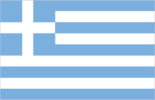
description: The flag consists of nine equal horizontal stripes, alternating between blue and white, with a blue square featuring a white cross located in the upper-left corner.
meaning: The cross represents Greek Orthodoxy, the predominant religion; the meanings of the stripes and colors remain undefined.
Capital
name
Athens
etymology
The etymology of the name is not clearly established; tradition holds that the city was named in honor of Athena, the Greek goddess of wisdom, although the name likely predates Hellenic times.
time difference
UTC+2 (seven hours ahead of Washington, DC, during Standard Time).
daylight saving time
+1hr, commencing on the last Sunday in March and concluding on the last Sunday in October.
geographic coordinates
37 59 N, 23 44 E
Suffrage
17 years of age; universal and compulsory
Citizenship
citizenship by birth
no
citizenship by descent only
at least one parent must be a citizen of Greece
dual citizenship recognized
yes
residency requirement for naturalization
10 years
Constitution
history
Numerous prior adjustments; the most recent one came into effect on 11 June 1975.
amendment process
Legislation must be proposed by a minimum of 50 members of Parliament and approved by a three-fifths majority in two separate votes spaced at least 30 days apart; to pass, it requires an absolute majority from the subsequent elected Parliament; the enactment is finalized through a "special parliamentary resolution"; amendments to articles concerning human rights, freedoms, and government structure are prohibited.
Country name
former
Hellenic State, Kingdom of Greece
etymology
The English name originates from the Roman (Latin) term Graecia, which translates to "Land of the Greeks"; Greeks refer to their nation as Ellas or Ellada, likely stemming from Hellas, the name of the fabled son of Deucalion.
local long form
Elliniki Dimokratia
local short form
Ellas or Ellada
conventional long form
Hellenic Republic
conventional short form
Greece
Independence
3 February 1830 (from the Ottoman Empire)
Legal system
The civil legal framework is founded on Roman law.
Government type
A parliamentary republic.
Judicial branch
highest court(s)
The Supreme Civil and Criminal Court, known as Areios Pagos, comprises 56 judges, including the court presidents; the Council of State, which serves as the supreme administrative court, includes a president, seven vice presidents, 42 privy councilors, 48 associate councilors, and 50 reporting judges, organized into six chambers consisting of either five or seven members; the Court of Audit, responsible for government auditing and enforcement, is made up of a president, five vice presidents, 20 councilors, and 90 associate and reporting judges.
subordinate courts
Courts of Appeal and Courts of First Instance (district courts)
judge selection and term of office
Judges of the Supreme Court are appointed through a presidential decree based on the recommendations of the Supreme Judicial Council (SJC), which consists of the Supreme Court president, other judges, and the Supreme Court's prosecutor; appointments are for life following a two-year probation, while the Council of State president is appointed by the Greek Cabinet for a four-year term; other judicial appointments and tenures are not specified; the president of the Court of Audit is appointed through a presidential decree upon the advice of the SJC, serving a four-year term or until reaching age 67; the tenures of vice presidents, councilors, and judges are unspecified.
Executive branch
cabinet
Cabinet appointed by the president on the recommendation of the prime minister
chief of state
President Konstantinos TASOULAS (since 13 March 2025)
election results
2025: Konstantinos TASOULAS (ND) elected president by Parliament - 160 of 300 votes
2020: Katerina SAKELLAROPOULOU (independent) elected president by Parliament - 261 of 300 votes
head of government
Prime Minister Kyriakos MITSOTAKIS (since 26 June 2023)
most recent election date
12 February 2025
election/appointment process
The president is elected by the Hellenic Parliament for a term of five years (eligible for a second term); the president designates the leader of the majority party or coalition in the Hellenic Parliament as the prime minister.
expected date of next election
2030
National holiday
Independence Day, 25 March (1821)
National color(s)
blue, white
National heritage
total World Heritage Sites
20 (18 cultural, 2 mixed)
selected World Heritage Site locales
Acropolis, Athens (c); Archaeological site of Delphi (c); Meteora (m); Medieval City of Rhodes (c); Archaeological site of Olympia (c); Archaeological site of Mycenae and Tiryns (c); Old Town of Corfu (c); Mount Athos (m); Delos (c); Archaeological Site of Philippi (c); Minoan Palatial Centres (c).
Political parties
Coalition of the Radical Left-Progressive Alliance or SYRIZA-PS
Communist Party of Greece or KKE
Course of Freedom
Democratic Patriotic Movement-Victory or NIKI
Greek Solution
New Democracy or ND
PASOK - Movement for Change or PASOK-KINAL
Spartans
Legislative branch
term in office
4 years
number of seats
300 (all directly elected)
electoral system
proportional representation
legislature name
Hellenic Parliament (Vouli Ton Ellinon)
scope of elections
full renewal
legislative structure
unicameral
most recent election date
6/25/2023
expected date of next election
June 2027
percentage of women in chamber
22.9%
parties elected and seats per party
New Democracy (ND) (158); Coalition of the Radical Left (SYRIZA) (47); Panhellenic Socialist Movement - Movement for Change (PASOK-KINAL) (32); Communist Party (KKE) (21); Others (42).
National anthem(s)
title
"Ymnos eis tin Eleftherian" (Hymn to Freedom)
history
Adopted in 1864; the national anthem is derived from a 158-stanza poem of the same name, inspired by the Greek Revolution of 1821 against the Ottomans (only the first two stanzas are performed); Cyprus also utilizes "Hymn to Freedom" as its national anthem.
lyrics/music
Dionysios SOLOMOS/Nikolaos MANTZAROS
National symbol(s)
Greek cross (white cross on a blue field)
National coat of arms
The coat of arms was created by Greek artist Kostas Grammatopoulos and has been in use since 1975; it features the national colors of blue and white; the white cross signifies the nation's primary faith, Greek Orthodoxy, while the laurel branches represent victory.
Administrative divisions
The country is divided into 13 regions (perifereies, singular - perifereia) and one autonomous monastic state* (aftonomi monastiki politeia); Agion Oros* (Mount Athos), Anatoliki Makedonia kai Thraki (East Macedonia and Thrace), Attiki (Attica), Dytiki Ellada (West Greece), Dytiki Makedonia (West Macedonia), Ionia Nisia (Ionian Islands), Ipeiros (Epirus), Kentriki Makedonia (Central Macedonia), Kriti (Crete), Notio Aigaio (South Aegean), Peloponnisos (Peloponnese), Sterea Ellada (Central Greece), Thessalia (Thessaly), Voreio Aigaio (North Aegean).
Diplomatic representation in the US
FAX
[1] (202) 939-1324
chancery
2217 Massachusetts Avenue NW, Washington, DC 20008
telephone
[1] (202) 939-1300
consulate(s)
Atlanta, Houston
chief of mission
Ambassador Ekaterini NASSIKA (since 27 February 2024)
consulate(s) general
Boston, Chicago, Los Angeles, New York, Tampa (FL), San Francisco.
email address and website
[email protected]
https://www.mfa.gr/usa/en/the-embassy/
Diplomatic representation from the US
FAX
[30] (210) 724-5313
embassy
91 Vasillisis Sophias Avenue, 10160 Athens
telephone
[30] (210) 721-2951
mailing address
7100 Athens Place, Washington DC 20521-7100
chief of mission
Ambassador Kimberly Ann GUILFOYLE (since 4 November 2025)
consulate(s) general
Thessaloniki
email address and website
[email protected]
https://gr.usembassy.gov/
International organization participation
Australia Group, BIS, BSEC, CD, CE, CERN, EAPC, EBRD, ECB, EIB, EMU, ESA, EU, FAO, FATF, IAEA, IBRD, ICAO, ICC (national committees), ICCt, ICRM, IDA, IEA, IFAD, IFC, IFRCS, IGAD (partners), IHO, ILO, IMF, IMO, IMSO, Interpol, IOC, IOM, IPU, ISO, ITSO, ITU, ITUC (NGOs), MIGA, NATO, NEA, NSG, OAS (observer), OECD, OIF, OPCW, OSCE, PCA, Schengen Convention, SELEC, UN, UNCTAD, UNESCO, UNHCR, UNIDO, UNIFIL, UNOOSA, UNWTO, UPU, Wassenaar Arrangement, WCO, WFTU (NGOs), WHO, WIPO, WMO, WTO, ZC
International law organization participation
Recognizes the compulsory jurisdiction of the ICJ with certain reservations; accepts the jurisdiction of the ICCt.
Economy
Budget
revenues
$111.938 billion (2023 est.)
expenditures
$114.497 billion (2023 est.)
Exports
Exports 2022
$106.189 billion (2022 est.)
Exports 2023
$107.218 billion (2023 est.)
Exports 2024
$108.424 billion (2024 est.)
Imports
Imports 2022
$127.82 billion (2022 est.)
Imports 2023
$119.234 billion (2023 est.)
Imports 2024
$122.408 billion (2024 est.)
Industries
tourism, food and tobacco processing, textiles, chemicals, metal products; mining, petroleum
Labor force
4.655 million (2024 est.)
Public debt
Public debt 2023
190.6% of GDP (2023 est.)
Remittances
Remittances 2022
0.3% of GDP (2022 est.)
Remittances 2023
0.2% of GDP (2023 est.)
Remittances 2024
0.2% of GDP (2024 est.)
Exchange rates
Currency
euros (EUR) per US dollar -
Exchange rates 2020
0.876 (2020 est.)
Exchange rates 2021
0.845 (2021 est.)
Exchange rates 2022
0.95 (2022 est.)
Exchange rates 2023
0.925 (2023 est.)
Exchange rates 2024
0.924 (2024 est.)
Economic overview
high-income EU and eurozone economy; exhibiting growth above the euro average, bolstered by private consumption and investments from EU funds; structural reforms aimed at enhancing public finances and banking system resilience; decreasing unemployment yet facing low labor productivity and skill shortages
Unemployment rate
Unemployment rate 2022
12.5% (2022 est.)
Unemployment rate 2023
11.1% (2023 est.)
Unemployment rate 2024
10.2% (2024 est.)
Exports - partners
Italy 12%, Germany 6%, Cyprus 6%, Bulgaria 4%, USA 4% (2023)
Imports - partners
Germany 10%, China 10%, Italy 8%, Iraq 7%, Netherlands 6% (2023)
Real GDP per capita
Real GDP per capita 2022
$35,900 (2022 est.)
Real GDP per capita 2023
$36,900 (2023 est.)
Real GDP per capita 2024
$37,800 (2024 est.)
Real GDP growth rate
Real GDP growth rate 2022
5.7% (2022 est.)
Real GDP growth rate 2023
2.3% (2023 est.)
Real GDP growth rate 2024
2.3% (2024 est.)
Agricultural products
maize, wheat, sheep milk, oranges, tomatoes, milk, peaches/nectarines, grapes, watermelons, barley (2023)
Exports - commodities
refined petroleum, packaged medicine, aluminum, olive oil, tobacco (2023)
Imports - commodities
crude petroleum, refined petroleum, natural gas, cars, packaged medicine (2023)
Current account balance
Current account balance 2022
-$22.623 billion (2022 est.)
Current account balance 2023
-$15.008 billion (2023 est.)
Current account balance 2024
-$16.399 billion (2024 est.)
Taxes and other revenues
26.6% (of GDP) (2023 est.)
GDP (official exchange rate)
$257.145 billion (2024 est.)
GDP - composition, by end use
household consumption
66.9% (2023 est.)
government consumption
19.3% (2023 est.)
investment in inventories
1.5% (2023 est.)
investment in fixed capital
15.2% (2023 est.)
exports of goods and services
43.7% (2023 est.)
imports of goods and services
-48.4% (2023 est.)
Population below poverty line
18.8% (2021 est.)
Average household expenditures
on food
16.4% of household expenditures (2023 est.)
on alcohol and tobacco
4.4% of household expenditures (2023 est.)
Inflation rate (consumer prices)
Inflation rate (consumer prices) 2022
9.6% (2022 est.)
Inflation rate (consumer prices) 2023
3.5% (2023 est.)
Inflation rate (consumer prices) 2024
2.7% (2024 est.)
Industrial production growth rate
6.1% (2024 est.)
Real GDP (purchasing power parity)
Real GDP (purchasing power parity) 2022
$374.753 billion (2022 est.)
Real GDP (purchasing power parity) 2023
$383.493 billion (2023 est.)
Real GDP (purchasing power parity) 2024
$392.205 billion (2024 est.)
Youth unemployment rate (ages 15-24)
male
23.2% (2024 est.)
total
24.7% (2024 est.)
female
26.6% (2024 est.)
Reserves of foreign exchange and gold
Reserves of foreign exchange and gold 2022
$12.061 billion (2022 est.)
Reserves of foreign exchange and gold 2023
$13.608 billion (2023 est.)
Reserves of foreign exchange and gold 2024
$15.222 billion (2024 est.)
GDP - composition, by sector of origin
industry
15.4% (2024 est.)
services
68% (2024 est.)
agriculture
3.3% (2024 est.)
Household income or consumption by percentage share
lowest 10%
2.7% (2022 est.)
highest 10%
25.7% (2022 est.)
Gini Index coefficient - distribution of family income
Gini Index coefficient - distribution of family income 2022
33.4 (2022 est.)
Energy
Coal
exports
5 metric tons (2023 est.)
imports
49,000 metric tons (2023 est.)
production
10.469 million metric tons (2023 est.)
consumption
10.091 million metric tons (2023 est.)
proven reserves
2.876 billion metric tons (2023 est.)
Petroleum
total petroleum production
5,000 bbl/day (2023 est.)
crude oil estimated reserves
10 million barrels (2021 est.)
refined petroleum consumption
308,000 bbl/day (2024 est.)
Electricity
exports
3.24 billion kWh (2023 est.)
imports
8.152 billion kWh (2023 est.)
consumption
46.929 billion kWh (2023 est.)
installed generating capacity
24.169 million kW (2023 est.)
transmission/distribution losses
5.346 billion kWh (2023 est.)
Natural gas
exports
8.362 billion cubic meters (2023 est.)
imports
11.619 billion cubic meters (2023 est.)
production
1.323 million cubic meters (2023 est.)
consumption
3.344 billion cubic meters (2023 est.)
proven reserves
991.09 million cubic meters (2021 est.)
Electricity access
electrification - total population
100% (2022 est.)
Energy consumption per capita
Total energy consumption per capita 2023
92.693 million Btu/person (2023 est.)
Electricity generation sources
wind
23.3% of total installed capacity (2023 est.)
solar
17.5% of total installed capacity (2023 est.)
fossil fuels
48.9% of total installed capacity (2023 est.)
hydroelectricity
9.8% of total installed capacity (2023 est.)
biomass and waste
0.6% of total installed capacity (2023 est.)
Communications
Internet users
percent of population
85% (2023 est.)
Broadcast media
In the realm of broadcast media, the private sector holds a significant majority; there are approximately 150 private television channels, around 10 of which operate on a national scale; there exists 1 state-owned terrestrial television channel that provides national coverage; additionally, there are 3 privately-owned satellite television channels; multi-channel satellite and cable television services are accessible; the number of radio stations exceeds 1,500, all of which are privately owned; the government-operated broadcaster manages 2 national radio stations.
Internet country code
.gr
Telephones - fixed lines
total subscriptions
4.69 million (2024 est.)
subscriptions per 100 inhabitants
47 (2024 est.)
Telephones - mobile cellular
total subscriptions
11.4 million (2024 est.)
subscriptions per 100 inhabitants
114 (2024 est.)
Broadband - fixed subscriptions
total
4.48 million (2023 est.)
subscriptions per 100 inhabitants
44 (2023 est.)
Transportation
Ports
large
1
small
7
medium
7
key ports
Alexandroupoli, Iraklion, Kerkira, Ormos Aliveriou, Piraievs, Soudha, Thessaloniki, Volos
very small
42
total ports
57 (2024)
ports with oil terminals
13
Airports
82 (2025)
Railways
total
2,345 km (2020) 731 km electrified
Heliports
59 (2025)
Merchant marine
total
1,215 (2023)
by type
bulk carriers 132, container vessels 4, general cargo ships 79, oil tankers 299, others 701
Civil aircraft registration country code prefix
SX
Military & Security
Military - note
The Hellenic Armed Forces (HAF) are tasked with safeguarding Greece’s sovereignty, independence, and territorial integrity; they also have a presence in Cyprus through the Hellenic Force in Cyprus (ELDYK), providing assistance and support to the Cypriot National Guard. As a participant in the EU, NATO, and various international organizations, the HAF is engaged in multinational peacekeeping and security operations abroad, focusing particularly on nearby regions such as the Balkans, the Mediterranean and Aegean seas, the Middle East, and North Africa. Key areas of concern for the HAF include regional instability in the Balkans, territorial conflicts with Turkey, and contributing to European security through NATO and the EU.
Greece's affiliation with NATO is crucial for its security framework; it became a member of NATO in 1952 and is strategically located on NATO’s southern flank in the Eastern Mediterranean. Greece hosts multiple NATO facilities, including the Deployable Corps Greece (NDC-GR) headquarters located in Thessaloniki, the Combined Air Operations Center in Larissa, the Multinational Peace Support Operations Training Center in Kilkis, the Multinational Sealift Coordination Center in Athens, as well as the Naval Base, Maritime Interdiction Operational Training Centre, and NATO Missile Firing Installation situated in Souda, Crete (2025).
Military deployments
approximately 1,000 in Cyprus; 120 in Kosovo (NATO); 130 in Lebanon (UNIFIL) (2025).
Military expenditures
Military Expenditures 2021
3.7% of GDP (2021 est.)
Military Expenditures 2022
3.9% of GDP (2022 est.)
Military Expenditures 2023
2.8% of GDP (2023 est.)
Military Expenditures 2024
2.7% of GDP (2024 est.)
Military Expenditures 2025
2.9% of GDP (2025 est.)
Military and security forces
Hellenic Armed Forces (HAF; Ellinikes Enoples Dynamis, EED): Hellenic Army (Ellinikos Stratos, ES; includes the National Guard), Hellenic Navy (Elliniko Polemiko Navtiko, EPN), Hellenic Air Force (Elliniki Polemiki Aeroporia, EPA; includes air defense) (2025).
Military service age and obligation
Voluntary military service begins at 18 years for both men and women; all Greek males aged 19-45 are required to serve in the military; the obligation spans 12 months for all branches (note - however, conscripts may serve for just 9 months instead of 12 if, after completing initial training, they fulfill the remainder of their service in specific eastern border areas, in Cyprus, or in designated military units) (2026).
Military equipment inventories and acquisitions
The military's arsenal comprises a combination of domestically manufactured and imported weaponry from Europe and the United States; in recent years, France, Germany, the UK, and the US have been significant suppliers of military systems. Greece's defense sector is capable of producing a variety of military equipment, including naval ships and related subsystems (2025).
Military and security service personnel strengths
approximately 112,000 active-duty military personnel (2025).
Terrorism
Terrorist group(s)
Islamic State of Iraq and ash-Sham (ISIS); Revolutionary Struggle (RS); Revolutionary People's Liberation Party/Front (DHKP/C)
Transnational Issues
Refugees and internally displaced persons
refugees
144,694 (2024 est.)
stateless persons
3,743 (2024 est.)
Space
Space agency/agencies
Hellenic Space Center (HSC), also known as the Hellenic Space Agency, was founded in 2018 and is anticipated to be active in 2025.
Space program overview
The agency concentrates on the design and management of satellites for communication and remote sensing (RS). It engages in research and development of space-related technologies across diverse fields, such as agriculture, defense, environmental research, RS, and telecommunications. Additionally, it plays a role in contributing to and engaging with the capabilities and programs of the European Space Agency (ESA). The agency also takes part in European Union space initiatives and collaborates directly with both European and U.S. space organizations and the commercial space industry. Furthermore, it has established a commercial space division that focuses on the research, development, and production of various space technologies and capabilities, with projections for 2025.
Key space-program milestones
1994 - entered into its initial cooperation agreement with ESA.
2005 - saw the launch of its first satellite, Hellas-Sat, by the United States for a national telecommunications satellite network; became an ESA member state in 2011.
2017 - marked the release of its first domestically produced communications satellite, UPSat, from the International Space Station.
2019 - commenced involvement in ESA’s quantum communications infrastructure initiative (EuroQCI or "fiber in the sky") as well as the U.S. Gateway Lunar orbital and landing programs.
2021 - initiated an ESA-supported national program aimed at the development, manufacture, launch, and operation of small satellites.
2024 - signed the U.S.-led Artemis Accords pertaining to space and lunar exploration.
2025 - launched the DUTHSat-2, a demonstrator/experimental RS cube satellite, under the ESA-supported national small satellite program.