CapitalOslo
LanguagesBokmal Norwegian , Nynorsk Norwegian , and small minorities of Sami and Finnish speakers.
CurrencyNorwegian kroner
Governmentparliamentary constitutional monarchy
Bamwor Indexes
Norway — Q1 2026
IBEUBamwor Urban Scale Index
19.65%
Rank #87 of 237
View full ranking →
IBCPBamwor Population Concentration Index
33.74%
Rank #103 of 237
View full ranking →
IBDABamwor Settlement Density Index
42.67per 1K km²
Rank #164 of 241
View full ranking →
IBCXBamwor Country Complexity Index
65.74/100
Rank #80 of 234
View full ranking →
IBEEBamwor Economic Stability Index
94.17/100
Rank #15 of 220
View full ranking →
IBFMBamwor Military Strength Index
56.59/100
Rank #46 of 124
View full ranking →
IBDIBamwor Digital Infrastructure Index
94.53/100
Rank #3 of 206
View full ranking →
IBSABamwor Healthcare Index
82.08/100
Rank #17 of 218
View full ranking →
Norway Intelligence Report
Download PDF with 20+ statistics, rankings & proprietary indices
Introduction
Background
The Viking raids into Europe diminished significantly following King Olav TRYGGVASON's conversion to Christianity in 994, with the Norwegian kingdom's conversion progressing over the subsequent decades. In 1397, Norway entered into a union with Denmark that endured for over four hundred years. In 1814, Norwegians opposed the transfer of their nation to Sweden and enacted a new constitution. Sweden subsequently invaded Norway, yet consented to allow Norway to retain its constitution in exchange for accepting a union under a Swedish monarch. The surge of nationalism throughout the 19th century culminated in a referendum in 1905 that granted Norway its independence. Norway maintained a stance of neutrality during World War I and declared its neutrality at the beginning of World War II; however, Nazi Germany occupied the nation for five years (1940-45). In 1949, Norway ended its policy of neutrality and joined NATO. The discovery of oil and gas in nearby waters during the late 1960s significantly enhanced Norway's economic prospects. In referenda conducted in 1972 and 1994, Norway opted not to join the EU. Major domestic concerns include immigration and the integration of ethnic minorities, the preservation of the extensive social safety net in light of an aging population, and the maintenance of economic competitiveness.
Geography
Area
land
304,282 sq km
water
19,520 sq km
total
323,802 sq km
Climate
The coastal climate is temperate, influenced by the North Atlantic Current, while the interior experiences colder temperatures, increased precipitation, and cooler summers; the western coast sees rainfall throughout the year.
Terrain
The landscape is characterized by glaciation, predominantly comprising high plateaus and rugged mountains interspersed with fertile valleys, along with small, scattered plains; the coastline is intricately shaped by fjords, and the northern region features arctic tundra.
Land use
other
64% (2023 est.)
forest
33.3% (2023 est.)
agricultural land
2.7% (2023 est.)
agricultural land: arable land
arable land: 2.2% (2023 est.)
agricultural land: permanent crops
permanent crops: 0% (2023 est.)
agricultural land: permanent pasture
permanent pasture: 0.5% (2023 est.)
Location
Located in Northern Europe, this region borders the North Sea and the North Atlantic Ocean, situated to the west of Sweden.
Coastline
25,148 km
Elevation
lowest point
Norwegian Sea 0 m
highest point
Galdhopiggen 2,469 m
mean elevation
460 m
Irrigated land
337 sq km (2016)
Map references
Europe
Land boundaries
total
2,566 km
border countries
Finland 709 km; Sweden 1,666 km; Russia 191 km
Maritime claims
contiguous zone
10 nm
territorial sea
12 nm
continental shelf
200 nm
exclusive economic zone
200 nm
Natural hazards
The area is prone to rockslides and avalanches.
volcanism: Beerenberg (2,227 m), situated on Jan Mayen Island in the Norwegian Sea, is recognized as the only active volcano in the nation.
Geography - note
Approximately two-thirds of the territory consists of mountainous regions; there are around 50,000 islands along its deeply indented coastline; its strategic location is adjacent to key sea lanes and air routes in the North Atlantic, contributing to one of the most rugged and extensive coastlines globally.
Natural resources
The natural resources include petroleum, natural gas, iron ore, copper, lead, zinc, titanium, pyrites, nickel, fish, timber, and hydropower.
Area - comparative
The area is slightly more than double the size of Georgia and marginally larger than New Mexico.
Geographic coordinates
62 00 N, 10 00 E
Population distribution
The majority of the population resides in the southern regions; significant population centers are located along the North Sea coast in the southwest and the Skaggerak in the southeast, while the northern interior remains largely uninhabited.
People & Society
Languages
Languages
Bokmal Norwegian (official), Nynorsk Norwegian (official), and small minorities of Sami and Finnish speakers.
major-language sample(s)
Verdens Faktabok, den essensielle kilden for grunnleggende informasjon. (Norwegian)
The World Factbook, the indispensable source for basic information.
Religions
Church of Norway (Evangelical Lutheran - official) 67.5%, Muslim 3.1%, Roman Catholic 3.1%, other Christian 3.8%, other 2.6%, unspecified 19.9% (2021 est.)
Sex ratio
at birth
1.05 male(s)/female
0-14 years
1.05 male(s)/female
15-64 years
1.05 male(s)/female
total population
1.02 male(s)/female (2024 est.)
65 years and over
0.9 male(s)/female
Birth rate
10.35 births/1,000 population (2025 est.)
Death rate
8.6 deaths/1,000 population (2025 est.)
Median age
male
40.1 years
total
41 years (2025 est.)
female
41.5 years
Population
male
2,780,972
total
5,509,733 (2024 est.)
female
2,728,761
Nationality
noun
Norwegian(s)
adjective
Norwegian
Tobacco use
male
12.6% (2025 est.)
total
12% (2025 est.)
female
11.3% (2025 est.)
Urbanization
urban population
84% of total population (2023)
rate of urbanization
1.32% annual rate of change (2020-25 est.)
Age structure
0-14 years
16.3% (male 461,979/female 438,243)
15-64 years
64.5% (male 1,820,692/female 1,734,818)
65 years and over
19.1% (2024 est.) (male 498,301/female 555,700)
Ethnic groups
Norwegian 81.5% (including approximately 60,000 Sami), other European 8.9%, other 9.6% (2021 est.)
Child marriage
women married by age 15
0% (2022)
women married by age 18
0% (2022)
Dependency ratios
total dependency ratio
55 (2024 est.)
youth dependency ratio
25.3 (2024 est.)
potential support ratio
3.4 (2024 est.)
elderly dependency ratio
29.6 (2024 est.)
Physician density
4.98 physicians/1,000 population (2023)
Health expenditure
Health expenditure (as % of GDP)
8.1% of GDP (2022)
Health expenditure (as % of national budget)
17.8% of national budget (2022 est.)
Net migration rate
3.98 migrant(s)/1,000 population (2025 est.)
Hospital bed density
3.4 beds/1,000 population (2020 est.)
Total fertility rate
1.58 children born/woman (2025 est.)
Drinking water source
improved: rural
rural: 100% of population (2022 est.)
improved: total
total: 100% of population (2022 est.)
improved: urban
urban: 100% of population (2022 est.)
unimproved: rural
rural: 0% of population (2022 est.)
unimproved: total
total: 0% of population (2022 est.)
unimproved: urban
urban: 0% of population (2022 est.)
Education expenditure
Education expenditure (% GDP)
5.5% of GDP (2022 est.)
Education expenditure (% national budget)
14.5% national budget (2022 est.)
Infant mortality rate
male
2.1 deaths/1,000 live births
total
1.8 deaths/1,000 live births (2025 est.)
female
1.5 deaths/1,000 live births
Population growth rate
0.57% (2025 est.)
Gross reproduction rate
0.77 (2025 est.)
Population distribution
The majority of the population resides in the southern regions; population concentrations are observed along the North Sea coast in the southwest and Skaggerak in the southeast, while the northern interior areas remain sparsely inhabited.
Life expectancy at birth
male
81.3 years
female
84.6 years
total population
82.9 years (2024 est.)
Maternal mortality ratio
1 deaths/100,000 live births (2023 est.)
Sanitation facility access
improved: rural
rural: 100% of population (2022 est.)
improved: total
total: 100% of population (2022 est.)
improved: urban
urban: 100% of population (2022 est.)
unimproved: rural
rural: 0% of population (2022 est.)
unimproved: total
total: 0% of population (2022 est.)
unimproved: urban
urban: 0% of population (2022 est.)
Alcohol consumption per capita
beer
2.63 liters of pure alcohol (2019 est.)
wine
2.23 liters of pure alcohol (2019 est.)
total
6.05 liters of pure alcohol (2019 est.)
spirits
1 liters of pure alcohol (2019 est.)
other alcohols
0.19 liters of pure alcohol (2019 est.)
Major urban areas - population
1.086 million OSLO (capital) (2023)
Obesity - adult prevalence rate
23.1% (2016)
Mother's mean age at first birth
29.8 years (2020 est.)
Currently married women (ages 15-49)
57.4% (2021 est.)
School life expectancy (primary to tertiary education)
male
18 years (2023 est.)
total
19 years (2023 est.)
female
20 years (2023 est.)
Environment
Climate
coastal areas experience a temperate climate influenced by the North Atlantic Current; the interior regions are cooler, featuring higher precipitation and chillier summers; the western coastline receives rain throughout the year
Geoparks
global geoparks and regional networks
Gea Norvegica; Fjord Coast; Magma; Sunnhordland; Trollfjell (2025)
total global geoparks and regional networks
5 (2025)
Land use
other
64% (2023 est.)
forest
33.3% (2023 est.)
agricultural land
2.7% (2023 est.)
agricultural land: arable land
arable land: 2.2% (2023 est.)
agricultural land: permanent crops
permanent crops: 0% (2023 est.)
agricultural land: permanent pasture
permanent pasture: 0.5% (2023 est.)
Urbanization
urban population
84% of total population (2023)
rate of urbanization
1.32% annual rate of change (2020-25 est.)
Methane emissions
other
6.2 kt (2019-2021 est.)
waste
33 kt (2019-2021 est.)
energy
31 kt (2022-2024 est.)
agriculture
99.8 kt (2019-2021 est.)
Waste and recycling
municipal solid waste generated annually
4.15 million tons (2024 est.)
percent of municipal solid waste recycled
35.3% (2022 est.)
Environmental issues
contamination of water sources; acid precipitation harming forests and impacting lakes and fish populations; air quality issues resulting from automobile emissions
Total water withdrawal
municipal
773.41 million cubic meters (2022 est.)
industrial
1.071 billion cubic meters (2022 est.)
agricultural
844.9 million cubic meters (2022 est.)
Carbon dioxide emissions
total emissions
38.535 million metric tonnes of CO2 (2023 est.)
from consumed natural gas
10.029 million metric tonnes of CO2 (2023 est.)
from coal and metallurgical coke
2.929 million metric tonnes of CO2 (2023 est.)
from petroleum and other liquids
25.576 million metric tonnes of CO2 (2023 est.)
Particulate matter emissions
7 micrograms per cubic meter (2019 est.)
Total renewable water resources
393 billion cubic meters (2022 est.)
International environmental agreements
party to
Air Pollution, Air Pollution-Heavy Metals, Air Pollution-Multi-effect Protocol, Air Pollution-Nitrogen Oxides, Air Pollution-Persistent Organic Pollutants, Air Pollution-Sulphur 85, Air Pollution-Sulphur 94, Air Pollution-Volatile Organic Compounds, Antarctic-Environmental Protection, Antarctic-Marine Living Resources, Antarctic Seals, Antarctic Treaty, Biodiversity, Climate Change, Climate Change-Kyoto Protocol, Climate Change-Paris Agreement, Comprehensive Nuclear Test Ban, Desertification, Endangered Species, Environmental Modification, Hazardous Wastes, Law of the Sea, Marine Dumping-London Convention, Marine Dumping-London Protocol, Nuclear Test Ban, Ozone Layer Protection, Ship Pollution, Tropical Timber 2006, Wetlands, Whaling
signed, but not ratified
none of the selected agreements
Government
Flag
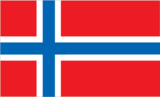
description: a flag featuring red with a blue cross outlined in white, which extends to the flag's edges; the cross is positioned towards the left side, reminiscent of the Dannebrog (Danish flag)
meaning: the colors symbolize Norway's historical political alliances with Denmark (red and white) and Sweden (blue)
Capital
name
Oslo
etymology
the name may originate from the Old Norwegian term os, which translates to "estuary" and highlights the city's placement on a fjord; alternatively, it may derive from As, a Scandinavian deity, combined with Lo, a nearby river
time difference
UTC+1 (6 hours ahead of Washington, DC, during Standard Time)
daylight saving time
+1hr, effective from the last Sunday in March to the last Sunday in October
geographic coordinates
59 55 N, 10 45 E
Suffrage
18 years of age; universal
Citizenship
citizenship by birth
no
citizenship by descent only
at least one parent must be a citizen of Norway
dual citizenship recognized
yes
residency requirement for naturalization
7 years
Constitution
history
drafted in spring 1814, adopted on 16 May 1814, and signed by the Constituent Assembly on 17 May 1814
amendment process
proposals can be put forth by Parliament members or the government within the initial three years of Parliament's four-year term; to pass, a two-thirds majority vote from a two-thirds quorum in the subsequent elected Parliament is required
Country name
etymology
derives from the Old Norse terms norre and vegr, which mean "northern way," and refers to Norway's extensive western coastline
local long form
Kongeriket Norge
local short form
Norge
conventional long form
Kingdom of Norway
conventional short form
Norway
Independence
7 June 1905 (declared dissolution of the union with Sweden); 26 October 1905 (Sweden consented to the annulment of the union); significant earlier dates include: circa 872 (traditional unification of Norwegian kingdoms by HARALD Fairhair); 1397 (Kalmar Union of Denmark, Norway, and Sweden); 1524 (Denmark-Norway); 17 May 1814 (adoption of the Norwegian constitution); 4 November 1814 (confirmation of the Sweden-Norway union)
Legal system
features a mixed legal system comprising civil, common, and customary law; the Supreme Court has the authority to provide advice on legislative matters
Dependent areas
Bouvet Island, Jan Mayen, Svalbard (3)
Government type
parliamentary constitutional monarchy
Judicial branch
highest court(s)
Supreme Court or Hoyesterett (consists of the chief justice and 18 associate justices)
subordinate courts
Courts of Appeal or Lagmennsrett; regional and district courts; Conciliation Boards; ordinary and special courts
judge selection and term of office
justices are appointed by the monarch (King in Council) based on recommendations from the Judicial Appointments Board; they may serve until reaching the mandatory retirement age of 70
Executive branch
cabinet
the Council of State is appointed by the monarch and requires Parliament's endorsement
chief of state
King HARALD V (since 17 January 1991)
head of government
Prime Minister Jonas Gahr STORE (since 14 October 2021)
election/appointment process
the monarchy is hereditary; after legislative elections, the monarch typically appoints the leader of the majority party or coalition as prime minister, subject to Parliament's approval
National holiday
Constitution Day, 17 May (1814)
National color(s)
red, white, blue
National heritage
total World Heritage Sites
8 (7 cultural, 1 natural)
selected World Heritage Site locales
Bryggen (c); Urnes Stave Church (c); Røros Mining Town and the Circumference (c); Rock Art of Alta (c); Vegaøyan – The Vega Archipelago (c); Struve Geodetic Arc (c); West Norwegian Fjords – Geirangerfjord and Nærøyfjord (n); Rjukan-Notodden Industrial Heritage Site (c)
Political parties
Center Party or Sp
Christian Democratic Party or KrF
Conservative Party or H
Green Party or MDG
Labor Party or Ap
Liberal Party or V
Patient Focus or PF
Progress Party or FrP
Red Party or R
Socialist Left Party or SV
Legislative branch
term in office
4 years
number of seats
169 (all directly elected)
electoral system
proportional representation
legislature name
Parliament (Stortinget)
scope of elections
full renewal
legislative structure
unicameral
most recent election date
9/8/2025
expected date of next election
September 2029
percentage of women in chamber
40.2%
parties elected and seats per party
Labour Party (53); Progress Party (47); Conservative Party (24); Socialist Left Party (9); Center Party (9); Red Party (9); Other (18)
National anthem(s)
title
"Kongesangen" (Song of the King)
history
royal anthem; utilizes the melody of "God Save the King," the anthem of the United Kingdom
lyrics/music
Gustav JENSEN
National symbol(s)
lion
Administrative divisions
12 counties (fylker, singular - fylke); Agder, Innlandet, More og Romsdal, Nordland, Oslo, Rogaland, Romsdal, Troms og Finnmark, Trondelag, Vestfold og Telemark, Vestland, Viken (2024)
Diplomatic representation in the US
FAX
[1] (202) 469-3990
chancery
2720 34th Street NW, Washington, DC 20008
telephone
[1] (202) 333-6000
chief of mission
Ambassador Anniken Scharning HUITFELDT (since 18 September 2024)
consulate(s) general
New York, San Francisco
email address and website
[email protected]
https://www.norway.no/en/usa/
Diplomatic representation from the US
FAX
[47] 22-56-27-51
embassy
Morgedalsvegen 36, 0378 Oslo
telephone
[47] 21-30-85-40
mailing address
5460 Oslo Place, Washington DC 20521-5460
chief of mission
Ambassador (vacant); Chargé d'Affaires Eric MEYER (since August 2024)
email address and website
[email protected]
https://no.usembassy.gov/
International organization participation
ADB (nonregional member), AfDB (nonregional member), Arctic Council, Australia Group, BIS, CBSS, CD, CE, CERN, EAPC, EBRD, EFTA, EITI (implementing country), ESA, FAO, FATF, IADB, IAEA, IBRD, ICAO, ICC (national committees), ICCt, ICRM, IDA, IEA, IFAD, IFC, IFRCS, IGAD (partners), IHO, ILO, IMF, IMO, IMSO, Interpol, IOC, IOM, IPU, ISO, ITSO, ITU, ITUC (NGOs), MIGA, NATO, NC, NEA, NIB, NSG, OAS (observer), OECD, OPCW, OSCE, Paris Club, PCA, Schengen Convention, UN, UNCTAD, UNESCO, UNHCR, UNIDO, UNITAR, UNMISS, UNOOSA, UNRWA, UNTSO, UNWTO, UPU, Wassenaar Arrangement, WCO, WHO, WIPO, WMO, WTO, ZC
International law organization participation
accepts compulsory ICJ jurisdiction with reservations; accepts ICCt jurisdiction
Economy
Budget
revenues
$261.945 billion (2023 est.)
expenditures
$178.156 billion (2023 est.)
Exports
Exports 2022
$323.875 billion (2022 est.)
Exports 2023
$230.882 billion (2023 est.)
Exports 2024
$229.205 billion (2024 est.)
Imports
Imports 2022
$160.649 billion (2022 est.)
Imports 2023
$156.11 billion (2023 est.)
Imports 2024
$162.467 billion (2024 est.)
Industries
shipping, aquaculture, food processing, shipbuilding, pulp and paper products, metals, chemicals, timber, mining, textiles, petroleum and gas
Labor force
3.042 million (2024 est.)
Public debt
Public debt 2017
36.5% of GDP (2017 est.)
Remittances
Remittances 2022
0.1% of GDP (2022 est.)
Remittances 2023
0.1% of GDP (2023 est.)
Remittances 2024
0.1% of GDP (2024 est.)
Exchange rates
Currency
Norwegian kroner (NOK) per US dollar -
Exchange rates 2020
9.416 (2020 est.)
Exchange rates 2021
8.59 (2021 est.)
Exchange rates 2022
9.614 (2022 est.)
Exchange rates 2023
10.563 (2023 est.)
Exchange rates 2024
10.746 (2024 est.)
Economic overview
high-income, non-EU economy with trade connections through the European Economic Area (EEA); plays a significant role in European energy security as a leading exporter of oil, gas, and electricity; substantial industries in fishing, forestry, and oil extraction; an oil sovereign fund backs a generous welfare system; low unemployment rate; inflation is moderating yet continues to exceed target levels
Unemployment rate
Unemployment rate 2022
3.3% (2022 est.)
Unemployment rate 2023
3.6% (2023 est.)
Unemployment rate 2024
4% (2024 est.)
Exports - partners
Germany 18%, UK 17%, Sweden 9%, Denmark 7%, Netherlands 6% (2023)
Imports - partners
Sweden 11%, Germany 11%, China 11%, USA 7%, Netherlands 5% (2023)
Real GDP per capita
Real GDP per capita 2022
$91,100 (2022 est.)
Real GDP per capita 2023
$90,100 (2023 est.)
Real GDP per capita 2024
$91,100 (2024 est.)
Real GDP growth rate
Real GDP growth rate 2022
3.2% (2022 est.)
Real GDP growth rate 2023
0.1% (2023 est.)
Real GDP growth rate 2024
2.1% (2024 est.)
Agricultural products
milk, barley, potatoes, oats, wheat, pork, chicken, beef, eggs, carrots/turnips (2023)
Exports - commodities
natural gas, crude petroleum, fish, refined petroleum, aluminum (2023)
Imports - commodities
cars, refined petroleum, ships, nickel, garments (2023)
Current account balance
Current account balance 2022
$170.714 billion (2022 est.)
Current account balance 2023
$84.104 billion (2023 est.)
Current account balance 2024
$82.511 billion (2024 est.)
Taxes and other revenues
27.1% (of GDP) (2023 est.)
GDP (official exchange rate)
$483.727 billion (2024 est.)
GDP - composition, by end use
household consumption
37.7% (2023 est.)
government consumption
22% (2023 est.)
investment in inventories
2.6% (2023 est.)
investment in fixed capital
21.7% (2023 est.)
exports of goods and services
47.9% (2023 est.)
imports of goods and services
-32.5% (2023 est.)
Population below poverty line
12.2% (2021 est.)
Average household expenditures
on food
11.7% of household expenditures (2023 est.)
on alcohol and tobacco
3.9% of household expenditures (2023 est.)
Inflation rate (consumer prices)
Inflation rate (consumer prices) 2022
5.8% (2022 est.)
Inflation rate (consumer prices) 2023
5.5% (2023 est.)
Inflation rate (consumer prices) 2024
3.1% (2024 est.)
Industrial production growth rate
2.4% (2024 est.)
Real GDP (purchasing power parity)
Real GDP (purchasing power parity) 2022
$496.877 billion (2022 est.)
Real GDP (purchasing power parity) 2023
$497.236 billion (2023 est.)
Real GDP (purchasing power parity) 2024
$507.68 billion (2024 est.)
Youth unemployment rate (ages 15-24)
male
12.3% (2024 est.)
total
11.6% (2024 est.)
female
10.8% (2024 est.)
Reserves of foreign exchange and gold
Reserves of foreign exchange and gold 2022
$72.077 billion (2022 est.)
Reserves of foreign exchange and gold 2023
$80.459 billion (2023 est.)
Reserves of foreign exchange and gold 2024
$81.242 billion (2024 est.)
GDP - composition, by sector of origin
industry
37% (2024 est.)
services
51.8% (2024 est.)
agriculture
2% (2024 est.)
Household income or consumption by percentage share
lowest 10%
3.5% (2022 est.)
highest 10%
22% (2022 est.)
Gini Index coefficient - distribution of family income
Gini Index coefficient - distribution of family income 2022
26.9 (2022 est.)
Energy
Coal
exports
60,000 metric tons (2023 est.)
imports
1.042 million metric tons (2023 est.)
production
120,000 metric tons (2023 est.)
consumption
1.096 million metric tons (2023 est.)
proven reserves
2 million metric tons (2023 est.)
Petroleum
total petroleum production
2.02 million bbl/day (2023 est.)
crude oil estimated reserves
8.122 billion barrels (2021 est.)
refined petroleum consumption
229,000 bbl/day (2024 est.)
Electricity
exports
30.978 billion kWh (2023 est.)
imports
13.232 billion kWh (2023 est.)
consumption
127.335 billion kWh (2023 est.)
installed generating capacity
41.1 million kW (2023 est.)
transmission/distribution losses
7.025 billion kWh (2023 est.)
Natural gas
exports
117.597 billion cubic meters (2023 est.)
imports
104.744 million cubic meters (2023 est.)
production
121.637 billion cubic meters (2023 est.)
consumption
5.082 billion cubic meters (2023 est.)
proven reserves
1.544 trillion cubic meters (2021 est.)
Electricity access
electrification - total population
100% (2022 est.)
Energy consumption per capita
Total energy consumption per capita 2023
206.961 million Btu/person (2023 est.)
Electricity generation sources
wind
9.2% of total installed capacity (2023 est.)
solar
0.2% of total installed capacity (2023 est.)
fossil fuels
1.2% of total installed capacity (2023 est.)
hydroelectricity
89.1% of total installed capacity (2023 est.)
biomass and waste
0.2% of total installed capacity (2023 est.)
Communications
Internet users
percent of population
99% (2023 est.)
Broadcast media
The public broadcaster, which is owned by the state, manages three nationwide television channels, three national radio stations, and 16 regional radio outlets. Approximately twelve privately operated television channels transmit on a national scale, alongside an additional 25 that serve local areas. Nearly 75% of households are equipped with multi-channel cable or satellite television services. There are two privately owned radio stations that operate nationally, in addition to around 240 local radio stations. Notably, Norway became the first nation to discontinue FM radio in favor of Digital Audio Broadcasting (DAB) in 2019.
Internet country code
.no
Telephones - fixed lines
total subscriptions
145,000 (2022 est.)
subscriptions per 100 inhabitants
3 (2022 est.)
Telephones - mobile cellular
total subscriptions
6.09 million (2022 est.)
subscriptions per 100 inhabitants
111 (2022 est.)
Broadband - fixed subscriptions
total
2.49 million (2022 est.)
subscriptions per 100 inhabitants
46 (2022 est.)
Transportation
Ports
large
1
small
34
medium
10
key ports
Bergen, Drammen, Hammerfest, Harstad, Horten, Karsto, Mongstad, Oslo, Stavanger, Tromso, Trondheim
very small
90
total ports
141 (2024)
size unknown
6
ports with oil terminals
54
Airports
146 (2025)
Railways
total
3,848 km (2020) 2,482 km electrified
Heliports
113 (2025)
Merchant marine
total
1,720 (2022)
by type
bulk carrier 109, container vessel 1, general cargo ship 274, oil tanker 95, miscellaneous 1,241
Civil aircraft registration country code prefix
LN
Military & Security
Military - note
The Norwegian Armed Forces (Forsvaret) are tasked with safeguarding Norway and its allies, which includes overseeing the airspace, digital, land, and maritime domains of Norway, ensuring the integrity of the nation's borders and sovereignty, contributing to missions organized by NATO and the UN, and offering assistance to civil society, such as support for police operations, search and rescue missions, and maritime counterterrorism activities. The military's responsibilities in defending territorial integrity and sovereignty are rendered complex by Norway's extensive maritime areas, myriad islands, lengthy and intricate fjords, as well as its rugged and mountainous landscape. A significant focus is placed on the northern boundary with Russia.
Norway stands as one of the founding members of NATO, which constitutes a vital element of the nation's defense strategy. The Forsvaret engages in NATO exercises, missions, and operations, which encompass air policing of NATO territories, NATO’s Enhanced Forward Presence mission in the Baltic States and Eastern Europe, and ongoing naval missions, alongside operations in regions outside of NATO, such as the Middle East.
The Forsvaret also maintains close cooperation with the military forces of other Nordic nations through the Nordic Defense Cooperation (NORDEFCO; established in 2009), which includes Denmark, Finland, Iceland, Norway, and Sweden. Norway is a contributor to the UK-led Joint Expeditionary Force, comprising high-readiness military units from ten Baltic and Scandinavian states, aimed at addressing a variety of contingencies in the High North, North Atlantic, and Baltic Sea areas. Furthermore, Norway fosters strong military relations with the United States, which include rotational deployments of US military personnel and an agreement facilitating mutual defense activities and access for US forces to certain Norwegian installations.
The origins of the Forsvaret trace back to the leidangen, a defense force formed along the coastline in the 10th century to protect Norway's shores (2025).
Military deployments
Approximately 100 personnel are deployed in Lithuania as part of NATO; Norway additionally contributes air and naval assets to support various NATO operations (2025).
Military expenditures
Military Expenditures 2021
1.7% of GDP (2021 est.)
Military Expenditures 2022
1.5% of GDP (2022 est.)
Military Expenditures 2023
1.8% of GDP (2023 est.)
Military Expenditures 2024
2.3% of GDP (2024 est.)
Military Expenditures 2025
3.4% of GDP (2025 est.)
Military and security forces
Norwegian Armed Forces (Forsvaret or "the Defense"): Norwegian Army (Haeren), Royal Norwegian Navy (Kongelige Norske Sjoeforsvaret; which includes the Coastal Rangers and Coast Guard (Kystvakt)), Royal Norwegian Air Force (Kongelige Norske Luftforsvaret), Home Guard (Heimevernet, HV) (2025).
Military service age and obligation
The minimum age for voluntary military service is 17 for men and 18 for women; all Norwegian citizens aged 19-44 are subject to selective compulsory military service, with a service obligation of 19 months for those selected (12 months plus 4-5 refresher training periods) (2025).
Military equipment inventories and acquisitions
The military maintains an arsenal of modern armaments, both domestically produced and imported from Western European and US manufacturers. Norway's defense industry collaborates on joint development and production of weapon systems with other European nations (2025).
Military and security service personnel strengths
The military comprises approximately 27,000 active personnel and around 40,000 in the Home Guard (2025).
Transnational Issues
Refugees and internally displaced persons
refugees
129,894 (2024 est.)
stateless persons
1,621 (2024 est.)
Space
Space launch site(s)
Andøya Space Center (located on Andøya Island; recognized as the first operational spaceport in continental Europe) (2025)
Space agency/agencies
the Norwegian Space Agency (NOSA, also known as Norsk Romsenter; founded in 1987) (2025)
Space program overview
collaboratively designs and constructs satellites alongside international partners, which encompass communications, remote sensing (RS), scientific, and navigational/positional satellites; engages in the development and launch of sounding rockets; investigates and manufactures a variety of other technologies associated with space, including satellite/space launch vehicle (SLV) and space station components, telescopes, and robotics; undertakes research in solar and telecommunications fields; is a member of the ESA; takes part in global initiatives such as the International Space Station; provides training on the island of Svalbard for Mars landing endeavors; collaborates with numerous foreign space agencies and industries, including those from Canada, ESA/EU member countries, Japan, Russia, and the US; maintains a vibrant and progressive private-sector space industry that collaborates with both domestic and international space initiatives (2025)
Key space-program milestones
1962 - launched first research rocket
1992 - began operating first communications satellite (THOR-1)
2010 - built first satellite (AISSat-1) to monitor from polar orbit Automatic Identification Signals from ships (launched by India)
2017 - launched two microsatellites (NorSat-1 and -2) to track commercial sea vessels
2025 - signed US-led Artemis Accords for space and lunar exploration