CapitalWellington
LanguagesEnglish, Maori, Samoan, Northern Chinese, Hindi, French, Yue, New Zealand Sign Language, other or not stated
CurrencyNew Zealand dollars
Governmentparliamentary democracy under a constitutional monarchy; part of the Commonwealth realm
Bamwor Indexes
New Zealand — Q1 2026
IBEUBamwor Urban Scale Index
29.65%
Rank #44 of 237
View full ranking →
IBCPBamwor Population Concentration Index
57.06%
Rank #46 of 237
View full ranking →
IBDABamwor Settlement Density Index
11.30per 1K km²
Rank #207 of 241
View full ranking →
IBCXBamwor Country Complexity Index
63.18/100
Rank #98 of 234
View full ranking →
IBEEBamwor Economic Stability Index
91.18/100
Rank #39 of 220
View full ranking →
IBFMBamwor Military Strength Index
47.14/100
Rank #81 of 124
View full ranking →
IBDIBamwor Digital Infrastructure Index
86.52/100
Rank #30 of 206
View full ranking →
IBSABamwor Healthcare Index
81.27/100
Rank #27 of 218
View full ranking →
New Zealand Intelligence Report
Download PDF with 20+ statistics, rankings & proprietary indices
Introduction
Background
Between the late 1200s and mid-1300s, Polynesians established themselves in New Zealand, referring to the land as Aotearoa. According to legend, Aotearoa is named after the canoe that Kupe, the first Polynesian to arrive in New Zealand, utilized for his voyage to the islands; today, Aotearoa is widely recognized as the local Maori designation for the nation. By the 1500s, as large game became extinct, competition for territory and resources incited sporadic conflicts among various Maori tribes. The first European to encounter the islands was Dutch explorer Abel TASMAN in 1642, although he departed after interacting with the local Maori. British sea captain James COOK reached the islands in 1769, paving the way for whalers, sealers, and traders to follow. The UK made a nominal claim over New Zealand, including it as part of New South Wales in Australia. Increasing concerns about lawlessness prompted the UK to appoint its inaugural British Resident in New Zealand in 1832, a role that held limited legal authority. In 1835, certain Maori tribes from the North Island declared their independence. Alarmed by the potential for a French settlement and takeover, most Maori chiefs signed the Treaty of Waitangi with the British in 1840. The land tenure issues resulting from the treaty continue to be actively negotiated in New Zealand.
The UK officially designated New Zealand as a separate colony in 1841 and granted limited self-governance in 1852. Divergent traditions of authority and land use led to a series of conflicts between Europeans and various Maori tribes from the 1840s to the 1870s, which, alongside diseases, resulted in a significant reduction of the Maori population by half. In the 1890s, New Zealand initially showed interest in engaging in independence discussions with Australia but ultimately chose to change its status to an independent dominion in 1907. During both World Wars, New Zealand contributed over 100,000 troops, many of whom served in the Australia and New Zealand Army Corps (ANZAC). New Zealand confirmed its independence in 1947 and entered into the Australia, New Zealand, and US (ANZUS) Treaty in 1951.
Starting in 1984, New Zealand initiated nuclear-free policies, leading to a dispute with the US regarding naval ship visits, which resulted in the US suspending its defense commitments to New Zealand in 1986. However, since the 2010s, bilateral relations and military connections have been revitalized through new security agreements. A significant challenge that has arisen for Auckland in the past decade is managing concerns regarding China's increasing influence in the Pacific while also recognizing its role as New Zealand's largest export market. New Zealand maintains strong ties with Australia, largely due to their shared origins as British colonies and their collective military history.
Geography
Area
land
264,537 sq km
water
4,301 sq km
total
268,838 sq km
Climate
characterized by a temperate climate with distinct regional variations
Terrain
largely mountainous featuring extensive coastal plains
Land use
other
24.5% (2023 est.)
forest
38.6% (2023 est.)
agricultural land
36.9% (2023 est.)
agricultural land: arable land
arable land: 2% (2023 est.)
agricultural land: permanent crops
permanent crops: 0.3% (2023 est.)
agricultural land: permanent pasture
permanent pasture: 34.6% (2023 est.)
Location
Oceania, situated in the South Pacific Ocean, to the southeast of Australia
Coastline
15,134 km
Elevation
lowest point
Pacific Ocean 0 m
highest point
Aoraki/Mount Cook stands at 3,724 m; it was previously measured at 3,764 m until 14 December 1991, when an avalanche of rock and ice caused a loss of approximately 10 m; subsequent erosion of the ice cap has reduced the height by an additional 30 m since that time
mean elevation
388 m
Irrigated land
7,000 sq km (2014)
Map references
Oceania
Land boundaries
total
0 km
Maritime claims
contiguous zone
24 nm
territorial sea
12 nm
continental shelf
200 nm or to the edge of the continental margin
exclusive economic zone
200 nm
Natural hazards
earthquakes frequently occur, although they are generally not severe; volcanic activity
volcanism: notable volcanic activity is present on the North Island; Ruapehu (2,797 m) has experienced significant eruptions over the last century; Taranaki poses risks for hazardous avalanches and lahars; other historically active volcanoes include Okataina, Raoul Island, Tongariro, and White Island; refer to note 2 under "Geography - note"
Geography - note
note 1: comprises two primary islands along with several smaller ones; the South Island, which is the larger of the two, ranks as the 12th-largest island globally and is bisected by the Southern Alps; the North Island, the 14th-largest island worldwide, is less mountainous but is distinguished by volcanic activity
note 2: New Zealand is located along the Ring of Fire, a region bordering the Pacific Ocean that hosts approximately 75% of the planet's volcanoes and around 90% of its earthquakes
note 3: nearly 90% of the populace resides in urban areas, with over three-quarters living on the North Island; Wellington holds the distinction of being the southernmost national capital worldwide
Natural resources
natural gas, iron ore, sand, coal, timber, hydropower, gold, limestone
Area - comparative
almost double the area of North Carolina; comparable in size to Colorado
Geographic coordinates
41 00 S, 174 00 E
Population distribution
more than three-quarters of New Zealand's population, including the Maori, inhabit the North Island, predominantly in urban settings
Major lakes (area sq km)
fresh water lake(s)
Lake Taupo - 610 sq km
People & Society
Languages
English (de facto official) 95.4%, Maori (de jure official) 4%, Samoan 2.2%, Northern Chinese 2%, Hindi 1.5%, French 1.2%, Yue 1.1%, New Zealand Sign Language (de jure official) 0.5%, other or not stated 17.2% (2018 est.)
Religions
Christian 37.3% (Catholic 10.1%, Anglican 6.8%, Presbyterian and Congregational 5.2%, Pentecostal 1.8%, Methodist 1.6%, Church of Jesus Christ 1.2%, other 10.7%), Hindu 2.7%, Maori 1.3%, Muslim, 1.3%, Buddhist 1.1%, other religion 1.6% (includes Judaism, Spiritualism and New Age religions, Baha'i, Asian religions other than Buddhism), no religion 48.6%, objected to answering 6.7% (2018 est.)
Sex ratio
at birth
1.05 male(s)/female
0-14 years
1.06 male(s)/female
15-64 years
1.02 male(s)/female
total population
1 male(s)/female (2024 est.)
65 years and over
0.88 male(s)/female
Birth rate
12.4 births/1,000 population (2025 est.)
Death rate
6.93 deaths/1,000 population (2025 est.)
Median age
male
37.2 years
total
38.1 years (2025 est.)
female
38.6 years
Population
male
2,584,607
total
5,161,211 (2024 est.)
female
2,576,604
Nationality
noun
New Zealander(s)
adjective
New Zealand
Tobacco use
male
11.2% (2025 est.)
total
10% (2025 est.)
female
8.9% (2025 est.)
Urbanization
urban population
87% of total population (2023)
rate of urbanization
0.92% annual rate of change (2020-25 est.)
Age structure
0-14 years
19% (male 503,120/female 475,490)
15-64 years
64.2% (male 1,674,407/female 1,638,276)
65 years and over
16.9% (2024 est.) (male 407,080/female 462,838)
Ethnic groups
European 64.1%, Maori 16.5%, Chinese 4.9%, Indian 4.7%, Samoan 3.9%, Tongan 1.8%, Cook Islands Maori 1.7%, English 1.5%, Filipino 1.5%, New Zealander 1%, other 13.7% (2018 est.)
Dependency ratios
total dependency ratio
55.8 (2024 est.)
youth dependency ratio
29.5 (2024 est.)
potential support ratio
3.8 (2024 est.)
elderly dependency ratio
26.3 (2024 est.)
Physician density
3.61 physicians/1,000 population (2022)
Health expenditure
Health expenditure (as % of GDP)
10% of GDP (2021)
Health expenditure (as % of national budget)
19.8% of national budget (2022 est.)
Net migration rate
2.83 migrant(s)/1,000 population (2025 est.)
Hospital bed density
2.7 beds/1,000 population (2021 est.)
Total fertility rate
1.84 children born/woman (2025 est.)
Drinking water source
improved: rural
rural: 100% of population (2022 est.)
improved: total
total: 100% of population (2022 est.)
improved: urban
urban: 100% of population (2022 est.)
unimproved: rural
rural: 0% of population (2022 est.)
unimproved: total
total: 0% of population (2022 est.)
unimproved: urban
urban: 0% of population (2022 est.)
Education expenditure
Education expenditure (% GDP)
5.3% of GDP (2023 est.)
Education expenditure (% national budget)
12.7% national budget (2023 est.)
Infant mortality rate
male
3.5 deaths/1,000 live births
total
3.3 deaths/1,000 live births (2025 est.)
female
3.1 deaths/1,000 live births
Population growth rate
0.83% (2025 est.)
Gross reproduction rate
0.9 (2025 est.)
Population distribution
more than three-quarters of the population of New Zealand, including the Maori, are situated on the North Island, predominantly in urban regions
Life expectancy at birth
male
81.2 years
female
84.8 years
total population
82.9 years (2024 est.)
Maternal mortality ratio
7 deaths/100,000 live births (2023 est.)
Sanitation facility access
improved: rural
rural: 100% of population (2022 est.)
improved: total
total: 100% of population (2022 est.)
improved: urban
urban: 100% of population (2022 est.)
unimproved: rural
rural: 0% of population (2022 est.)
unimproved: total
total: 0% of population (2022 est.)
unimproved: urban
urban: 0% of population (2022 est.)
Alcohol consumption per capita
beer
3.41 liters of pure alcohol (2019 est.)
wine
2.88 liters of pure alcohol (2019 est.)
total
9.17 liters of pure alcohol (2019 est.)
spirits
1.62 liters of pure alcohol (2019 est.)
other alcohols
1.26 liters of pure alcohol (2019 est.)
Major urban areas - population
1.673 million Auckland, 422,000 WELLINGTON (capital) (2023)
Obesity - adult prevalence rate
30.8% (2016)
Mother's mean age at first birth
27.8 years
Currently married women (ages 15-49)
57.7% (2018 est.)
School life expectancy (primary to tertiary education)
male
19 years (2023 est.)
total
19 years (2023 est.)
female
20 years (2023 est.)
Environment
Climate
temperate exhibiting pronounced regional variations
Land use
other
24.5% (2023 est.)
forest
38.6% (2023 est.)
agricultural land
36.9% (2023 est.)
agricultural land: arable land
arable land: 2% (2023 est.)
agricultural land: permanent crops
permanent crops: 0.3% (2023 est.)
agricultural land: permanent pasture
permanent pasture: 34.6% (2023 est.)
Urbanization
urban population
87% of total population (2023)
rate of urbanization
0.92% annual rate of change (2020-25 est.)
Methane emissions
other
6.2 kt (2019-2021 est.)
waste
158.8 kt (2019-2021 est.)
energy
95.4 kt (2022-2024 est.)
agriculture
1,105.6 kt (2019-2021 est.)
Waste and recycling
municipal solid waste generated annually
3.405 million tons (2024 est.)
percent of municipal solid waste recycled
22% (2022 est.)
Environmental issues
water quality and accessibility; swift urban expansion; deforestation; soil erosion and deterioration; indigenous plants and animals significantly affected by non-native species
Total water withdrawal
municipal
547 million cubic meters (2022)
industrial
1.184 billion cubic meters (2022 est.)
agricultural
3.207 billion cubic meters (2022 est.)
Carbon dioxide emissions
total emissions
33.506 million metric tonnes of CO2 (2023 est.)
from consumed natural gas
7.43 million metric tonnes of CO2 (2023 est.)
from coal and metallurgical coke
4.24 million metric tonnes of CO2 (2023 est.)
from petroleum and other liquids
21.836 million metric tonnes of CO2 (2023 est.)
Particulate matter emissions
8.7 micrograms per cubic meter (2019 est.)
Total renewable water resources
327 billion cubic meters (2022)
International environmental agreements
party to
Antarctic-Environmental Protection, Antarctic-Marine Living Resources, Antarctic Treaty, Biodiversity, Climate Change, Climate Change-Kyoto Protocol, Climate Change-Paris Agreement, Comprehensive Nuclear Test Ban, Desertification, Endangered Species, Environmental Modification, Hazardous Wastes, Law of the Sea, Marine Dumping-London Convention, Marine Dumping-London Protocol, Nuclear Test Ban, Ozone Layer Protection, Ship Pollution, Tropical Timber 2006, Wetlands, Whaling
signed, but not ratified
Antarctic Seals, Marine Life Conservation
Government
Flag
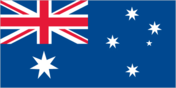
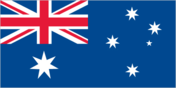
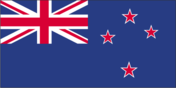
description: blue background featuring the UK flag in the upper-left corner, adorned with four five-pointed red stars outlined in white placed in the right section of the flag
meaning: the stars symbolize the Southern Cross constellation
Capital
name
Wellington
etymology
the name was derived in 1840 from Arthur WELLESLEY, the inaugural Duke of Wellington, renowned for his triumph at Waterloo in 1815 and as a supporter of the New Zealand Company that established settlements in North Island
time zone note
New Zealand operates under two time zones: New Zealand standard time (UTC+12) and Chatham Islands time (which is 45 minutes ahead of New Zealand standard time; UTC+12:45)
time difference
UTC+12 (17 hours ahead of Washington, DC, during Standard Time)
daylight saving time
+1 hour, commencing on the last Sunday of September and concluding on the first Sunday of April
geographic coordinates
41 18 S, 174 47 E
Suffrage
18 years of age; universal
Citizenship
citizenship by birth
no
citizenship by descent only
at least one parent must be a citizen of New Zealand
dual citizenship recognized
yes
residency requirement for naturalization
3 years
Constitution
history
New Zealand lacks a singular constitutional document; the Constitution Act 1986, which came into effect on 1 January 1987, represents only a portion of the uncodified constitution. Other components include a variety of statutes or "acts of Parliament," the Treaty of Waitangi, Orders in Council, letters patent, judicial decisions, and unwritten conventions
amendment process
introduced as a bill by Parliament or through a referendum initiated by either the government or the populace; the enactment of a bill as an act typically necessitates two distinct readings with interspersed committee reviews for amendments and adjustments, followed by a third reading endorsed by the House of Representatives or by a majority in a referendum, and the governor-general's assent; modifications to reserved constitutional provisions concerning the duration of Parliament, electoral districts, and voting limitations require the consent of 75% of the House membership or a majority in a referendum
Country name
former
Nieuw Zeeland
etymology
the title is an anglicized variant of the Dutch term Nieuw Zeeland, meaning "New Sea Land," which was first recorded in 1643 in tribute to the Dutch province of Zeeland
abbreviation
NZ
conventional long form
none
conventional short form
New Zealand
Independence
26 September 1907 (from the UK)
Legal system
a common law framework, modeled on English law, with specific legislation and land courts tailored for the Maori
Dependent areas
Tokelau (1)
Government type
parliamentary democracy under a constitutional monarchy; part of the Commonwealth realm
Judicial branch
highest court(s)
Supreme Court (comprising 5 justices, including the chief justice)
subordinate courts
Court of Appeal; High Court; various tribunals and authorities; district courts; specialized courts addressing employment, environmental, family, Maori lands, youth, and military issues; tribunals
judge selection and term of office
justices are appointed by the governor-general based on the attorney-general's recommendations; they serve until mandatory retirement at the age of 70
Executive branch
cabinet
Executive Council appointed by the governor-general on the recommendation of the prime minister
chief of state
King CHARLES III (since 8 September 2022); represented by Governor-General Dame Cindy KIRO (since 21 October 2021)
head of government
Prime Minister Christopher LUXON (since 27 November 2023)
election/appointment process
the monarchy follows a hereditary system; the governor-general is appointed by the monarch upon the prime minister's counsel; post legislative elections, the governor-general designates the leader of the majority party or coalition as prime minister; the deputy prime minister is also appointed by the governor-general
National holiday
Waitangi Day, 6 February (1840); Anzac Day, 25 April (1915)
National color(s)
black, white, red (ochre)
National heritage
total World Heritage Sites
3 (2 natural, 1 mixed)
selected World Heritage Site locales
Te Wahipounamu – South West New Zealand (n); Tongariro National Park (m); New Zealand Sub-Antarctic Islands (n)
Political parties
ACT New Zealand
Green Party
New Zealand First Party or NZ First
Labor Party
National Party
Te Pāti Māori
Legislative branch
term in office
3 years
number of seats
120 (all directly elected)
electoral system
mixed system
legislature name
House of Representatives
scope of elections
full renewal
legislative structure
unicameral
most recent election date
10/14/2023
expected date of next election
September 2026
percentage of women in chamber
45.1%
parties elected and seats per party
National Party (49); Labour Party (34); Green Party (14); ACT New Zealand (11); New Zealand First (8); Te Pāti Māori (4); Others (2)
National anthem(s)
title
"God Save the King"
history
royal anthem and one of two official national anthems; typically performed only in the presence of a royal family member or representative, or when showing allegiance to the crown
lyrics/music
unknown
National symbol(s)
Southern Cross constellation (four five-pointed stars), kiwi (bird), silver fern
National coat of arms
the shield's first quarter depicts four stars symbolizing the Southern Cross constellation and three ships representing New Zealand's maritime commerce; the second quarter features a fleece denoting the sheep farming sector; the third quarter displays a wheat sheaf representing agriculture; the fourth quarter shows crossed hammers signifying mining; a Māori chieftain wields a taiaha (a Māori war weapon) while a European woman holds the New Zealand flag; St. Edward's crown above the shield signifies the British monarch
Administrative divisions
16 regions and 1 territory*; Auckland, Bay of Plenty, Canterbury, Chatham Islands*, Gisborne, Hawke's Bay, Manawatu-Wanganui, Marlborough, Nelson, Northland, Otago, Southland, Taranaki, Tasman, Waikato, Wellington, West Coast
Diplomatic representation in the US
FAX
[1] (202) 667-5277
chancery
37 Observatory Circle NW, Washington, DC 20008
telephone
[1] (202) 328-4800
chief of mission
Ambassador Rosemary BANKS (since 17 June 2024)
consulate(s) general
Honolulu, Los Angeles, New York
email address and website
[email protected]
https://www.mfat.govt.nz/en/countries-and-regions/americas/united-states-of-america/
Diplomatic representation from the US
FAX
[64] (4) 499-0490
embassy
29 Fitzherbert Terrace, Thorndon, Wellington 6011
telephone
[64] (4) 462-6000
mailing address
4370 Auckland Place, Washington DC 20521-4370
chief of mission
Ambassador (vacant); Chargé d’Affaires David GEHRENBECK (since January 2025); note - also accredited to Samoa
consulate(s) general
Auckland
email address and website
[email protected]
https://nz.usembassy.gov/
International organization participation
ADB, ANZUS, APEC, ARF, ASEAN (dialogue partner), Australia Group, BIS, C, CD, CP, EAS, EBRD, FAO, FATF, IAEA, IBRD, ICAO, ICC (national committees), ICCt, ICRM, IDA, IEA, IFAD, IFC, IFRCS, IHO, ILO, IMF, IMO, IMSO, Interpol, IOC, IOM, IPU, ISO, ITSO, ITU, ITUC (NGOs), MIGA, NSG, OECD, OPCW, Pacific Alliance (observer), Paris Club (associate), PCA, PIF, SICA (observer), Sparteca, SPC, UN, UNCTAD, UNESCO, UNHCR, UNIDO, UNMISS, UNOOSA, UNTSO, UPU, Wassenaar Arrangement, WCO, WFTU (NGOs), WHO, WIPO, WMO, WTO
International law organization participation
accepts compulsory ICJ jurisdiction with reservations; accepts ICCt jurisdiction
Economy
Budget
revenues
$83.167 billion (2022 est.)
expenditures
$91.782 billion (2022 est.)
Exports
Exports 2022
$57.485 billion (2022 est.)
Exports 2023
$59.029 billion (2023 est.)
Exports 2024
$61.799 billion (2024 est.)
Imports
Imports 2022
$71.35 billion (2022 est.)
Imports 2023
$68.412 billion (2023 est.)
Imports 2024
$67.998 billion (2024 est.)
Industries
agriculture, forestry, fishing, timber and wood products, manufacturing, mining, construction, financial services, real estate services, tourism
Labor force
3.124 million (2024 est.)
Public debt
Public debt 2022
54% of GDP (2022 est.)
Remittances
Remittances 2021
0.3% of GDP (2021 est.)
Remittances 2022
0.2% of GDP (2022 est.)
Remittances 2023
0.3% of GDP (2023 est.)
Exchange rates
Currency
New Zealand dollars (NZD) per US dollar -
Exchange rates 2020
1.542 (2020 est.)
Exchange rates 2021
1.414 (2021 est.)
Exchange rates 2022
1.577 (2022 est.)
Exchange rates 2023
1.628 (2023 est.)
Exchange rates 2024
1.652 (2024 est.)
Economic overview
high-income, globally integrated Pacific island economy; robust agriculture, manufacturing, and tourism sectors; dependence on the Chinese market for exports; recovering from a significant post-pandemic recession; facing challenges such as fiscal deficits, below-average productivity, high cost of living, and a decline in net migration
Unemployment rate
Unemployment rate 2022
3.3% (2022 est.)
Unemployment rate 2023
3.8% (2023 est.)
Unemployment rate 2024
4.9% (2024 est.)
Exports - partners
China 28%, USA 12%, Australia 12%, Japan 6%, S. Korea 3% (2023)
Imports - partners
China 20%, Australia 11%, USA 9%, S. Korea 7%, Japan 7% (2023)
Real GDP per capita
Real GDP per capita 2022
$49,600 (2022 est.)
Real GDP per capita 2023
$49,100 (2023 est.)
Real GDP per capita 2024
$48,200 (2024 est.)
Real GDP growth rate
Real GDP growth rate 2022
3.5% (2022 est.)
Real GDP growth rate 2023
1.4% (2023 est.)
Real GDP growth rate 2024
-0.1% (2024 est.)
Agricultural products
milk, beef, kiwifruit, apples, grapes, lamb/mutton, potatoes, wheat, barley, chicken (2023)
Exports - commodities
milk, wood, beef, butter, sheep and goat meat (2023)
Imports - commodities
refined petroleum, cars, gas turbines, broadcasting equipment, trucks (2023)
Current account balance
Current account balance 2022
-$21.627 billion (2022 est.)
Current account balance 2023
-$17.065 billion (2023 est.)
Current account balance 2024
-$15.978 billion (2024 est.)
Taxes and other revenues
29.6% (of GDP) (2022 est.)
GDP (official exchange rate)
$260.236 billion (2024 est.)
GDP - composition, by end use
household consumption
57.5% (2022 est.)
government consumption
20.9% (2022 est.)
investment in inventories
0.9% (2022 est.)
investment in fixed capital
25.4% (2022 est.)
exports of goods and services
24% (2022 est.)
imports of goods and services
-29.4% (2022 est.)
Average household expenditures
on food
12.8% of household expenditures (2023 est.)
on alcohol and tobacco
4.7% of household expenditures (2023 est.)
Inflation rate (consumer prices)
Inflation rate (consumer prices) 2022
7.2% (2022 est.)
Inflation rate (consumer prices) 2023
5.7% (2023 est.)
Inflation rate (consumer prices) 2024
2.9% (2024 est.)
Industrial production growth rate
-1% (2023 est.)
Real GDP (purchasing power parity)
Real GDP (purchasing power parity) 2022
$253.903 billion (2022 est.)
Real GDP (purchasing power parity) 2023
$257.443 billion (2023 est.)
Real GDP (purchasing power parity) 2024
$257.117 billion (2024 est.)
Youth unemployment rate (ages 15-24)
male
14.6% (2024 est.)
total
14.3% (2024 est.)
female
14% (2024 est.)
Reserves of foreign exchange and gold
Reserves of foreign exchange and gold 2022
$14.4 billion (2022 est.)
Reserves of foreign exchange and gold 2023
$15.487 billion (2023 est.)
Reserves of foreign exchange and gold 2024
$22.065 billion (2024 est.)
GDP - composition, by sector of origin
industry
19.6% (2022 est.)
services
67.4% (2022 est.)
agriculture
4.6% (2022 est.)
Energy
Coal
exports
906,000 metric tons (2023 est.)
imports
283,000 metric tons (2023 est.)
production
3.011 million metric tons (2023 est.)
consumption
2.696 million metric tons (2023 est.)
proven reserves
6.75 billion metric tons (2023 est.)
Petroleum
total petroleum production
12,000 bbl/day (2023 est.)
crude oil estimated reserves
40.993 million barrels (2021 est.)
refined petroleum consumption
154,000 bbl/day (2024 est.)
Electricity
consumption
40.794 billion kWh (2023 est.)
installed generating capacity
10.643 million kW (2023 est.)
transmission/distribution losses
3.058 billion kWh (2023 est.)
Natural gas
production
3.97 billion cubic meters (2023 est.)
consumption
3.891 billion cubic meters (2023 est.)
proven reserves
31.149 billion cubic meters (2021 est.)
Electricity access
electrification - total population
100% (2022 est.)
Energy consumption per capita
Total energy consumption per capita 2023
121.647 million Btu/person (2023 est.)
Electricity generation sources
wind
8% of total installed capacity (2023 est.)
solar
0.8% of total installed capacity (2023 est.)
geothermal
17.6% of total installed capacity (2023 est.)
fossil fuels
12.4% of total installed capacity (2023 est.)
hydroelectricity
59.7% of total installed capacity (2023 est.)
biomass and waste
1.5% of total installed capacity (2023 est.)
Communications
Internet users
percent of population
96% (2023 est.)
Broadcast media
Television New Zealand, which is state-owned, manages several television networks; Radio New Zealand, also state-owned, runs three radio networks along with a shortwave radio service aimed at the South Pacific region; there exists a limited number of national commercial television and radio stations, as well as numerous regional commercial TV and radio outlets; in addition, cable and satellite television systems are accessible (2019)
Internet country code
.nz
Telephones - fixed lines
total subscriptions
660,000 (2023 est.)
subscriptions per 100 inhabitants
13 (2023 est.)
Telephones - mobile cellular
total subscriptions
6.56 million (2023 est.)
subscriptions per 100 inhabitants
115 (2022 est.)
Broadband - fixed subscriptions
total
1.93 million (2023 est.)
subscriptions per 100 inhabitants
37 (2023 est.)
Transportation
Ports
large
2
small
10
medium
1
key ports
Auckland, Bluff Harbor, Gisborne, Manukau Harbor, Napier, Nelson, New Plymouth, Otago Harbor, Picton, Tauranga, Timaru, Wellington, Whangarei
very small
9
total ports
22 (2024)
ports with oil terminals
14
Airports
206 (2025)
Railways
total
4,128 km (2018)
narrow gauge
4,128 km (2018) 1.067-m gauge (506 km electrified)
Heliports
62 (2025)
Merchant marine
total
117 (2023)
by type
2 container ships, 12 general cargo vessels, 3 oil tankers, and 100 other types
Civil aircraft registration country code prefix
ZK
Military & Security
Military - note
The NZDF is tasked with safeguarding New Zealand’s sovereignty, advancing its interests, ensuring peace and security, and participating in peacekeeping, humanitarian, and various international missions.
New Zealand is a participant in the Five Powers Defense Arrangements (FPDA), a set of mutual defense agreements established in 1971 involving Australia, Malaysia, New Zealand, Singapore, and the UK. The FPDA obligates the member nations to consult each other in the event of an armed attack or threat against any member and to collectively determine appropriate responses, whether jointly or independently; however, there is no explicit requirement for military intervention.
Since 1951, New Zealand has been a signatory to the Australia, New Zealand, and US Security (ANZUS) Treaty; however, in 1986, the US suspended its security commitments to New Zealand following Auckland's enactment of a policy prohibiting nuclear-armed and nuclear-powered vessels from accessing its ports. In 2010, the US and New Zealand signed the Wellington Declaration, which reaffirmed their strong relationship, and in 2012, they signed the Washington Declaration, establishing a framework for future defense dialogues and security cooperation. In 2016, a US naval vessel made the first bilateral warship visit to New Zealand since the 1980s. New Zealand holds Major Non-NATO Ally (MNNA) status with the US, a designation under US law that offers certain benefits in defense trade and security collaboration (2025).
Military deployments
A limited number of New Zealand military personnel are engaged in diverse international missions across Africa, Antarctica, the Asia-Pacific region, and the Middle East (2025).
Military expenditures
Military Expenditures 2020
1.5% of GDP (2020 est.)
Military Expenditures 2021
1.3% of GDP (2021 est.)
Military Expenditures 2022
1.3% of GDP (2022 est.)
Military Expenditures 2023
1.3% of GDP (2023 est.)
Military Expenditures 2024
1.2% of GDP (2024 est.)
Military and security forces
New Zealand Defense Force (NZDF): New Zealand Army, Royal New Zealand Navy, Royal New Zealand Air Force (2025).
Military service age and obligation
Individuals may voluntarily enlist in the military at the age of 17, but soldiers cannot be deployed until they reach 18; there is no conscription (2025).
Military equipment inventories and acquisitions
The inventory of the NZDF consists of weapons and equipment sourced both domestically and from Western suppliers, including nations such as Australia, Canada, the UK, and the US (2025).
Military and security service personnel strengths
There are around 8,800 active (Regular Force) members of the New Zealand Defense Forces, comprising 4,300 from the Army, 2,100 from the Navy, and 2,400 from the Air Force (2025).
Terrorism
Terrorist group(s)
Islamic State of Iraq and ash-Sham (ISIS)
Transnational Issues
Refugees and internally displaced persons
IDPs
26 (2024 est.)
refugees
5,622 (2024 est.)
stateless persons
29 (2024 est.)
Space
Space launch site(s)
Mahia Peninsula Launch Complex (Hawke's Bay) (2025)
Space agency/agencies
The New Zealand Space Agency (NZSA), established in 2016 under the auspices of the Ministry of Business, Innovation, and Employment, is set for developments in 2025.
Space program overview
The agency's national space initiative is primarily centered on fostering a commercial space industry, with a significant emphasis on satellite technologies and satellite launch vehicles (SLVs). It is involved in the manufacturing and launching of commercial satellites and SLVs, while also engaging in research and development of various space-related technologies, such as propulsion systems. Moreover, the agency collaborates with international programs and partners with various foreign space agencies and industries, including those from Australia, Canada, the European Union, the European Space Agency, individual nations in Europe, South Africa, and the United States. This collaboration contributes to the agency's expanding commercial space sector, anticipated to flourish by 2025.
Key space-program milestones
2009 - Successfully launched Atea-1, a two-stage suborbital sounding rocket.
2018 - Achieved the placement of a satellite into orbit using a rocket constructed by a New Zealand-US commercial partnership, launched from a privately owned domestic site.
2019 - Initiated operations of the Kiwi Space Radar, a system intended for tracking debris in low Earth orbit.
2021 - Endorsed the US-led Artemis Accords, which focus on space and lunar exploration.
2024 - Delivered the first domestically manufactured science payload to the International Space Station via a US rocket.