CapitalYaounde
Languages24 major African language groups, English , French
CurrencyCooperation Financiere en Afrique Centrale francs
Governmentpresidential republic
Bamwor Indexes
Cameroon — Q1 2026
IBEUBamwor Urban Scale Index
4.25%
Rank #220 of 237
View full ranking →
IBCPBamwor Population Concentration Index
11.88%
Rank #207 of 237
View full ranking →
IBDABamwor Settlement Density Index
30.23per 1K km²
Rank #175 of 241
View full ranking →
IBCXBamwor Country Complexity Index
67.06/100
Rank #66 of 234
View full ranking →
IBEEBamwor Economic Stability Index
84.22/100
Rank #150 of 220
View full ranking →
IBDIBamwor Digital Infrastructure Index
48.93/100
Rank #170 of 206
View full ranking →
IBEDBamwor Education Index
47.99/100
Rank #95 of 119
View full ranking →
IBSABamwor Healthcare Index
53.93/100
Rank #192 of 218
View full ranking →
Cameroon Intelligence Report
Download PDF with 20+ statistics, rankings & proprietary indices
Introduction
Background
Powerful chiefdoms ruled much of the area of present-day Cameroon before it became a German colony known as Kamerun in 1884. After World War I, the territory was divided between France and the UK as League of Nations mandates. French Cameroon became independent in 1960 as the Republic of Cameroon. The following year, the southern portion of neighboring British Cameroon voted to merge with the new country to form the Federal Republic of Cameroon. In 1972, a new constitution replaced the federation with a unitary state, the United Republic of Cameroon. The country has generally enjoyed stability, which has enabled the development of agriculture, roads, and railways, as well as a petroleum industry. Nonetheless, unrest and violence in the country's two western, English-speaking regions have persisted since 2016. Movement toward democratic reform is slow, and political power remains firmly in the hands of President Paul BIYA.
Geography
Area
land
472,710 sq km
water
2,730 sq km
total
475,440 sq km
Climate
varies by geographical features, ranging from tropical along the coastline to semiarid and hot in the northern regions
Terrain
characterized by a variety of landscapes, including a coastal plain in the southwest, a dissected plateau in the central region, mountainous areas in the west, and plains in the north
Land use
other
38.1% (2023 est.)
forest
41% (2023 est.)
agricultural land
20.9% (2023 est.)
agricultural land: arable land
arable land: 13.1% (2023 est.)
agricultural land: permanent crops
permanent crops: 3.6% (2023 est.)
agricultural land: permanent pasture
permanent pasture: 4.2% (2023 est.)
Location
Located in Central Africa, adjacent to the Bight of Biafra, positioned between Equatorial Guinea and Nigeria
Coastline
402 km
Elevation
lowest point
Atlantic Ocean 0 m
highest point
Fako on Mont Cameroun 4,045 m
mean elevation
667 m
Irrigated land
290 sq km (2012)
Major aquifers
Lake Chad Basin
Map references
Africa
Land boundaries
total
5,018 km
border countries
The borders include: Central African Republic 901 km; Chad 1,116 km; Republic of the Congo 494 km; Equatorial Guinea 183 km; Gabon 349 km; Nigeria 1,975 km
Maritime claims
contiguous zone
24 nm
territorial sea
12 nm
Natural hazards
associated with volcanic activity that periodically emits toxic gases from the Lake Nyos and Lake Monoun volcanoes
volcanism: Mt. Cameroon (4,095 m), which last erupted in 2000, is recognized as the most active volcano in West Africa; the lakes within the Oku volcanic field can sometimes emit lethal gas levels, resulting in approximately 1,700 fatalities in 1986
Geography - note
often called the hinge of Africa due to its central position on the continent and its location at the west-south intersection of the Gulf of Guinea; features thermal springs and signs of active or past volcanic activity; Mount Cameroon, the tallest peak in Sub-Saharan West Africa, is an active volcano
Natural resources
natural resources include petroleum, bauxite, iron ore, timber, and hydropower
Area - comparative
slightly larger than the state of California; approximately four times the area of Pennsylvania
Geographic coordinates
6 00 N, 12 00 E
Population distribution
population is primarily concentrated in the western and northern regions, while the interior sections of the country remain sparsely populated, as depicted in this population distribution map
Major lakes (area sq km)
fresh water lake(s)
Lake Chad (endorheic lake shared with Niger, Nigeria, and Chad) - 10,360-25,900 sq km
note - area fluctuates seasonally and from year to year
Major watersheds (area sq km)
Atlantic Ocean drainage
Congo (3,730,881 sq km), Niger (2,261,741 sq km)
Internal (endorheic basin) drainage
Lake Chad (2,497,738 sq km)
People & Society
Literacy
male
79.7% (2018 est.)
female
66.2% (2018 est.)
total population
72.6% (2018 est.)
Languages
Languages
24 major African language groups, English (official), French (official)
major-language sample(s)
The World Factbook, the indispensable source for basic information. (English)
The World Factbook, une source indispensable d'informations de base. (French)
Religions
Roman Catholic 33.1%, Muslim 30.6%, Protestant 27.1%, other Christian 6.1%, animist 1.3%, other 0.7%, none 1.2% (2022 estimate)
Sex ratio
at birth
1.03 male(s)/female
0-14 years
1.02 male(s)/female
15-64 years
0.98 male(s)/female
total population
0.99 male(s)/female (2024 est.)
65 years and over
0.87 male(s)/female
Birth rate
30.79 births/1,000 population (2025 est.)
Death rate
6.73 deaths/1,000 population (2025 est.)
Median age
male
18.6 years
total
19.4 years (2025 est.)
female
19.2 years
Population
male
15,683,611
total
31,518,954 (2025 est.)
female
15,835,343
Nationality
noun
Cameroonian(s)
adjective
Cameroonian
Tobacco use
male
9.2% (2025 est.)
total
5% (2025 est.)
female
0.9% (2025 est.)
Urbanization
urban population
59.3% of total population (2023)
rate of urbanization
3.43% annual rate of change (2020-25 est.)
Age structure
0-14 years
41.5% (male 6,477,438/female 6,364,987)
15-64 years
55.3% (male 8,488,522/female 8,638,519)
65 years and over
3.2% (2024 est.) (male 463,628/female 533,011)
Ethnic groups
Bamileke-Bamu 22.2%, Biu-Mandara 16.4%, Arab-Choa/Hausa/Kanuri 13.5%, Beti/Bassa, Mbam 13.1%, Grassfields 9.9%, Adamawa-Ubangi, 9.8%, Cotier/Ngoe/Oroko 4.6%, Southwestern Bantu 4.3%, Kako/Meka 2.3%, foreign/other ethnic group 3.8% (2022 est.)
Child marriage
men married by age 18
2.9% (2018)
women married by age 15
10.7% (2018)
women married by age 18
29.8% (2018)
Dependency ratios
total dependency ratio
77.6 (2025 est.)
youth dependency ratio
71.8 (2025 est.)
potential support ratio
17.3 (2025 est.)
elderly dependency ratio
5.8 (2025 est.)
Physician density
0.14 physicians/1,000 population (2022)
Health expenditure
Health expenditure (as % of GDP)
3.8% of GDP (2021)
Health expenditure (as % of national budget)
3.9% of national budget (2022 est.)
Net migration rate
-0.32 migrant(s)/1,000 population (2025 est.)
Hospital bed density
2.6 beds/1,000 population (2016 est.)
Total fertility rate
3.87 children born/woman (2025 est.)
Drinking water source
improved: rural
rural: 52.5% of population (2022 est.)
improved: total
total: 69.6% of population (2022 est.)
improved: urban
urban: 81.6% of population (2022 est.)
unimproved: rural
rural: 47.5% of population (2022 est.)
unimproved: total
total: 30.4% of population (2022 est.)
unimproved: urban
urban: 18.4% of population (2022 est.)
Education expenditure
Education expenditure (% GDP)
2.8% of GDP (2023 est.)
Education expenditure (% national budget)
13.8% national budget (2024 est.)
Infant mortality rate
male
50.8 deaths/1,000 live births
total
44.6 deaths/1,000 live births (2025 est.)
female
41.3 deaths/1,000 live births
Population growth rate
2.37% (2025 est.)
Gross reproduction rate
1.91 (2025 est.)
Population distribution
the populace is primarily located in the western and northern regions, while the central areas of the nation are lightly inhabited, as illustrated in this population distribution map
Life expectancy at birth
male
62.3 years
female
66.1 years
total population
64.2 years (2024 est.)
Maternal mortality ratio
258 deaths/100,000 live births (2023 est.)
Sanitation facility access
improved: rural
rural: 27.4% of population (2022 est.)
improved: total
total: 60.2% of population (2022 est.)
improved: urban
urban: 83.2% of population (2022 est.)
unimproved: rural
rural: 72.6% of population (2022 est.)
unimproved: total
total: 39.8% of population (2022 est.)
unimproved: urban
urban: 16.8% of population (2022 est.)
Alcohol consumption per capita
beer
2.36 liters of pure alcohol (2019 est.)
wine
0.16 liters of pure alcohol (2019 est.)
total
4.09 liters of pure alcohol (2019 est.)
spirits
0.01 liters of pure alcohol (2019 est.)
other alcohols
1.56 liters of pure alcohol (2019 est.)
Major urban areas - population
4.509 million YAOUNDE (capital), 4.063 million Douala (2023)
Obesity - adult prevalence rate
11.4% (2016)
Mother's mean age at first birth
20.1 years (2018 est.)
Currently married women (ages 15-49)
58.1% (2018 est.)
Children under the age of 5 years underweight
11% (2018 est.)
School life expectancy (primary to tertiary education)
male
12 years (2023 est.)
total
11 years (2023 est.)
female
10 years (2023 est.)
Environment
Climate
fluctuates according to the landscape, ranging from tropical in the coastal areas to semiarid and hot in the northern regions
Land use
other
38.1% (2023 est.)
forest
41% (2023 est.)
agricultural land
20.9% (2023 est.)
agricultural land: arable land
arable land: 13.1% (2023 est.)
agricultural land: permanent crops
permanent crops: 3.6% (2023 est.)
agricultural land: permanent pasture
permanent pasture: 4.2% (2023 est.)
Urbanization
urban population
59.3% of total population (2023)
rate of urbanization
3.43% annual rate of change (2020-25 est.)
Methane emissions
other
24 kt (2019-2021 est.)
waste
166.4 kt (2019-2021 est.)
energy
293.3 kt (2022-2024 est.)
agriculture
278.2 kt (2019-2021 est.)
Waste and recycling
municipal solid waste generated annually
3.271 million tons (2024 est.)
percent of municipal solid waste recycled
4.6% (2022 est.)
Environmental issues
deforestation; excessive grazing; soil degradation; desertification; illegal hunting; overfishing; excessive hunting
Total water withdrawal
municipal
246.8 million cubic meters (2022 est.)
industrial
104.6 million cubic meters (2022 est.)
agricultural
737 million cubic meters (2022 est.)
Carbon dioxide emissions
total emissions
6.707 million metric tonnes of CO2 (2023 est.)
from consumed natural gas
1.049 million metric tonnes of CO2 (2023 est.)
from coal and metallurgical coke
200 metric tonnes of CO2 (2023 est.)
from petroleum and other liquids
5.658 million metric tonnes of CO2 (2023 est.)
Particulate matter emissions
62 micrograms per cubic meter (2019 est.)
Total renewable water resources
283.15 billion cubic meters (2022 est.)
International environmental agreements
party to
Biodiversity, Climate Change, Climate Change-Kyoto Protocol, Climate Change-Paris Agreement, Comprehensive Nuclear Test Ban, Desertification, Endangered Species, Environmental Modification, Hazardous Wastes, Law of the Sea, Ozone Layer Protection, Ship Pollution, Tropical Timber 2006, Wetlands, Whaling
signed, but not ratified
Nuclear Test Ban
Government
Flag
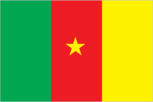
description: three equal vertical stripes of green (left), red, and yellow, featuring a small five-pointed yellow star positioned centrally in the red stripe
meaning: red symbolizes unity; yellow represents the sun, joy, and the northern savannahs; green signifies hope and the southern forests; the star is referred to as the "star of unity;" the vertical tricolor pattern resembles that of the French flag
history: incorporates the colors associated with the Pan-African movement
Capital
name
Yaounde
etymology
The city was established by Germans in 1888, though its name is derived from the indigenous Ewondo people; the interpretation of the name remains uncertain
time difference
UTC+1 (6 hours ahead of Washington, DC, during Standard Time)
geographic coordinates
3 52 N, 11 31 E
Suffrage
20 years of age; universal
Citizenship
citizenship by birth
no
citizenship by descent only
at least one parent must be a citizen of Cameroon
dual citizenship recognized
no
residency requirement for naturalization
5 years
Constitution
history
several previous; latest effective 18 January 1996
amendment process
proposals can be put forth by the president of the republic or Parliament; drafts for amendments must gain the approval of at least one-third of the members in either house of Parliament; for passage, an absolute majority vote of the Parliament's membership is required; drafts requested by the president for a second reading in Parliament need a two-thirds majority vote; the president may choose to present drafts to a referendum, requiring only a simple majority for approval; constitutional provisions regarding Cameroon’s unity, territorial integrity, and democratic principles are immutable
Country name
former
Kamerun, French Cameroon, British Cameroon, Federal Republic of Cameroon, United Republic of Cameroon
etymology
In the 16th century, Portuguese explorers named an estuary near the Wouri River's mouth the Rio dos Camaroes (River of Prawns) due to the plentiful shrimp found there; from this, the name Camaroes developed into "Cameroon"
local long form
République du Cameroun (French)/Republic of Cameroon (English)
local short form
Cameroun/Cameroon
conventional long form
Republic of Cameroon
conventional short form
Cameroon
Independence
1 January 1960 (from French-administered UN trusteeship)
Legal system
a mixed legal system incorporating English common law, French civil law, and customary law
Government type
presidential republic
Judicial branch
highest court(s)
Supreme Court of Cameroon (composed of 9 titular judges and 6 surrogate judges, organized into judicial, administrative, and audit chambers); Constitutional Council (comprising 11 members)
subordinate courts
Parliamentary Court of Justice (with jurisdiction limited to cases involving the president and prime minister); appellate and first instance courts; circuit and magistrates' courts
judge selection and term of office
Supreme Court judges are appointed by the president with the counsel of the Higher Judicial Council of Cameroon, which is chaired by the president and includes the minister of justice, selected magistrates, and National Assembly representatives; term of judges is not applicable; members of the Constitutional Council are appointed by the president for renewable six-year terms
Executive branch
cabinet
The cabinet is proposed by the prime minister and appointed by the president
chief of state
President Paul BIYA (since 6 November 1982)
election results
2025- Paul BIYA reelected as president; vote percentage - Paul BIYA (CPDM) 53.7%, Issa Tchiroma BAKARY (CNSF) 35.2%, Cabral LIBII (PCRN) 3.4%, Bello Boubou MAIGARI (UNDP) 2.4%, others 5.3%
2018: Paul BIYA reelected as president; vote percentage - Paul BIYA (CPDM) 71.3%, Maurice KAMTO (MRC) 14.2%, Cabral LIBII (Univers) 6.3%, others 8.2%
(2018)
head of government
Prime Minister Joseph NGUTE (since 4 January 2019)
most recent election date
12 October 2025
election/appointment process
The president is directly elected by a simple-majority popular vote for a term of 7 years (with no term limits); the prime minister is appointed by the president
expected date of next election
October 2032
National holiday
State Unification Day (National Day), celebrated on 20 May (since 1972)
National color(s)
green, red, yellow
National heritage
total World Heritage Sites
3 (two natural and one cultural)
selected World Heritage Site locales
Dja Faunal Reserve (n); Sangha Trinational Forest (n); Diy-Gid-Biy Cultural Landscape of the Mandara Mountains (c)
Political parties
Alliance for Democracy and Development
Cameroon People's Democratic Movement or CPDM
Cameroon People's Party or CPP
Cameroon Renaissance Movement or MRC
Cameroonian Democratic Union or UDC
Cameroonian Party for National Reconciliation or PCRN
Front for the National Salvation of Cameroon or FSNC
Movement for the Defense of the Republic or MDR
Movement for the Liberation and Development of Cameroon or MLDC
National Union for Democracy and Progress or UNDP
Progressive Movement or MP
Social Democratic Front or SDF
Union of Peoples of Cameroon or UPC
Union of Socialist Movements
Legislative branch
legislature name
Parlement - Parliament
legislative structure
bicameral
National anthem(s)
title
"O Cameroun, Berceau de Nos Ancêtres" (O Cameroon, Cradle of Our Forefathers)
history
adopted in 1957; lyrics were slightly modified to the current version in 1978
lyrics/music
Rene Djam AFAME, Samuel Minkio BAMBA, Moise Nyatte NKO'O [French], Benard Nsokika FONLON [English]/Rene Djam AFAME
National symbol(s)
lion
Administrative divisions
10 regions (régions, singular - région); Adamaoua, Centre, East (Est), Far North (Extrême-Nord), Littoral, North (Nord), North-West (Nord-Ouest), West (Ouest), South (Sud), South-West (Sud-Ouest)
Legislative branch - lower chamber
chamber name
National Assembly (Assemblée nationale - National Assembly)
term in office
5 years
number of seats
180 (all directly elected)
electoral system
proportional representation
scope of elections
full renewal
most recent election date
3/12/2023
expected date of next election
February 2026
percentage of women in chamber
33.9%
parties elected and seats per party
Cameroon People's Democratic Movement (RDPC/CPDM) (152); Other (28)
Legislative branch - upper chamber
chamber name
Senate (Sénat - Senate)
term in office
5 years
number of seats
100 (70 indirectly elected; 30 appointed)
scope of elections
full renewal
most recent election date
2/9/2020 to 3/22/2020
expected date of next election
March 2027
percentage of women in chamber
33%
Diplomatic representation in the US
FAX
[1] (202) 387-3826
chancery
2349 Massachusetts Avenue NW, Washington, DC 20008
telephone
[1] (202) 265-8790
chief of mission
Ambassador Henri ETOUNDI ESSOMBA (since 27 June 2016)
email address and website
mail@cameroonembassyusa
Cameroon Embassy in Washington DC, USA (cameroonembassyusa.org)
Diplomatic representation from the US
FAX
[237] 22251-4000, Ext. 4531
embassy
Avenue Rosa Parks, Yaoundé
telephone
[237] 22251-4000
mailing address
2520 Yaounde Place, Washington, DC 20521-2520
branch office(s)
Douala
chief of mission
Ambassador Christopher J. LAMORA (since 21 March 2022)
email address and website
[email protected]
https://cm.usembassy.gov/
International organization participation
ACP, AfDB, AU, BDEAC, C, CEMAC, EITI (compliant country), FAO, FZ, G-77, IAEA, IBRD, ICAO, ICRM, IDA, IDB, IFAD, IFC, IFRCS, IHO, ILO, IMF, IMO, IMSO, Interpol, IOC, IOM, IPU, ISO, ITSO, ITU, ITUC (NGOs), LCBC, MIGA, MNJTF, MONUSCO, NAM, OIC, OIF, OPCW, PCA, UN, UNCTAD, UNESCO, UNHRC, UNIDO, UNMISS, UNOOSA, UNWTO, UPU, WCO, WFTU (NGOs), WHO, WIPO, WMO, WTO
International law organization participation
accepts compulsory ICJ jurisdiction; non-party state to the ICCt
Economy
Budget
revenues
$6.385 billion (2021 est.)
expenditures
$7.624 billion (2021 est.)
Exports
Exports 2021
$7.447 billion (2021 est.)
Exports 2022
$8.641 billion (2022 est.)
Exports 2023
$8.353 billion (2023 est.)
Imports
Imports 2021
$9.025 billion (2021 est.)
Imports 2022
$9.759 billion (2022 est.)
Imports 2023
$10.294 billion (2023 est.)
Industries
petroleum extraction and processing, aluminum manufacturing, food production, light consumer goods, textiles, timber, ship maintenance
Labor force
11.119 million (2024 est.)
Public debt
Public debt 2016
32.5% of GDP (2016 est.)
Remittances
Remittances 2021
1% of GDP (2021 est.)
Remittances 2022
1.3% of GDP (2022 est.)
Remittances 2023
1.6% of GDP (2023 est.)
Exchange rates
Currency
Cooperation Financiere en Afrique Centrale francs (XAF) per US dollar -
Exchange rates 2020
575.586 (2020 est.)
Exchange rates 2021
554.531 (2021 est.)
Exchange rates 2022
623.76 (2022 est.)
Exchange rates 2023
606.57 (2023 est.)
Exchange rates 2024
606.345 (2024 est.)
Debt - external
Debt - external 2023
$11.112 billion (2023 est.)
Economic overview
the largest economy in CEMAC, rich in natural resources; recent political turmoil and terrorism have diminished economic performance; prevalent corruption; weak enforcement of property rights; escalating poverty in northern areas
Unemployment rate
Unemployment rate 2022
3.7% (2022 est.)
Unemployment rate 2023
3.7% (2023 est.)
Unemployment rate 2024
3.6% (2024 est.)
Exports - partners
Netherlands 21%, France 14%, UAE 13%, India 9%, China 8% (2023)
Imports - partners
China 43%, France 6%, India 6%, Belgium 4%, UAE 4% (2023)
Real GDP per capita
Real GDP per capita 2022
$4,800 (2022 est.)
Real GDP per capita 2023
$4,900 (2023 est.)
Real GDP per capita 2024
$4,900 (2024 est.)
Real GDP growth rate
Real GDP growth rate 2022
3.7% (2022 est.)
Real GDP growth rate 2023
3.2% (2023 est.)
Real GDP growth rate 2024
3.7% (2024 est.)
Agricultural products
cassava, plantains, oil palm fruit, maize, taro, tomatoes, sorghum, sugarcane, bananas, vegetables (2023)
Exports - commodities
crude petroleum, natural gas, gold, cocoa beans, wood (2023)
Imports - commodities
garments, refined petroleum, plastic products, wheat, rice (2023)
Current account balance
Current account balance 2021
-$1.794 billion (2021 est.)
Current account balance 2022
-$1.505 billion (2022 est.)
Current account balance 2023
-$2.019 billion (2023 est.)
Taxes and other revenues
11.3% (of GDP) (2021 est.)
GDP (official exchange rate)
$51.327 billion (2024 est.)
GDP - composition, by end use
household consumption
74.5% (2024 est.)
government consumption
10.5% (2024 est.)
investment in inventories
0% (2024 est.)
investment in fixed capital
21.4% (2024 est.)
exports of goods and services
14.7% (2024 est.)
imports of goods and services
-21.1% (2024 est.)
Average household expenditures
on food
45.8% of household expenditures (2023 est.)
on alcohol and tobacco
2.9% of household expenditures (2023 est.)
Inflation rate (consumer prices)
Inflation rate (consumer prices) 2022
6.2% (2022 est.)
Inflation rate (consumer prices) 2023
7.4% (2023 est.)
Inflation rate (consumer prices) 2024
4.5% (2024 est.)
Industrial production growth rate
1.9% (2024 est.)
Real GDP (purchasing power parity)
Real GDP (purchasing power parity) 2022
$133.843 billion (2022 est.)
Real GDP (purchasing power parity) 2023
$138.191 billion (2023 est.)
Real GDP (purchasing power parity) 2024
$143.264 billion (2024 est.)
Youth unemployment rate (ages 15-24)
male
5.9% (2024 est.)
total
6.2% (2024 est.)
female
6.7% (2024 est.)
Reserves of foreign exchange and gold
Reserves of foreign exchange and gold 2021
$4.3 billion (2021 est.)
Reserves of foreign exchange and gold 2022
$5.133 billion (2022 est.)
Reserves of foreign exchange and gold 2023
$4.882 billion (2023 est.)
GDP - composition, by sector of origin
industry
25.6% (2024 est.)
services
49.9% (2024 est.)
agriculture
17.4% (2024 est.)
Household income or consumption by percentage share
lowest 10%
2.1% (2021 est.)
highest 10%
31.1% (2021 est.)
Gini Index coefficient - distribution of family income
Gini Index coefficient - distribution of family income 2021
42.2 (2021 est.)
Energy
Coal
imports
300 metric tons (2023 est.)
Petroleum
total petroleum production
64,000 bbl/day (2023 est.)
crude oil estimated reserves
200 million barrels (2021 est.)
refined petroleum consumption
41,000 bbl/day (2023 est.)
Electricity
imports
60 million kWh (2023 est.)
consumption
6.161 billion kWh (2023 est.)
installed generating capacity
1.798 million kW (2023 est.)
transmission/distribution losses
2.238 billion kWh (2023 est.)
Natural gas
exports
1.821 billion cubic meters (2023 est.)
production
2.356 billion cubic meters (2023 est.)
consumption
534.691 million cubic meters (2023 est.)
proven reserves
135.071 billion cubic meters (2021 est.)
Electricity access
electrification - rural areas
25%
electrification - urban areas
94%
electrification - total population
71% (2022 est.)
Energy consumption per capita
Total energy consumption per capita 2023
4.271 million Btu/person (2023 est.)
Electricity generation sources
solar
0.3% of total installed capacity (2023 est.)
fossil fuels
36.1% of total installed capacity (2023 est.)
hydroelectricity
63.1% of total installed capacity (2023 est.)
biomass and waste
0.5% of total installed capacity (2023 est.)
Communications
Internet users
percent of population
42% (2023 est.)
Broadcast media
The government exercises stringent control over broadcasting media; state-operated Cameroon Radio Television (CRTV), which provides both television and radio services, was the sole officially recognized and fully licensed broadcaster until 2007. In that year, the government granted licenses to two private television broadcasters and one private radio broadcaster. Currently, approximately 70 privately owned but unlicensed radio stations function under a system of "administrative tolerance," indicating that these stations may face closure at any moment (2023).
Internet country code
.cm
Telephones - fixed lines
total subscriptions
67,500 (2024 est.)
subscriptions per 100 inhabitants
(2024 est.) less than 1
Telephones - mobile cellular
total subscriptions
31.5 million (2024 est.)
subscriptions per 100 inhabitants
108 (2024 est.)
Broadband - fixed subscriptions
total
603,000 (2022 est.)
subscriptions per 100 inhabitants
2 (2022 est.)
Transportation
Ports
large
0
small
0
medium
1
key ports
The ports of Douala, Ebome Marine Terminal, Kole Oil Terminal, Kome Kribi 1 Marine Terminal, Kribi Deep Sea Port, Limboh Terminal, and Moudi Marine Terminal
very small
5
total ports
7 (2024)
size unknown
1
ports with oil terminals
5
Airports
37 (2025)
Railways
total
987 km (2014)
narrow gauge
987 km (2014) 1.000-m gauge
Heliports
1 (2025)
Merchant marine
total
198 (2023)
by type
bulk carrier 2, general cargo 91, oil tanker 42, other 63
Civil aircraft registration country code prefix
TJ
Military & Security
Military - note
The Cameroon Armed Forces (FAC) are tasked with safeguarding the nation's territorial integrity, delivering humanitarian aid, assisting in regional peacekeeping efforts, and enhancing internal security. Their primary concerns include the threats posed by Boko Haram and ISIS-West Africa, particularly along the borders with Nigeria and Chad in the Far North region, and since 2016, a rebellion from armed Anglophone separatists in the North-West and South-West regions. Moreover, the FAC frequently deploys ground forces to the border with the Central African Republic to address incursions by armed militias and bandits. The Navy's responsibilities encompass the protection of Cameroon's oil facilities, tackling crime and piracy in the Gulf of Guinea, and overseeing the nation's lakes and rivers. The FAC's modest Air Force provides support to both ground and naval operations (2025)
Military deployments
750 (plus about 400 police) Central African Republic (MINUSCA) (2025)
Military expenditures
Military Expenditures 2020
1% of GDP (2020 est.)
Military Expenditures 2021
1% of GDP (2021 est.)
Military Expenditures 2022
1% of GDP (2022 est.)
Military Expenditures 2023
1% of GDP (2023 est.)
Military Expenditures 2024
1% of GDP (2024 est.)
Military and security forces
Cameroon Armed Forces (Forces Armees Camerounaises, FAC): Army, Cameroon Navy (which includes naval infantry or fusiliers marin), Air Force, National Gendarmerie, National Firefighting Corps.
General Delegation for National Security (Délégation Générale à la Sûreté Nationale or DGSN): Cameroon Police (2025)
Military service age and obligation
Individuals aged 18-23 can voluntarily enlist for military service, with the age range extending to 28 for medical roles; there is no conscription, and the service commitment lasts for four years (2025)
Military equipment inventories and acquisitions
The FAC's inventory includes weaponry from a diverse array of nations, such as China, Israel, Russia/former Soviet Union, South Africa, the United States, and several Western European countries, notably France (2025)
Military and security service personnel strengths
The estimated number of active FAC personnel, including the Gendarmerie, is between 40,000 and 50,000 (2025)
Terrorism
Terrorist group(s)
Boko Haram; Islamic State of Iraq and ash-Sham – West Africa
Transnational Issues
Refugees and internally displaced persons
IDPs
1,058,405 (2024 est.)
refugees
443,740 (2024 est.)