CapitalGuatemala City
LanguagesSpanish, Maya languages , other .
Currencyquetzales
Governmentpresidential republic
Bamwor Indexes
Guatemala — Q1 2026
IBEUBamwor Urban Scale Index
5.45%
Rank #206 of 237
View full ranking →
IBCPBamwor Population Concentration Index
13.54%
Rank #195 of 237
View full ranking →
IBDABamwor Settlement Density Index
155.95per 1K km²
Rank #95 of 241
View full ranking →
IBCXBamwor Country Complexity Index
67.94/100
Rank #59 of 234
View full ranking →
IBEEBamwor Economic Stability Index
87.90/100
Rank #96 of 220
View full ranking →
IBFMBamwor Military Strength Index
46.20/100
Rank #84 of 124
View full ranking →
IBDIBamwor Digital Infrastructure Index
62.55/100
Rank #145 of 206
View full ranking →
IBEDBamwor Education Index
67.28/100
Rank #64 of 119
View full ranking →
IBSABamwor Healthcare Index
69.21/100
Rank #109 of 218
View full ranking →
Guatemala Intelligence Report
Download PDF with 20+ statistics, rankings & proprietary indices
Introduction
Background
The Maya civilization thrived in Guatemala and its neighboring areas throughout the first millennium A.D. Following nearly three hundred years as a colony under Spanish rule, Guatemala achieved its independence in 1821. In the latter part of the 20th century, the nation underwent a succession of both military and civilian administrations, alongside a 36-year-long guerrilla conflict. In 1996, a peace treaty was signed by the government, officially concluding the internal strife.
Geography
Area
land
107,159 sq km
water
1,730 sq km
total
108,889 sq km
Climate
tropical; lowlands experience hot and humid conditions; highlands are cooler
Terrain
the nation is segmented into three distinct regions by two mountain ranges that trend east-west: the elevated highlands, the Pacific coastline located south of the mountains, and the expansive northern Peten lowlands
Land use
other
23.7% (2023 est.)
forest
33.2% (2023 est.)
agricultural land
43% (2023 est.)
agricultural land: arable land
arable land: 14.5% (2023 est.)
agricultural land: permanent crops
permanent crops: 11% (2023 est.)
agricultural land: permanent pasture
permanent pasture: 17.5% (2023 est.)
Location
Central America, situated between El Salvador and Mexico along the North Pacific Ocean, and bordering the Gulf of Honduras (Caribbean Sea) between Honduras and Belize
Coastline
400 km
Elevation
lowest point
Pacific Ocean 0 m
highest point
Volcan Tajumulco, the highest elevation in Central America, stands at 4,220 meters
mean elevation
759 m
Irrigated land
3,375 sq km (2012)
Map references
Central America and the Caribbean
Land boundaries
total
1,667 km
border countries
Belize 266 kilometers; El Salvador 199 kilometers; Honduras 244 kilometers; Mexico 958 kilometers
Maritime claims
territorial sea
12 nm
continental shelf
200-m depth or to the depth of exploitation
exclusive economic zone
200 nm
Natural hazards
the mountainous regions are home to numerous volcanoes, accompanied by sporadic severe earthquakes; the Caribbean coastline is particularly vulnerable to hurricanes and other tropical storms
volcanism: there is considerable volcanic activity within the Sierra Madre range; Santa Maria (3,772 m) has been recognized as a Decade Volcano by the International Association of Volcanology and Chemistry of the Earth's Interior due to its explosive past and its proximity to populated areas; Pacaya (2,552 m) ranks among the most active volcanoes in the nation, with regular eruptions since 1965; other historically active volcanoes include Acatenango, Almolonga, Atitlan, Fuego, and Tacana; refer to note 2 under "Geography - note"
Geography - note
note 1: although the country has coastlines on both the eastern and western sides (Caribbean Sea and Pacific Ocean), there are no natural harbors on the western coast
note 2: Guatemala is one of the nations located along the Ring of Fire, a region surrounding the Pacific Ocean that encompasses approximately 75% of the world's volcanoes and up to 90% of global earthquakes
Natural resources
petroleum, nickel, rare woods, fish, chicle, hydropower
Area - comparative
slightly smaller than the state of Pennsylvania
Geographic coordinates
15 30 N, 90 15 W
Population distribution
the overwhelming majority of the population lives in the southern part of the nation, especially within the mountainous areas; more than half of the populace is found in rural locations
Major lakes (area sq km)
fresh water lake(s)
Lago de Izabal - 590 sq km
People & Society
Literacy
male
86.9% (2024 est.)
female
78.5% (2024 est.)
total population
82.1% (2024 est.)
Languages
Languages
Spanish (official) 69.9%, Maya languages 29.7% (Q'eqchi' 8.3%, K'iche 7.8%, Mam 4.4%, Kaqchikel 3%, Q'anjob'al 1.2%, Poqomchi' 1%, others 4%), other 0.4% (including Xinca and Garifuna) (2018 estimate).
major-language sample(s)
La Libreta Informativa del Mundo, la fuente indispensable de información básica. (Spanish)
The World Factbook, the indispensable source for basic information.
Religions
Evangelical 45.7%, Roman Catholic 42.4%, none 11%, unspecified 0.9% (2023 estimate).
Sex ratio
at birth
1.05 male(s)/female
0-14 years
1.04 male(s)/female
15-64 years
0.97 male(s)/female
total population
0.98 male(s)/female (2024 est.)
65 years and over
0.8 male(s)/female
Birth rate
17.12 births/1,000 population (2025 est.)
Death rate
4.99 deaths/1,000 population (2025 est.)
Median age
male
24.2 years
total
26.7 years (2025 est.)
female
25.4 years
Population
male
9,050,684
total
18,255,216 (2024 est.)
female
9,204,532
Nationality
noun
Guatemalan(s)
adjective
Guatemalan
Tobacco use
male
22.5% (2025 est.)
total
11.8% (2025 est.)
female
1.5% (2025 est.)
Urbanization
urban population
53.1% of total population (2023)
rate of urbanization
2.59% annual rate of change (2020-25 est.)
Age structure
0-14 years
31.5% (male 2,925,079/female 2,819,927)
15-64 years
63.2% (male 5,688,500/female 5,839,958)
65 years and over
5.4% (2024 est.) (male 437,105/female 544,647)
Ethnic groups
Mestizo (a blend of Indigenous and Spanish ancestry, referred to as Ladino in local Spanish) 56%, Maya 41.7%, Xinca (Indigenous and non-Maya) 1.8%, African descent 0.2%, Garifuna (a mix of West and Central African, Island Carib, and Arawak) 0.1%, foreign 0.2% (2018 estimate).
Child marriage
men married by age 18
9.6% (2015)
women married by age 15
6.2% (2015)
women married by age 18
29.5% (2015)
Dependency ratios
total dependency ratio
58.3 (2024 est.)
youth dependency ratio
49.8 (2024 est.)
potential support ratio
11.7 (2024 est.)
elderly dependency ratio
8.5 (2024 est.)
Physician density
1.28 physicians/1,000 population (2020)
Health expenditure
Health expenditure (as % of GDP)
6.9% of GDP (2021)
Health expenditure (as % of national budget)
16.9% of national budget (2022 est.)
Net migration rate
-2.22 migrant(s)/1,000 population (2025 est.)
Hospital bed density
0.4 beds/1,000 population (2021 est.)
Total fertility rate
1.97 children born/woman (2025 est.)
Drinking water source
improved: rural
rural: 91% of population (2022 est.)
improved: total
total: 94.6% of population (2022 est.)
improved: urban
urban: 97.8% of population (2022 est.)
unimproved: rural
rural: 9% of population (2022 est.)
unimproved: total
total: 5.4% of population (2022 est.)
unimproved: urban
urban: 2.2% of population (2022 est.)
Education expenditure
Education expenditure (% GDP)
3.1% of GDP (2023 est.)
Education expenditure (% national budget)
17.3% national budget (2025 est.)
Infant mortality rate
male
28.1 deaths/1,000 live births
total
23.4 deaths/1,000 live births (2025 est.)
female
21.7 deaths/1,000 live births
Population growth rate
0.99% (2025 est.)
Gross reproduction rate
0.96 (2025 est.)
Population distribution
A significant portion of the population is concentrated in the southern region of the nation, especially within the mountainous areas; over half of the total populace resides in rural settings.
Life expectancy at birth
male
71.5 years
female
75.6 years
total population
73.5 years (2024 est.)
Maternal mortality ratio
94 deaths/100,000 live births (2023 est.)
Sanitation facility access
improved: rural
rural: 68.9% of population (2022 est.)
improved: total
total: 80.8% of population (2022 est.)
improved: urban
urban: 91.4% of population (2022 est.)
unimproved: rural
rural: 31.1% of population (2022 est.)
unimproved: total
total: 19.2% of population (2022 est.)
unimproved: urban
urban: 8.6% of population (2022 est.)
Alcohol consumption per capita
beer
0.9 liters of pure alcohol (2019 est.)
wine
0.05 liters of pure alcohol (2019 est.)
total
1.63 liters of pure alcohol (2019 est.)
spirits
0.68 liters of pure alcohol (2019 est.)
other alcohols
0.01 liters of pure alcohol (2019 est.)
Major urban areas - population
3.095 million GUATEMALA CITY (capital) (2023)
Obesity - adult prevalence rate
21.2% (2016)
Mother's mean age at first birth
20.6 years (2014/15 est.)
Currently married women (ages 15-49)
56.2% (2018 est.)
Children under the age of 5 years underweight
14.4% (2021 est.)
School life expectancy (primary to tertiary education)
male
10 years (2023 est.)
total
11 years (2023 est.)
female
11 years (2023 est.)
Environment
Climate
tropical; characterized by high temperatures and humidity in lowland areas; cooler conditions in highland regions
Land use
other
23.7% (2023 est.)
forest
33.2% (2023 est.)
agricultural land
43% (2023 est.)
agricultural land: arable land
arable land: 14.5% (2023 est.)
agricultural land: permanent crops
permanent crops: 11% (2023 est.)
agricultural land: permanent pasture
permanent pasture: 17.5% (2023 est.)
Urbanization
urban population
53.1% of total population (2023)
rate of urbanization
2.59% annual rate of change (2020-25 est.)
Waste and recycling
municipal solid waste generated annually
2.757 million tons (2024 est.)
percent of municipal solid waste recycled
10.4% (2022 est.)
Environmental issues
deforestation occurring in the Peten rainforest; erosion of soil; pollution of water sources
Total water withdrawal
municipal
835 million cubic meters (2022 est.)
industrial
603.1 million cubic meters (2022 est.)
agricultural
1.886 billion cubic meters (2022 est.)
Carbon dioxide emissions
total emissions
18.546 million metric tonnes of CO2 (2023 est.)
from consumed natural gas
4,000 metric tonnes of CO2 (2023 est.)
from coal and metallurgical coke
2.31 million metric tonnes of CO2 (2023 est.)
from petroleum and other liquids
16.232 million metric tonnes of CO2 (2023 est.)
Particulate matter emissions
21.8 micrograms per cubic meter (2019 est.)
Total renewable water resources
127.91 billion cubic meters (2022 est.)
International environmental agreements
party to
Antarctic Treaty, Biodiversity, Climate Change, Climate Change-Kyoto Protocol, Climate Change-Paris Agreement, Comprehensive Nuclear Test Ban, Desertification, Endangered Species, Environmental Modification, Hazardous Wastes, Law of the Sea, Marine Dumping-London Convention, Marine Dumping-London Protocol, Nuclear Test Ban, Ozone Layer Protection, Ship Pollution, Tropical Timber 2006, Wetlands
signed, but not ratified
none of the selected agreements
Government
Flag
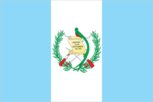
description: features three vertical bands of equal width in light blue (left), white, and light blue, with the coat of arms positioned centrally in the white band; the coat of arms displays a green-and-red quetzal (the national bird), a scroll inscribed with LIBERTAD 15 DE SEPTIEMBRE DE 1821 (the date of independence from Spain), a pair of crossed rifles, and a pair of crossed swords; the arrangement is encircled by a laurel wreath
meaning: the rifles symbolize Guatemala's readiness to defend itself, the swords represent honor, and the laurel wreath signifies victory; blue represents the Pacific Ocean and Caribbean Sea, while white stands for peace and purity
Capital
name
Guatemala City
etymology
the initial capital established by the Spanish conquistadors in 1524 was a Mayan settlement known as "Quauhtemallan" by their Nahuatl-speaking Mexican allies, a term meaning "land of the eagle," which the Spanish likely pronounced as "Guatemala"
time difference
UTC-6 (one hour behind Washington, DC, during Standard Time)
geographic coordinates
14 37 N, 90 31 W
Suffrage
18 years of age; universal
Citizenship
citizenship by birth
yes
citizenship by descent only
yes
dual citizenship recognized
yes
residency requirement for naturalization
5 years with no absences of six consecutive months or longer or absences totaling more than a year
Constitution
history
multiple previous constitutions; the most recent was adopted on 31 May 1985 and came into effect on 14 January 1986; it was suspended and later reinstated in 1994
amendment process
legislation can be proposed by the president of the republic, through an agreement of 10 or more congressional deputies, by the Constitutional Court, or via a public petition signed by at least 5,000 citizens; for a proposal to pass, it requires a two-thirds majority vote in Congress and subsequent approval through a public referendum, referred to as "popular consultation"; specific constitutional articles related to national sovereignty, the republican form of governance, restrictions on presidential candidates, or presidential terms cannot be amended
Country name
etymology
the Spanish conquistadors' first capital (established in 1524) was a former Mayan settlement called "Quauhtemallan" by their Nahuatl-speaking Mexican allies, a name that translates to "land of the eagle" but was likely pronounced "Guatemala" by the Spanish
local long form
República de Guatemala
local short form
Guatemala
conventional long form
Republic of Guatemala
conventional short form
Guatemala
Independence
15 September 1821 (from Spain)
Legal system
civil law framework; includes the judicial review of legislative actions
Government type
presidential republic
Judicial branch
highest court(s)
Supreme Court of Justice or Corte Suprema de Justicia (comprises 13 magistrates, including the president of the court, and organized into 3 chambers)
subordinate courts
Appellate Courts of Accounts, Contentious Administrative Tribunal, courts of appeal, first instance courts, child and adolescence courts, minor or peace courts
judge selection and term of office
Supreme Court magistrates elected by the Congress of the Republic from candidates proposed by the Postulation Committee, an independent body of deans of the country's university law schools, representatives of the country's law associations, and representatives of the Courts of Appeal; magistrates elected for concurrent, renewable 5-year terms; Constitutional Court judges - 1 elected by the Congress of the Republic, 1 by the Supreme Court, 1 by the president of the republic, 1 by the (public) University of San Carlos, and 1 by the Assembly of the College of Attorneys and Notaries; judges elected for renewable, consecutive 5-year terms; the presidency of the court rotates among the magistrates for a single 1-year term
Executive branch
cabinet
Council of Ministers appointed by the president
chief of state
President Bernardo ARÉVALO de León (in office since 15 January 2024)
election results
2023: Bernardo ARÉVALO de León was elected president in the second round; percentage of votes in the first round - Sandra TORRES (UNE) 21%; Bernardo ARÉVALO de León (SEMILLA) 15.6%, Manuel CONDE Orellana (VAMOS) 10.4%; Armando CASTILLO Alvarado (VIVA) 9.6%, others 43.4%; percentage of votes in the second round - Bernardo ARÉVALO de León 60.9%, Sandra TORRES 39.1%
2019: Alejandro GIAMMATTEI was elected president; percentage of votes in the first round - Sandra TORRES (UNE) 25.5%, Alejandro GIAMMATTEI (VAMOS) 14%, Edmond MULET (PHG) 11.2%, Thelma CABRERA (MLP) 10.4%, Roberto ARZU (PAN-PODEMOS) 6.1%, others 32.8%; percentage of votes in the second round - Alejandro GIAMMATTEI 58%, Sandra TORRES 42%
head of government
President Bernardo ARÉVALO de León (in office since 15 January 2024)
most recent election date
25 June 2023, with a runoff on 20 August 2023
election/appointment process
the president and vice president are directly elected on the same ballot through an absolute-majority popular vote in two rounds, if necessary, serving a term of 4 years (not eligible for consecutive terms)
expected date of next election
June 2027
National holiday
Independence Day, 15 September (1821)
National color(s)
blue, white
National heritage
total World Heritage Sites
4 (3 cultural, 1 mixed)
selected World Heritage Site locales
Antigua Guatemala (c); Tikal National Park (m); Archaeological Park and Ruins of Quirigua (c); National Archaeological Park Tak'alik Ab'aj (c)
Political parties
Bienestar Nacional or BIEN
Blue Party (Partido Azul) or Blue
CABAL
Cambio
Citizen Prosperity or PC
Commitment, Renewal, and Order or CREO
Elephant Community (Comunidad Elefante) or Elephant
Everyone Together for Guatemala or TODOS
Guatemalan National Revolutionary Unity or URNG-MAIZ or URNG
Humanist Party of Guatemala or PHG
Movement for the Liberation of Peoples or MLP
Movimiento Semilla or SEMILLA
National Advancement Party or PAN
National Convergence Front or FCN-NACION
National Unity for Hope or UNE
Nationalist Change Union or UCN (dissolved 16 December 2021)
Nosotros or PPN
PODEMOS
Political Movement Winaq or Winaq
TODOS
Value or VALOR
Vamos por una Guatemala Diferente or VAMOS
Victory or VICTORIA
Vision with Values or VIVA
Will, Opportunity and Solidarity (Voluntad, Oportunidad y Solidaridad) or VOS
Legislative branch
term in office
4 years
number of seats
160 (all directly elected)
electoral system
mixed system
legislature name
Congress of the Republic (Congreso de la República)
scope of elections
full renewal
legislative structure
unicameral
most recent election date
6/25/2023
expected date of next election
June 2027
percentage of women in chamber
20%
parties elected and seats per party
Let’s Go for a Different Guatemala (Vamos) (39); National Unity of Hope Party (UNE) (28); Seed Movement (Semilla) (23); Cabal (18); Vision with Values (VIVA) (11); Other (41)
National anthem(s)
title
"Himno Nacional de Guatemala" (National Anthem of Guatemala)
history
adopted in 1897, with modified lyrics adopted in 1934; the lyrics were submitted anonymously by Cuban poet Jose Joaquin PALMA to a public contest for a national anthem, which remained undiscovered until 1911; the anthem consists of four verses, each accompanied by four distinct choruses at the end of every verse -- all are official, and the complete anthem is performed when sung in Guatemala
lyrics/music
Jose Joaquin PALMA/Rafael Alvarez OVALLE
National symbol(s)
quetzal (bird)
Administrative divisions
22 administrative divisions (departamentos, singular - departamento); Alta Verapaz, Baja Verapaz, Chimaltenango, Chiquimula, El Progreso, Escuintla, Guatemala, Huehuetenango, Izabal, Jalapa, Jutiapa, Petén, Quetzaltenango, Quiché, Retalhuleu, Sacatepéquez, San Marcos, Santa Rosa, Sololá, Suchitepéquez, Totonicapán, Zacapa
Diplomatic representation in the US
FAX
[1] (202) 745-1908
chancery
2220 R Street NW, Washington, DC 20008
telephone
[1] (202) 745-4953
consulate(s)
Dallas, Del Rio (TX), Lake Worth (FL), McAllen (TX), Riverhead (NY), San Bernardino (CA), Tucson (AZ)
chief of mission
Ambassador Hugo Eduardo BETETA (in office since 17 June 2024)
consulate(s) general
Atlanta, Chicago, Columbus (OH), Denver, Houston, Los Angeles, Miami, Nashville (TN), New York, Oklahoma City, Omaha (NE), Philadelphia, Phoenix, Providence (RI), Raleigh (NC), Rockville (MD), San Francisco, Seattle
email address and website
[email protected]
https://estadosunidos.minex.gob.gt/home/home.aspx
Diplomatic representation from the US
FAX
[502] 2326-4654
embassy
Boulevard Austriaco 11-51, Zone 16, Guatemala City
telephone
[502] 2354-0000
mailing address
3190 Guatemala Place, Washington DC 20521-3190
chief of mission
Ambassador Tobin BRADLEY (since 12 February 2024)
email address and website
[email protected]
https://gt.usembassy.gov/
International organization participation
ACS, BCIE, CACM, CD, CELAC, EITI (compliant country), FAO, G-24, G-77, IADB, IAEA, IBRD, ICAO, ICC (national committees), ICCt (signatory), ICRM, IDA, IFAD, IFC, IFRCS, IHO, ILO, IMF, IMO, Interpol, IOC, IOM, IPU, ISO (correspondent), ITSO, ITU, ITUC (NGOs), LAES, LAIA (observer), MIGA, MINUSTAH, MONUSCO, NAM, OAS, OPANAL, OPCW, Pacific Alliance (observer), PCA, Petrocaribe, SICA, UN, UNCTAD, UNESCO, UNHCR, UNIDO, UNIFIL, Union Latina, UNISFA, UNITAR, UNMISS, UNOCI, UNOOSA, UNWTO, UPU, WCO, WFTU (NGOs), WHO, WIPO, WMO, WTO
International law organization participation
has not provided an ICJ jurisdiction declaration; accepts ICCt jurisdiction
Economy
Budget
revenues
$16.603 billion (2023 est.)
expenditures
$17.349 billion (2023 est.)
Exports
Exports 2022
$18.141 billion (2022 est.)
Exports 2023
$17.342 billion (2023 est.)
Exports 2024
$17.997 billion (2024 est.)
Imports
Imports 2022
$33.943 billion (2022 est.)
Imports 2023
$33.056 billion (2023 est.)
Imports 2024
$35.576 billion (2024 est.)
Industries
sugar, textiles and apparel, furniture, chemicals, petroleum, metals, rubber, tourism
Labor force
7.575 million (2024 est.)
Public debt
Public debt 2020
31.56% of GDP (2020 est.)
Remittances
Remittances 2022
19% of GDP (2022 est.)
Remittances 2023
19.1% of GDP (2023 est.)
Remittances 2024
19.1% of GDP (2024 est.)
Exchange rates
Currency
quetzales (GTQ) per US dollar -
Exchange rates 2020
7.722 (2020 est.)
Exchange rates 2021
7.734 (2021 est.)
Exchange rates 2022
7.748 (2022 est.)
Exchange rates 2023
7.832 (2023 est.)
Exchange rates 2024
7.759 (2024 est.)
Debt - external
Debt - external 2023
$11.862 billion (2023 est.)
Economic overview
developing Central American economy; consistent economic growth driven by remittances; significant poverty and income disparity; inadequate government services, insufficient job opportunities, and recurrent natural disasters hinder human development initiatives and promote emigration
Unemployment rate
Unemployment rate 2022
3.1% (2022 est.)
Unemployment rate 2023
2.4% (2023 est.)
Unemployment rate 2024
2.3% (2024 est.)
Exports - partners
USA 33%, El Salvador 11%, Honduras 9%, Nicaragua 6%, Mexico 4% (2023)
Imports - partners
USA 30%, China 19%, Mexico 11%, El Salvador 4%, Costa Rica 3% (2023)
Real GDP per capita
Real GDP per capita 2022
$12,100 (2022 est.)
Real GDP per capita 2023
$12,400 (2023 est.)
Real GDP per capita 2024
$12,600 (2024 est.)
Real GDP growth rate
Real GDP growth rate 2022
4.2% (2022 est.)
Real GDP growth rate 2023
3.5% (2023 est.)
Real GDP growth rate 2024
3.7% (2024 est.)
Agricultural products
sugarcane, bananas, oil palm fruit, maize, cantaloupes/melons, potatoes, milk, tomatoes, chicken, pineapples (2023)
Exports - commodities
garments, bananas, coffee, palm oil, raw sugar (2023)
Imports - commodities
refined petroleum, video displays, cars, trucks, packaged medicine (2023)
Current account balance
Current account balance 2022
$1.116 billion (2022 est.)
Current account balance 2023
$3.212 billion (2023 est.)
Current account balance 2024
$3.333 billion (2024 est.)
Taxes and other revenues
11.6% (of GDP) (2023 est.)
GDP (official exchange rate)
$113.2 billion (2024 est.)
GDP - composition, by end use
household consumption
88% (2024 est.)
government consumption
10.9% (2024 est.)
investment in inventories
0.6% (2024 est.)
investment in fixed capital
16.1% (2024 est.)
exports of goods and services
15.9% (2024 est.)
imports of goods and services
-31.5% (2024 est.)
Population below poverty line
56% (2023 est.)
Average household expenditures
on food
35.1% of household expenditures (2023 est.)
on alcohol and tobacco
1.3% of household expenditures (2023 est.)
Inflation rate (consumer prices)
Inflation rate (consumer prices) 2022
6.9% (2022 est.)
Inflation rate (consumer prices) 2023
6.2% (2023 est.)
Inflation rate (consumer prices) 2024
2.9% (2024 est.)
Industrial production growth rate
2% (2024 est.)
Real GDP (purchasing power parity)
Real GDP (purchasing power parity) 2022
$216.815 billion (2022 est.)
Real GDP (purchasing power parity) 2023
$224.475 billion (2023 est.)
Real GDP (purchasing power parity) 2024
$232.673 billion (2024 est.)
Youth unemployment rate (ages 15-24)
male
4% (2024 est.)
total
4.2% (2024 est.)
female
4.7% (2024 est.)
Reserves of foreign exchange and gold
Reserves of foreign exchange and gold 2022
$20.415 billion (2022 est.)
Reserves of foreign exchange and gold 2023
$21.311 billion (2023 est.)
Reserves of foreign exchange and gold 2024
$24.412 billion (2024 est.)
GDP - composition, by sector of origin
industry
21.7% (2024 est.)
services
61.8% (2024 est.)
agriculture
9.8% (2024 est.)
Household income or consumption by percentage share
lowest 10%
1.6% (2023 est.)
highest 10%
34.1% (2023 est.)
Gini Index coefficient - distribution of family income
Gini Index coefficient - distribution of family income 2023
45.2 (2023 est.)
Energy
Coal
exports
20 metric tons (2023 est.)
imports
808,000 metric tons (2023 est.)
consumption
1.012 million metric tons (2023 est.)
Petroleum
total petroleum production
6,000 bbl/day (2023 est.)
crude oil estimated reserves
86.11 million barrels (2021 est.)
refined petroleum consumption
117,000 bbl/day (2023 est.)
Electricity
exports
1.104 billion kWh (2023 est.)
imports
1.573 billion kWh (2023 est.)
consumption
12.222 billion kWh (2023 est.)
installed generating capacity
4.995 million kW (2023 est.)
transmission/distribution losses
1.716 billion kWh (2023 est.)
Natural gas
production
2.016 million cubic meters (2023 est.)
consumption
1.991 million cubic meters (2023 est.)
Electricity access
electrification - rural areas
98.2%
electrification - urban areas
97.7%
electrification - total population
99.1% (2022 est.)
Energy consumption per capita
Total energy consumption per capita 2023
17.096 million Btu/person (2023 est.)
Electricity generation sources
wind
2.6% of total installed capacity (2023 est.)
solar
1.8% of total installed capacity (2023 est.)
geothermal
2.5% of total installed capacity (2023 est.)
fossil fuels
25.4% of total installed capacity (2023 est.)
hydroelectricity
42% of total installed capacity (2023 est.)
biomass and waste
25.7% of total installed capacity (2023 est.)
Communications
Internet users
percent of population
56% (2023 est.)
Broadcast media
The landscape of TV broadcasting is primarily influenced by four privately owned national terrestrial television channels; in addition, there exist multi-channel satellite and cable services. As of 2019, there is one government-operated radio station alongside numerous privately owned radio stations.
Internet country code
.gt
Telephones - fixed lines
total subscriptions
1.94 million (2023 est.)
subscriptions per 100 inhabitants
11 (2023 est.)
Telephones - mobile cellular
total subscriptions
20.6 million (2023 est.)
subscriptions per 100 inhabitants
115 (2022 est.)
Broadband - fixed subscriptions
total
921,000 (2023 est.)
subscriptions per 100 inhabitants
5 (2023 est.)
Transportation
Ports
large
0
small
2
medium
0
key ports
Puerto Barrios, Puerto Quetzal, Santo Tomas de Castilla
very small
1
total ports
3 (2024)
ports with oil terminals
2
Airports
58 (2025)
Railways
total
800 km (2018)
narrow gauge
800 km (2018) 0.914-m gauge
Heliports
2 (2025)
Merchant marine
total
9 (2023)
by type
oil tanker 1, other 8
Civil aircraft registration country code prefix
TG
Military & Security
Military - note
The military's duty is to uphold the independence, sovereignty, territorial integrity, and dignity of Guatemala; however, it has predominantly concentrated on internal security. Since the early 2000s, the Guatemalan government has utilized the military to assist the National Civil Police in internal security initiatives (as allowed by the constitution) aimed at addressing organized crime, gang violence, and drug trafficking. Additional responsibilities encompass border security, cybersecurity, and the provision of humanitarian aid. The military also engages in United Nations missions on a limited scale and has established a peacekeeping operations training command that provides training for countries in the region. Security partnerships exist with regional nations such as Brazil, Colombia, El Salvador, and Honduras; collaboration with El Salvador and Honduras has included a joint police-military anti-gang task force for patrolling border regions. Furthermore, there are connections with the United States, which involve joint training exercises and material support.
The military wielded power throughout the majority of Guatemala’s 36-year civil conflict (1960-1996), executing a campaign marked by extensive violence and repression, particularly against the indigenous majority population. It is estimated that over 200,000 individuals were killed or went missing during the conflict (2025).
Military deployments
180 Democratic Republic of the Congo (MONUSCO) (2025)
Military expenditures
Military Expenditures 2020
0.4% of GDP (2020 est.)
Military Expenditures 2021
0.4% of GDP (2021 est.)
Military Expenditures 2022
0.4% of GDP (2022 est.)
Military Expenditures 2023
0.4% of GDP (2023 est.)
Military Expenditures 2024
0.4% of GDP (2024 est.)
Military and security forces
Army of Guatemala (Ejercito de Guatemala; also known as Armed Forces of Guatemala or Fuerzas Armadas de Guatemala): Land Forces (Fuerzas de Tierra), Naval Forces (Fuerzas de Mar), and Air Force (Fuerza de Aire) (2025).
Military service age and obligation
Individuals aged 18-28 can voluntarily serve, including both men and women (17-21 for military academies); all Guatemalan males aged 18-49 are subject to selective compulsory service, with an obligation ranging from 12 to 24 months (2025).
Military equipment inventories and acquisitions
The military is equipped lightly, with an arsenal primarily consisting of outdated US equipment; in recent years, the US has supplied additional used equipment (2025).
Military and security service personnel strengths
approximately 20,000 active Armed Forces (2025)
Terrorism
Terrorist group(s)
La Mara Salvatrucha (MS-13)
Transnational Issues
Illicit drugs
USG identification
major illicit drug-producing and/or drug-transit country
major precursor-chemical producer (2025)
Refugees and internally displaced persons
IDPs
572,813 (2024 est.)
refugees
4,676 (2024 est.)