CapitalTunis
LanguagesArabic , French , Tamazight
CurrencyTunisian dinars
Governmentparliamentary republic
Bamwor Indexes
Tunisia — Q1 2026
IBEUBamwor Urban Scale Index
5.79%
Rank #202 of 237
View full ranking →
IBCPBamwor Population Concentration Index
12.31%
Rank #203 of 237
View full ranking →
IBDABamwor Settlement Density Index
13.72per 1K km²
Rank #199 of 241
View full ranking →
IBCXBamwor Country Complexity Index
64.68/100
Rank #90 of 234
View full ranking →
IBEEBamwor Economic Stability Index
82.29/100
Rank #169 of 220
View full ranking →
IBFMBamwor Military Strength Index
54.80/100
Rank #54 of 124
View full ranking →
IBDIBamwor Digital Infrastructure Index
69.43/100
Rank #127 of 206
View full ranking →
IBEDBamwor Education Index
72.31/100
Rank #47 of 119
View full ranking →
IBSABamwor Healthcare Index
71.06/100
Rank #93 of 218
View full ranking →
Tunisia Intelligence Report
Download PDF with 20+ statistics, rankings & proprietary indices
Introduction
Background
Tunisia has been governed by several empires throughout its history, including the Phoenicians, who arrived as early as the 12th century B.C., followed by the Carthaginians, Romans, Vandals, Byzantines, various Arab and Berber dynasties, and finally the Ottomans, who ruled from the 16th to the late-19th centuries. The struggle between French and Italian interests in Tunisia reached its peak with the French invasion in 1881, leading to the establishment of a protectorate. After World War I, persistent demands for independence prompted the French to grant Tunisia sovereignty in 1956. The inaugural president, Habib BOURGUIBA, instituted a strict one-party regime, maintaining control for 31 years while suppressing Islamic fundamentalism and promoting women's rights. In 1987, Zine el Abidine BEN ALI ascended to power through a bloodless coup, ousting BOURGUIBA.
In 2010, protests ignited in Tunis over soaring unemployment, corruption, pervasive poverty, and elevated food prices, escalating into widespread unrest in 2011 that resulted in numerous fatalities, marking the beginning of the Arab Spring movement. Following these events, BEN ALI dissolved the government and fled, leading to the formation of a "national unity government." Later that year, elections were conducted for a new Constituent Assembly, which elected human rights advocate Moncef MARZOUKI as interim president. The Assembly embarked on crafting a new constitution in 2012 and, after several revisions and a protracted political crisis that delayed the process, ratified the final document in 2014. At the close of 2014, parliamentary and presidential elections were conducted for a stable government, resulting in Beji CAID ESSEBSI being elected as the first president under the new constitution. Following ESSEBSI’s death in 2019, Kais SAIED was elected. SAIED's term, along with that of Tunisia's 217-member parliament, was due to end in 2024. Nonetheless, in 2021, SAIED utilized the extraordinary powers granted by Tunisia's constitution to terminate the prime minister's position and suspend the legislature. In 2022, a public referendum resulted in the approval of a new constitution, which augmented presidential powers and established a new bicameral legislature.
Geography
Area
land
155,360 sq km
water
8,250 sq km
total
163,610 sq km
Climate
The northern region experiences a temperate climate characterized by mild, rainy winters and hot, dry summers, while the southern part is classified as desert.
Terrain
The landscape includes mountains in the north, a hot and arid central plain, and a semiarid southern area that transitions into the Sahara Desert.
Land use
other
33.1% (2023 est.)
forest
4.5% (2023 est.)
agricultural land
62.4% (2023 est.)
agricultural land: arable land
arable land: 18.2% (2023 est.)
agricultural land: permanent crops
permanent crops: 13.6% (2023 est.)
agricultural land: permanent pasture
permanent pasture: 30.6% (2023 est.)
Location
Located in Northern Africa, it shares a border with the Mediterranean Sea between Algeria and Libya.
Coastline
1,148 km
Elevation
lowest point
Shatt al Gharsah -17 m
highest point
Jebel ech Chambi 1,544 m
mean elevation
246 m
Irrigated land
3,920 sq km (2013)
Major aquifers
North Western Sahara Aquifer System
Map references
Africa
Land boundaries
total
1,495 km
border countries
Algeria 1,034 km; Libya 461 km
Maritime claims
contiguous zone
24 nm
territorial sea
12 nm
exclusive economic zone
12 nm
Natural hazards
Natural disasters such as flooding, earthquakes, and droughts occur in the region.
Geography - note
It holds a strategically significant position in the central Mediterranean.
Natural resources
Natural resources include petroleum, phosphates, iron ore, lead, zinc, and salt.
Area - comparative
Its land area is slightly greater than that of the state of Georgia.
Geographic coordinates
34 00 N, 9 00 E
Population distribution
A significant proportion of the population resides in the northern part of the nation, while the southern region is predominantly sparsely populated, as illustrated in this population distribution map.
People & Society
Literacy
male
92.7% (2023 est.)
female
80.1% (2023 est.)
total population
86.2% (2023 est.)
Languages
Languages
Arabic (official, used in commerce), French (commerce), Tamazight
major-language sample(s)
كتاب حقائق العالم، أحسن كتاب تتعلم به المعلومات الأساسية (Arabic)
The World Factbook, une source indispensable d'informations de base. (French)
The World Factbook, the indispensable source for basic information.
Religions
Muslim (official; Sunni) 99%, others (including Christian, Jewish, Shia Muslim, and Baha'i) <1%
Sex ratio
at birth
1.06 male(s)/female
0-14 years
1.06 male(s)/female
15-64 years
0.97 male(s)/female
total population
0.98 male(s)/female (2024 est.)
65 years and over
0.9 male(s)/female
Birth rate
11.35 births/1,000 population (2025 est.)
Death rate
6.4 deaths/1,000 population (2025 est.)
Median age
male
33.6 years
total
34.1 years (2025 est.)
female
35.1 years
Population
male
5,926,741
total
11,962,995 (2025 est.)
female
6,036,254
Nationality
noun
Tunisian(s)
adjective
Tunisian
Tobacco use
male
37.6% (2025 est.)
total
19% (2025 est.)
female
1.4% (2025 est.)
Urbanization
urban population
70.5% of total population (2023)
rate of urbanization
1.34% annual rate of change (2020-25 est.)
Age structure
0-14 years
24.4% (male 1,516,871/female 1,426,522)
15-64 years
65.2% (male 3,861,731/female 3,990,802)
65 years and over
10.4% (2024 est.) (male 593,640/female 659,281)
Ethnic groups
Arab 98%, European 1%, Jewish and other 1%
Child marriage
men married by age 18
0% (2018)
women married by age 15
0% (2018)
women married by age 18
1.5% (2018)
Dependency ratios
total dependency ratio
50.7 (2025 est.)
youth dependency ratio
35.6 (2025 est.)
potential support ratio
6.6 (2025 est.)
elderly dependency ratio
15.1 (2025 est.)
Physician density
1.32 physicians/1,000 population (2021)
Health expenditure
Health expenditure (as % of GDP)
7% of GDP (2021)
Health expenditure (as % of national budget)
11.2% of national budget (2022 est.)
Net migration rate
-1.16 migrant(s)/1,000 population (2025 est.)
Hospital bed density
2.4 beds/1,000 population (2021 est.)
Total fertility rate
1.59 children born/woman (2025 est.)
Drinking water source
improved: rural
rural: 93.4% of population (2022 est.)
improved: total
total: 97.2% of population (2022 est.)
improved: urban
urban: 98.8% of population (2022 est.)
unimproved: rural
rural: 6.6% of population (2022 est.)
unimproved: total
total: 2.8% of population (2022 est.)
unimproved: urban
urban: 1.2% of population (2022 est.)
Education expenditure
Education expenditure (% GDP)
6.7% of GDP (2023 est.)
Education expenditure (% national budget)
17.3% national budget (2025 est.)
Infant mortality rate
male
12.7 deaths/1,000 live births
total
10.6 deaths/1,000 live births (2025 est.)
female
9.8 deaths/1,000 live births
Population growth rate
0.38% (2025 est.)
Gross reproduction rate
0.77 (2025 est.)
Population distribution
the vast majority of the populace resides in the northern region of the country; the southern areas remain predominantly sparsely populated, as depicted in this population distribution map.
Life expectancy at birth
male
75.7 years
female
79.1 years
total population
77.3 years (2024 est.)
Maternal mortality ratio
36 deaths/100,000 live births (2023 est.)
Sanitation facility access
improved: rural
rural: 99.4% of population (2022 est.)
improved: total
total: 99% of population (2022 est.)
improved: urban
urban: 98.8% of population (2022 est.)
unimproved: rural
rural: 0.6% of population (2022 est.)
unimproved: total
total: 1% of population (2022 est.)
unimproved: urban
urban: 1.2% of population (2022 est.)
Alcohol consumption per capita
beer
0.99 liters of pure alcohol (2019 est.)
wine
0.32 liters of pure alcohol (2019 est.)
total
1.51 liters of pure alcohol (2019 est.)
spirits
0.17 liters of pure alcohol (2019 est.)
other alcohols
0.03 liters of pure alcohol (2019 est.)
Major urban areas - population
2.475 million TUNIS (capital) (2023)
Obesity - adult prevalence rate
26.9% (2016)
Currently married women (ages 15-49)
52.5% (2023 est.)
Children under the age of 5 years underweight
1.6% (2018 est.)
School life expectancy (primary to tertiary education)
male
14 years (2016 est.)
total
14 years (2016 est.)
female
15 years (2016 est.)
Environment
Climate
the northern region experiences a temperate climate characterized by mild, rainy winters and hot, arid summers, while the southern region is classified as desert
Land use
other
33.1% (2023 est.)
forest
4.5% (2023 est.)
agricultural land
62.4% (2023 est.)
agricultural land: arable land
arable land: 18.2% (2023 est.)
agricultural land: permanent crops
permanent crops: 13.6% (2023 est.)
agricultural land: permanent pasture
permanent pasture: 30.6% (2023 est.)
Urbanization
urban population
70.5% of total population (2023)
rate of urbanization
1.34% annual rate of change (2020-25 est.)
Methane emissions
other
3 kt (2019-2021 est.)
waste
97.9 kt (2019-2021 est.)
energy
88 kt (2022-2024 est.)
agriculture
94.5 kt (2019-2021 est.)
Waste and recycling
municipal solid waste generated annually
2.7 million tons (2024 est.)
percent of municipal solid waste recycled
10.9% (2022 est.)
Environmental issues
disposal of toxic and hazardous waste; water contamination due to untreated sewage; scarcity of freshwater resources; deforestation; excessive grazing; soil degradation; desertification
Total water withdrawal
municipal
815.5 million cubic meters (2022 est.)
industrial
61.9 million cubic meters (2022 est.)
agricultural
2.71 billion cubic meters (2022 est.)
Carbon dioxide emissions
total emissions
24.645 million metric tonnes of CO2 (2023 est.)
from consumed natural gas
10.392 million metric tonnes of CO2 (2023 est.)
from coal and metallurgical coke
4,000 metric tonnes of CO2 (2023 est.)
from petroleum and other liquids
14.249 million metric tonnes of CO2 (2023 est.)
Particulate matter emissions
26.5 micrograms per cubic meter (2019 est.)
Total renewable water resources
4.615 billion cubic meters (2022 est.)
International environmental agreements
party to
Biodiversity, Climate Change, Climate Change-Kyoto Protocol, Climate Change-Paris Agreement, Comprehensive Nuclear Test Ban, Desertification, Endangered Species, Environmental Modification, Hazardous Wastes, Law of the Sea, Marine Dumping-London Convention, Nuclear Test Ban, Ozone Layer Protection, Ship Pollution, Wetlands
signed, but not ratified
Marine Life Conservation
Government
Flag
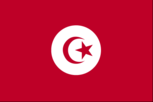
description: a red flag featuring a white disc at the center, which encompasses a red crescent surrounding a five-pointed red star
meaning: the color red symbolizes the blood of martyrs who fought against oppression, while white signifies peace; the crescent and star are well-known emblems of Islam
history: this design resembles the Ottoman flag (a red field with a white crescent and star), reflecting Tunisia's historical ties to the Ottoman Empire
Capital
name
Tunis
etymology
the origins of the ancient name remain ambiguous; it is occasionally linked to the name of the Phoenician goddess Tanith
time difference
UTC+1 (6 hours ahead of Washington, DC, during Standard Time)
geographic coordinates
36 48 N, 10 11 E
Suffrage
18 years old; universally applicable, except for active security forces of the government (including military and police), individuals with mental disabilities, those who have served over three months in prison (in criminal cases only), and individuals given a suspended sentence exceeding six months
Citizenship
citizenship by birth
no
citizenship by descent only
at least one parent must be a citizen of Tunisia
dual citizenship recognized
yes
residency requirement for naturalization
5 years
Constitution
history
several drafts have been proposed; the most recent draft was published by the president on 30 June 2022, approved through a referendum on 25 July 2022, and enacted on 27 July 2022
amendment process
initiated by the president of the republic or one-third of the Assembly of the Representatives of the People members; after a review by the Constitutional Court, moving forward requires an absolute majority vote in the Assembly, and final approval necessitates a two-thirds majority vote; the president may also choose to present an amendment to a referendum, which demands an absolute majority of votes for passage
Country name
etymology
the country name derives from the capital city of Tunis
local long form
Al Jumhuriyah at Tunisiyah
local short form
Tunis
conventional long form
Republic of Tunisia
conventional short form
Tunisia
Independence
20 March 1956 (from France)
Legal system
a mixed legal system consisting of civil law, based on the French civil code, and Islamic (sharia) law; the Supreme Court examines certain legislative acts in joint sessions
Government type
parliamentary republic
Judicial branch
highest court(s)
Court of Cassation (composed of the first president, chamber presidents, and magistrates; organized into 27 civil chambers and 11 criminal chambers)
subordinate courts
Courts of Appeal; administrative courts; Court of Audit; Housing Court; courts of first instance; lower district courts; military courts
judge selection and term of office
Supreme Court judges are selected by the Supreme Judicial Council, an independent four-part body mainly composed of elected judges and a few legal specialists; judges serve terms based on their appointment length; the Constitutional Court was established in the 2014 and 2022 constitutions but has not been implemented
Executive branch
cabinet
the prime minister is appointed by the president; cabinet members are appointed by the president after consulting with the prime minister
chief of state
President Kais SAIED (since 23 October 2019)
election results
2024: Kais SAIED reelected president in first round - Kais SAIED (independent) 90.7%, Ayachi ZAMMEL (Long Live Tunisia) 7.3%, Zouhair MAGHZAOUI (People's Movement) 2%
2019: Kais SAIED elected president in second round; percent of vote in first round - Kais SAIED (independent) 18.4%, Nabil KAROUI (Heart of Tunisia) 15.6%, Abdelfattah MOUROU (Nahda Movement) 12.9%, Abdelkrim ZBIDI (independent) 10.7%, Youssef CHAHED (Long Live Tunisia) 7.4%, Safi SAID (independent) 7.1%, Lotfi MRAIHI (Republican People's Union) 6.6%, other 21.3%; percent of vote in second round - Kais SAIED 72.7%, Nabil KAROUI 27.3%
head of government
Prime Minister Sarra ZAAFRANI Zenzri (since 21 March 2025)
most recent election date
6 October 2024
election/appointment process
the president is elected directly through an absolute-majority popular vote, which may occur in two rounds if necessary, serving a 5-year term (eligible for re-election for a second term)
expected date of next election
2029
National holiday
Independence Day is observed on 20 March (1956); Revolution and Youth Day is celebrated on 14 January (2011)
National color(s)
red, white
National heritage
total World Heritage Sites
9 (8 cultural, 1 natural)
selected World Heritage Site locales
Amphitheatre of El Jem (c); Archaeological Site of Carthage (c); Medina of Tunis (c); Ichkeul National Park (n); Punic Town of Kerkuane (c); Kairouan (c); Medina of Sousse (c); Dougga / Thugga (c); Djerba: Testimony to a settlement pattern in an island territory (c)
Political parties
Afek Tounes
Al Badil Al-Tounisi (The Tunisian Alternative)
Al-Amal Party
Call for Tunisia Party (Nidaa Tounes)
Current of Love (formerly the Popular Petition party)
Democratic Current
Democratic Patriots' Unified Party
Dignity Coalition or Al Karama Coalition
Ennahda Movement (The Renaissance)
Ettakatol Party
Free Destourian Party or PDL
Green Tunisia Party
Harakat Hak
Heart of Tunisia (Qalb Tounes)
July 25 Movement
Labor and Achievement Party
Long Live Tunisia (Tahya Tounes)
Movement of Socialist Democrats or MDS
National Coalition Party
National Salvation Front
New Carthage Party
Party of the Democratic Arab Vanguard
People's Movement
Republican Party (Al Joumhouri)
The Movement Party (Hizb Harak)
Third Republic Party
Tunisian Ba'ath Movement
Voice of the Republic
Workers' Party
Legislative branch
legislative structure
bicameral
National anthem(s)
title
"Humat Al Hima" (Defenders of the Homeland)
history
adopted in 1957, replaced in 1958, and restored in 1987; Mohamad Abdel WAHAB also created the music for the anthem of the United Arab Emirates
lyrics/music
Mustafa Sadik AL-RAFII and Aboul-Qacem ECHEBBI/Mohamad Abdel WAHAB
National symbol(s)
red crescent moon and five-pointed star in a white circle
Administrative divisions
24 governorates (wilayat, singular - wilayah); Beja (Bajah), Ben Arous (Bin 'Arus), Bizerte (Banzart), Gabes (Qabis), Gafsa (Qafsah), Jendouba (Jundubah), Kairouan (Al Qayrawan), Kasserine (Al Qasrayn), Kebili (Qibili), Kef (Al Kaf), L'Ariana (Aryanah), Mahdia (Al Mahdiyah), Manouba (Manubah), Medenine (Madanin), Monastir (Al Munastir), Nabeul (Nabul), Sfax (Safaqis), Sidi Bouzid (Sidi Bu Zayd), Siliana (Silyanah), Sousse (Susah), Tataouine (Tatawin), Tozeur (Tawzar), Tunis, Zaghouan (Zaghwan)
Legislative branch - lower chamber
chamber name
Assembly of People's Representatives (Majlis Nawwab ash-Sha'ab)
term in office
5 years
number of seats
161 (all directly elected)
electoral system
plurality/majority
scope of elections
full renewal
most recent election date
12/17/2022 to 1/29/2023
expected date of next election
December 2027
percentage of women in chamber
15.8%
Legislative branch - upper chamber
chamber name
National Council of Regions and Districts
term in office
5 years
number of seats
77 (all indirectly elected)
scope of elections
full renewal
most recent election date
4/19/2024
expected date of next election
April 2029
percentage of women in chamber
13%
Diplomatic representation in the US
FAX
[1] (202) 862-1858
chancery
1515 Massachusetts Avenue NW, Washington, DC 20005
telephone
[1] (202) 862-1850
chief of mission
Ambassador (vacant); Chargé d'Affaires Anis HAJRI (since 1 August 2025)
email address and website
[email protected]
https://www.tunisianembassy.org/
Diplomatic representation from the US
FAX
[216] 71-107-090
embassy
Les Berges du Lac, 1053 Tunis
telephone
[216] 71-107-000
mailing address
6360 Tunis Place, Washington DC 20521-6360
chief of mission
Ambassador Bill BAZZI (since 21 November 2025)
email address and website
[email protected]
https://tn.usembassy.gov/
International organization participation
ABEDA, AfDB, AFESD, AIIB, AMF, AMU, AU, BSEC (observer), CAEU, CD, EBRD, FAO, G-11, G-77, IAEA, IBRD, ICAO, ICC (national committees), ICCt, ICRM, IDA, IDB, IFAD, IFC, IFRCS, IHO, ILO, IMF, IMO, IMSO, Interpol, IOC, IOM, IPU, ISO, ITSO, ITU, ITUC (NGOs), LAS, MIGA, MONUSCO, NAM, OAS (observer), OIC, OIF, OPCW, OSCE (partner), UN, UNCTAD, UNESCO, UNHCR, UNIDO, UNOCI, UNOOSA, UNWTO, UPU, WCO, WFTU (NGOs), WHO, WIPO, WMO, WTO
International law organization participation
has not provided an ICJ jurisdiction declaration; accepts ICCt jurisdiction
Economy
Budget
revenues
$10.866 billion (2019 est.)
expenditures
$12.375 billion (2019 est.)
Exports
Exports 2021
$14.054 billion (2021 est.)
Exports 2022
$17.254 billion (2022 est.)
Exports 2023
$19.732 billion (2023 est.)
Imports
Imports 2021
$18.178 billion (2021 est.)
Imports 2022
$22.453 billion (2022 est.)
Imports 2023
$21.953 billion (2023 est.)
Industries
petroleum, mining (notably phosphate and iron ore), tourism, textiles, footwear, agribusiness, beverages
Labor force
4.247 million (2024 est.)
Public debt
Public debt 2016
62.3% of GDP (2016 est.)
Remittances
Remittances 2021
6.3% of GDP (2021 est.)
Remittances 2022
6.2% of GDP (2022 est.)
Remittances 2023
6% of GDP (2023 est.)
Exchange rates
Currency
Tunisian dinars (TND) per US dollar -
Exchange rates 2020
2.812 (2020 est.)
Exchange rates 2021
2.794 (2021 est.)
Exchange rates 2022
3.104 (2022 est.)
Exchange rates 2023
3.106 (2023 est.)
Exchange rates 2024
3.107 (2024 est.)
Debt - external
Debt - external 2023
$21.212 billion (2023 est.)
Economic overview
a North African economy classified as lower middle-income; engaging in reforms aimed at attracting foreign lenders; facing high unemployment rates, particularly among youth and women; significantly impacted by COVID-19; characterized by elevated public sector salaries; substantial public debt; implementation of protectionist austerity policies; a significant trading partner with the EU
Unemployment rate
Unemployment rate 2022
15.3% (2022 est.)
Unemployment rate 2023
15.2% (2023 est.)
Unemployment rate 2024
16.3% (2024 est.)
Exports - partners
France 22%, Italy 17%, Germany 13%, USA 4%, Libya 4% (2023)
Imports - partners
Italy 13%, France 12%, China 10%, Russia 8%, Germany 7% (2023)
Real GDP per capita
Real GDP per capita 2022
$12,700 (2022 est.)
Real GDP per capita 2023
$12,600 (2023 est.)
Real GDP per capita 2024
$12,700 (2024 est.)
Real GDP growth rate
Real GDP growth rate 2022
2.7% (2022 est.)
Real GDP growth rate 2023
0% (2023 est.)
Real GDP growth rate 2024
1.4% (2024 est.)
Agricultural products
milk, tomatoes, olives, onions, chillies/peppers, watermelons, potatoes, wheat, dates, oranges (2023)
Exports - commodities
garments, insulated wire, olive oil, refined petroleum, crude petroleum (2023)
Imports - commodities
refined petroleum, natural gas, plastic products, cars, plastics (2023)
Current account balance
Current account balance 2021
-$2.77 billion (2021 est.)
Current account balance 2022
-$3.969 billion (2022 est.)
Current account balance 2023
-$1.111 billion (2023 est.)
GDP (official exchange rate)
$53.41 billion (2024 est.)
GDP - composition, by end use
household consumption
76.2% (2024 est.)
government consumption
18.6% (2024 est.)
investment in inventories
0% (2024 est.)
investment in fixed capital
13.4% (2024 est.)
exports of goods and services
48.4% (2024 est.)
imports of goods and services
-56.6% (2024 est.)
Population below poverty line
16.6% (2021 est.)
Average household expenditures
on food
22.3% of household expenditures (2023 est.)
on alcohol and tobacco
3.3% of household expenditures (2023 est.)
Inflation rate (consumer prices)
Inflation rate (consumer prices) 2022
8.3% (2022 est.)
Inflation rate (consumer prices) 2023
9.3% (2023 est.)
Inflation rate (consumer prices) 2024
7.2% (2024 est.)
Industrial production growth rate
-2.5% (2024 est.)
Real GDP (purchasing power parity)
Real GDP (purchasing power parity) 2022
$153.945 billion (2022 est.)
Real GDP (purchasing power parity) 2023
$154.006 billion (2023 est.)
Real GDP (purchasing power parity) 2024
$156.086 billion (2024 est.)
Youth unemployment rate (ages 15-24)
male
41.1% (2024 est.)
total
40.1% (2024 est.)
female
37.6% (2024 est.)
Reserves of foreign exchange and gold
Reserves of foreign exchange and gold 2022
$8.094 billion (2022 est.)
Reserves of foreign exchange and gold 2023
$9.24 billion (2023 est.)
Reserves of foreign exchange and gold 2024
$9.344 billion (2024 est.)
GDP - composition, by sector of origin
industry
23.6% (2023 est.)
services
62.1% (2023 est.)
agriculture
9.3% (2023 est.)
Household income or consumption by percentage share
lowest 10%
3.1% (2021 est.)
highest 10%
27% (2021 est.)
Gini Index coefficient - distribution of family income
Gini Index coefficient - distribution of family income 2021
33.7 (2021 est.)
Energy
Coal
exports
28 metric tons (2023 est.)
imports
3,000 metric tons (2023 est.)
consumption
2,000 metric tons (2022 est.)
Petroleum
total petroleum production
35,000 bbl/day (2023 est.)
crude oil estimated reserves
425 million barrels (2021 est.)
refined petroleum consumption
104,000 bbl/day (2023 est.)
Electricity
exports
80 million kWh (2023 est.)
imports
2.576 billion kWh (2023 est.)
consumption
19.153 billion kWh (2023 est.)
installed generating capacity
6.639 million kW (2023 est.)
transmission/distribution losses
4.629 billion kWh (2023 est.)
Natural gas
imports
3.887 billion cubic meters (2023 est.)
production
1.313 billion cubic meters (2023 est.)
consumption
5.131 billion cubic meters (2023 est.)
proven reserves
65.129 billion cubic meters (2021 est.)
Electricity access
electrification - rural areas
99.7%
electrification - urban areas
100%
electrification - total population
100% (2022 est.)
Energy consumption per capita
Total energy consumption per capita 2023
33.754 million Btu/person (2023 est.)
Electricity generation sources
wind
1.6% of total installed capacity (2023 est.)
solar
2.3% of total installed capacity (2023 est.)
fossil fuels
96.1% of total installed capacity (2023 est.)
Communications
Internet users
percent of population
72% (2023 est.)
Broadcast media
Two government-operated television channels; ten privately-owned local television stations; availability of satellite television services; a state-run radio network comprising two stations; numerous private and community radio stations; broadcasts from various international media outlets accessible (2019)
Internet country code
.tn
Telephones - fixed lines
total subscriptions
1.863 million (2023 est.)
subscriptions per 100 inhabitants
15 (2023 est.)
Telephones - mobile cellular
total subscriptions
14.4 million (2024 est.)
subscriptions per 100 inhabitants
118 (2024 est.)
Broadband - fixed subscriptions
total
1.73 million (2023 est.)
subscriptions per 100 inhabitants
14 (2023 est.)
Transportation
Ports
large
0
small
7
medium
3
key ports
Ashtart Oil Terminal, Banzart, Didon Terminal, Gabes, La Goulette, Menzel Bourguiba, Mersa Sfax, Sousse, Tazerka Oil Terminal, Tunis
very small
6
total ports
16 (2024)
ports with oil terminals
10
Airports
14 (2025)
Railways
total
2,173 km (2014) (1,991 in use)
dual gauge
8 km (2014) 1.435-1.000-m gauge
narrow gauge
1,694 km (2014) 1.000-m gauge (65 km electrified)
standard gauge
471 km (2014) 1.435-m gauge
Heliports
11 (2025)
Merchant marine
total
72 (2023)
by type
1 container ship, 8 general cargo vessels, 1 oil tanker, and 62 others
Civil aircraft registration country code prefix
TS
Military & Security
Military - note
The Tunisian Armed Forces (FAT) are tasked with safeguarding territorial integrity and maintaining internal order; their operational priorities include counterterrorism efforts and the enhancement of security in border regions, particularly along the boundaries with Algeria and Libya.
The FAT engages in both bilateral and multinational military training exercises with various nations, such as Algeria, several North African and Middle Eastern states, France, and the United States, in addition to NATO; furthermore, it takes part in United Nations peacekeeping missions. Tunisia holds the status of Major Non-NATO Ally (MNNA) with the United States, a classification under U.S. legislation that grants international partners specific advantages in defense trade and security collaboration (2025).
Military deployments
840 Central African Republic (MINUSCA) (2025)
Military expenditures
Military Expenditures 2020
3% of GDP (2020 est.)
Military Expenditures 2021
3% of GDP (2021 est.)
Military Expenditures 2022
2.7% of GDP (2022 est.)
Military Expenditures 2023
2.5% of GDP (2023 est.)
Military Expenditures 2024
2.5% of GDP (2024 est.)
Military and security forces
Tunisian Armed Forces (Forces Armées Tunisiennes, FAT): Comprising the Tunisian Army (which includes the Air Defense Force), Tunisian Navy, and Tunisian Air Force.
Ministry of Interior (MoI): Responsible for Internal Security Forces, which include the National Police and the National Guard (2025).
Military service age and obligation
Individuals can voluntarily enlist at 18 years of age for both men and women; males aged 20 to 35 are required to complete 12 months of compulsory national service (2025).
Military equipment inventories and acquisitions
The equipment inventory of the Tunisian military predominantly consists of older or secondhand assets sourced from a range of suppliers, including Austria, France, Italy, Türkiye, and the United States (2025).
Military and security service personnel strengths
The Armed Forces comprise approximately 35,000 active-duty personnel (2025).
Terrorism
Terrorist group(s)
Ansar al-Sharia in Tunisia; Islamic State of Iraq and ash-Sham (ISIS) network in Tunisia (referred to locally as Ajnad al-Khilafah or the Army of the Caliphate); al-Qa'ida in the Islamic Maghreb
Transnational Issues
Trafficking in persons
tier rating
Tier 2 Watch List — the administration did not show an overall enhancement in efforts to eradicate trafficking when compared to the prior reporting period, which led to Tunisia being lowered to the Tier 2 Watch List; for additional information, visit:
https://www.state.gov/reports/2025-trafficking-in-persons-report/tunisia
Refugees and internally displaced persons
refugees
12,575 (2024 est.)